

International
There’s No Ceasefire!
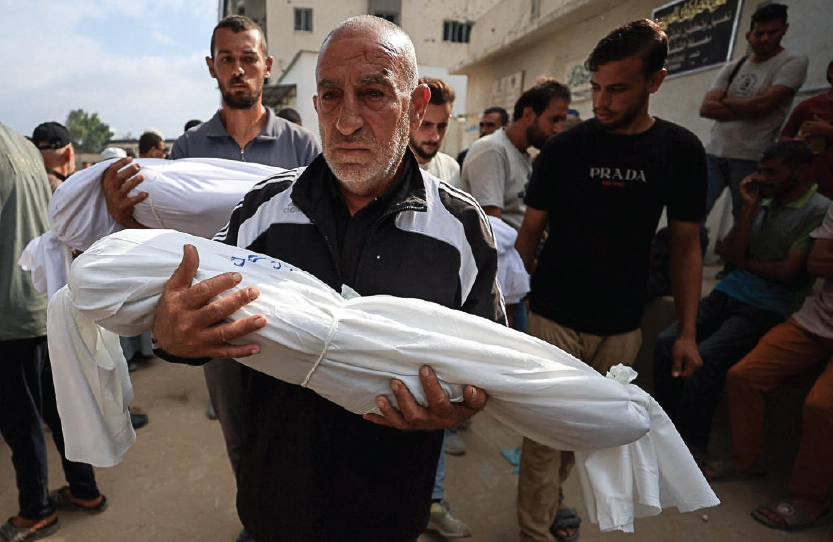
Hundreds of Palestinians, many of them children, have been killed since the ceasefire brokered between Israel and Hamas in October 2025

I have learned, over time, to distrust the word ceasefire. It arrives dressed as mercy, speaking softly of pauses and calm, but history suggests it is often less an ending than an intermission - the lights dim, the audience exhales, and the machinery behind the curtain continues to hum.
When the ceasefire in Gaza went into effect on October 10, 2025, it was described, predictably, as a breakthrough. The language was familiar: de-escalation, restraint, humanitarian pause. What was less emphasized was what continued beneath the vocabulary. Nearly two children have died every day since. Hundreds of Palestinians - many of them children - are continually being killed during what is now called “the calm.” Aid has entered, but infrastructure remains shattered. Hunger has eased statistically while persisting biologically. A population survives, but only just.
The ceasefire did not end the violence; it rearranged it.
History tells us that this is not a transitional phase. It is often the phase itself.
The problem with ceasefires is not that they fail to stop violence entirely; it is that they frequently succeed at slowing it just enough to sap urgency. (Like commas in a sentence that insists on continuing). In Rwanda, the Arusha Accords of 1993 produced a ceasefire meant to end a civil war. Within months, preparations for genocide accelerated under the cover of diplomacy. When the killing began in April 1994, eight hundred thousand people were murdered in roughly one hundred days. UN officials later admitted that the international community mistook negotiation for prevention; pause for progress.
Bosnia offers another warning. Between 1992 and 1995, multiple ceasefires were brokered, violated, and re-brokered. They did not stop ethnic cleansing; they reorganized it. Srebrenica was designated a UN “safe area” during a ceasefire. In July 1995, more than eight thousand Bosniak men and boys were executed there in less than a week. The ceasefire did not fail because it was broken. It failed because it existed without enforcement, accountability, or political will.
Even in conflicts that eventually quieted - Northern Ireland, South Africa - the ceasefire was not the cure. It was merely a fragile precondition, useless without political courage and structural change.
These are not analogies for effect. They are patterns.
In Gaza today, the statistics tell a story that rhetoric tries to soften. Since the ceasefire announcement, hundreds of Palestinians have been killed, including dozens of children. UNICEF confirms child deaths even during the pause. The health system - already devastated - continues to collapse. Roughly four thousand children require urgent medical evacuation that cannot be carried out at scale. Aid trucks enter, but equipment to repair water systems, sewage networks, and hospitals is blocked or delayed. Unexploded ordnance remains buried beneath residential rubble. Disease spreads easily in overcrowded shelters as winter approaches.
This is not an emergency that the ceasefire has solved. It is one the ceasefire has merely stabilized - at a lethal baseline.
International law has long supplied us with vocabulary for what is happening there: occupation, apartheid, collective punishment, genocide. Amnesty International’s conclusion that Israel is committing genocide in Gaza did not hinge on metaphor but on statute - on killings, on the infliction of serious bodily and mental harm, on conditions of life deliberately calculated to bring about physical destruction. A ceasefire that leaves those conditions intact does not interrupt genocide; it manages its tempo.
What has changed since October 10? The intensity of bombardment has decreased. The underlying conditions have not.
More than half of Gaza remains under Israeli military deployment. Access to the sea is still severely restricted. Agricultural land has been destroyed or rendered inaccessible. Livestock is gone. Fishing is curtailed. Independent sources of sustenance - what keeps populations alive when aid falters - have been systematically eliminated. This is not incidental damage. It is structural deprivation.
Ceasefires in such contexts do not interrupt genocidal processes; they often extend them over time. In Sudan’s Darfur region, repeated ceasefires between 2003 and 2008 coincided with mass displacement and starvation. By the time violence subsided, an estimated 300,000 people were dead - not from a single blitz of killing, but from conditions allowed to persist while the world negotiated.
There is a particular cruelty in how ceasefires interact with trauma. During active bombardment, survival narrows perception. People focus on water, shelter, and a sigh of breath. When the violence slows, memory returns. Therapists in Gaza describe patients collapsing psychologically once the ceasefire began - when the constant threat receded just enough for grief to surface. This pattern is well documented in post-conflict societies. In Cambodia, PTSD rates surged after fighting ended. Healing requires safety, not merely quiet.
A ceasefire without safety is an invitation to despair.
What troubles us most is not that the ceasefire is inadequate, but that it is being treated as sufficient. Already, international pressure is easing. Arms exports resume. Trade suspensions are quietly shelved. The logic is implicit but familiar: the worst has passed. History suggests otherwise.
After the Armenian genocide, the world moved on. After Rwanda, there were regrets - never again, solemnly intoned, and then forgotten. Accountability deferred becomes accountability denied. When perpetrators remain in power, ceasefires become alibis.
And yet - this is the part that history also insists upon - ceasefires can matter. They can become hinges rather than parentheses. But only if we decide they are not endpoints. First, it must be treated not as an achievement but as leverage.
Ceasefires work only when they are immediately followed by irreversible actions: lifting blockades, restoring services, allowing independent monitoring, and enforcing international law. If Gaza’s ceasefire is to mean anything, it must be weaponized - ethically. It must be used to force unfettered humanitarian access, not negotiate it piecemeal. Simply increasing aid deliveries without repairing infrastructure condemns populations to permanent dependency. Food without water systems, medicine without hospitals, shelter without land - these are humanitarian gestures that preserve life while denying the future.
Second, accountability cannot be postponed. In every genocide since World War II, delay has functioned as denial. The International Criminal Tribunal for Rwanda began years after the killing ended. Bosnia’s prosecutions took decades. In Gaza, investigations must begin during the ceasefire, not after the damage becomes historical. Journalists and human-rights monitors must be allowed in, not as guests but as witnesses. Arms transfers should be suspended to Israel until violations cease. Most exigently of all, prosecutions should expedite and lead to sanctions, embargoes, and isolation.
Third, the ceasefire must address political root causes, not merely humanitarian symptoms. Occupation and apartheid are not background conditions; they are engines of violence. In South Africa, the end of apartheid required not merely a cessation of violence but the dismantling of a system. It required truth commissions, prosecutions, sanctions, and an unambiguous moral stance from the international community. In Northern Ireland, peace came not from silence alone but from political inclusion and structural reform. In both cases, the ceasefire was leveraged aggressively towards transformation. Enduring peace in Gaza requires acknowledging Palestinian self-determination not as a bargaining chip but as a right. It requires, frankly, a willingness to offend powerful allies in the service of international law.
I often think of how future commissions will read this period - how reports will cite numbers we already know. How phrases like “credible warnings” and “missed opportunities” will appear again. The language of regret is remarkably consistent across genocides. What changes is only the geography. History will not ask whether we called it a ceasefire. It will ask what we allowed to continue beneath its name.
Based in Karachi, the writer is a political-economic analyst and can be reached at syzainabbasrizvi@gmail.com


Leave a Reply