

Islamabad
SHAME ON US!
The people of Pakistan have been living with a system in which the elite and privileged (read mafia) have remained above the law.

The safe parking of funds in shell companies accumulated through corrupt practices and tax evasion is a global challenge and is not the problem of a single region or country. Some years ago, this problem came into sharp focus in many countries, including Pakistan, with the exception that in our country, the focused process of accountability intensified the political polarization, shaking the very foundations of the democratic dispensation. In other countries, necessary investigations were made, and the persons involved were punished. The people of Pakistan also widely wished that, in the wider interest of the country, the process of accountability should reach a logical conclusion, as a society with such a massive scale of corruption could not last long. People’s wishes in an underdeveloped society seldom turn into realities.
We may recall, during the financial crisis of 2007-2008 that hit the USA and many other major economies of the world, the attention of the powerful countries was drawn to the negative fallout of secrecy laws, regulations and innovative methods of banks to seek and retain clients providing safe havens for their ill-gotten fortunes, which equally focused on the business of shell companies to hide treasures of tax evaders, drug dealers, mafias and corrupt politicians. The banks and financial institutions involved in parking the tax evaded and illegitimate wealth were taken to task, and laws and systems to oversee the cross-border financial flows were revamped.
To the utter surprise of the international community it was found that safe havens for the outflow of the illegitimate funds were spread all over the world including the British territories and Dependencies (London in the middle surrounded by British Virgin Islands, Bermuda, Gibraltar, the Cayman Island, Jersey) USA (Delaware, Nevada, Wyoming) some European and Asian countries including Luxemburg, the Netherlands, Dubai, Hong Kong, Singapore. There were some less wealthy countries like the Bahamas, Mauritius, and Seychelles providing safe havens.
The USA Justice Department, during the 2008 financial crisis, summoned Swiss banking regulators, particularly some executives of the Union Bank of Switzerland (UBS), who were suspected of having helped American clients evade taxes. Earlier, they had imprisoned Bradley Birkenhead, one of the senior executives of UBS, for his role in laundering tax-evaded wealth from the USA. Mr. Birkenhead had made stunning revelations to the American Investigators. He described in detail a ‘culture of deception at the UBS which circumvented many countries’ laws and the bank’s own regulations, making use of encrypted computers and offshore shell companies to channelize the illegitimate funds.’ He also shed light on the clients of the bank, who included Silicon Valley entrepreneurs, Russian oligarchs, Arab Princes, Chinese industrial magnates, and politicians from developing countries, including Pakistan.
Mr. Birkenhead further revealed that his UBS colleagues used less sophisticated methods, like toothpaste tubes, to smuggle diamonds across borders for safe parking in the bank. He described the shell companies as facilitators of tax evasion, corruption, and organized crimes, undermining the rule of law and grossly contributing to financial imbalance and inequality in many societies, helping the ruling elite ‘to loot the treasuries of their countries and stash their spoils elsewhere, generating illicit cross-border financial flow of over $1trillion every year.’ They also found that Americans accounted for less than 2% of the bank’s wealth management division, handling $1.3trillion in 2007. The American share of this huge amount just ranged within $20billion.
As a result of the investigations by the American authorities and the looming probability of prosecution of the Swiss bankers, the UBS admitted having defrauded the USA, revealing the names of 280 tax evaders, and paid fines of $780million in 2009. This list of tax evaders expanded to 4,450 names when the US authorities widened the network of investigations and included other Swiss banks. Later, 55,000 American tax evaders volunteered to come forward to pay their taxes and the interest accumulated thereon during the period. By the beginning of 2016, the USA recovered some $8billion from these tax evaders, plus $1.4billion in penalties paid by the banks.
The lack of accountability in Pakistan has created a dangerous perception that nothing will be done to the corrupt, owing to the weakening writ of the state and its corrupt legal and judicial processes
In the last quarter of 2017, an International Consortium of Investigative Journalists, in partnership with 95 News Organizations all over the world, published ‘Paradise Papers’ reports based on the data leak from the Bermuda-based offices of an offshore law firm, Appleby, with exhaustive comments on how the Shell Companies hide the illegitimate wealth. Earlier, in 2016, the Panama Papers reports based on data leaks from a Panamanian law firm, Mossack-Fonseca, exposed a world of illicit assets, criminality, and creative tax evasion. In Mossack Fonseca data, a good number of Pakistanis, including a former Prime Minister and his sons, were conspicuous in their presence on the list of beneficiaries of shell companies.
What these two reports revealed was that a huge amount of $8.7trillion was held by the shell companies, equal to 10% of the global GDP. However, James Henry, an economist of repute, is on record as having rejected this amount as ridiculously small. According to him, the wealth held by the shell companies ranges between $24 to 36trillion, out of which $70-120 billion accounts for tax evasion, and the remainder comes from the plunder of treasuries of the developing countries by their ruling elite, mafias, and drug and arms smugglers.
The sheer growth of the illicit funds parked in safe havens, and concerns of the world community for the funding of terrorist groups, forced major powers to revamp their anti-money laundering laws and create financial task forces to monitor financial flows across borders. The UNO also passed resolutions against money laundering. The Organization of Economic Cooperation and Development in Europe devised the system of Common Report Standard by which the member countries automatically share financial information in order to address the challenge of the illicit financial flows across borders. Pakistan has been under the watch of the Financial Action Task Force (FATF) during the past decade.
The Panama Papers revelations cost many a leader their high positions all over the world. The reverberations of these revelations have echoed in Pakistan for a long time. The former Prime Minister Mian Nawaz Sharif was sentenced to 7 years’ rigorous imprisonment in the Evanfield reference along with his daughter. The Islamabad High Court suspended their sentence, giving them temporary relief. However, this relief proved short-lived as the trial court in two other references –Al Azizia Hill Metals sentenced him for 7 years. He landed in the jail ward again. Another senior leader was implicated in cases of money laundering through fake bank accounts and acquiring expensive properties in Pakistan and abroad. The people were watching – incredibly stunned.
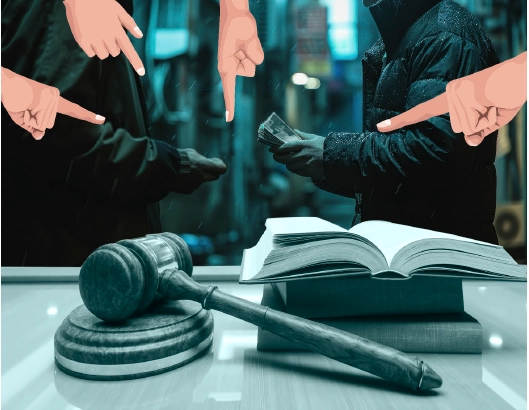
The lack of accountability in Pakistan has created a dangerous perception that nothing will happen to the corrupt owing to the weakening writ of the state and its corrupt legal and judicial processes. The common understanding or belief is that ‘if you do corruption of a few thousand, you would be caught; if you do corruption in millions, you would have many safe escape doors.’ The way the national and provincial treasuries have been plundered with an audacious impunity by the mafias (read elite), ridiculing laws, the common man believed in the above legacy until the Supreme Court of Pakistan took notice of the Panama Paper revelations and brought the sitting Prime Minister under judicial scrutiny.
After the imprisonment of the former prime minister on corruption charges, the confusion of the people was worth witnessing. They were confused whether to believe what was happening to one of the most powerful families of the country or listen to the voices which portray them as innocent and selfless champions of the rights of the underprivileged and crusaders for civil supremacy, plural democracy, and rule of law; and that they were being victimized for their defiance to the supremacy of a powerful institution in the political affairs of the country. Even many in the educated class were at a loss to understand the phenomenon unfolding in Pakistan.
When the winds from the garrison town changed direction, and the services of these families were required, the superior courts, on the first hearing, absolved them from all the corruption charges, doing away with the sentences handed down by the trial courts. Who says our courts have ever been independent in handing down sentences or whitewashing sins with scented waters? Now, the corruption charges have shifted to another political party and its leaders. This pendulum of corruption, treason, and subversion charges has been swinging from one corner to another, from one bunch of politicians to another for decades.
The people of Pakistan have been living with a system in which the elite and privileged (read mafia) have remained above the law. The corrupt anti-graft departments had been pursuing, prosecuting, and persecuting the lower echelons of our federal and provincial administrative structures while shying away from the misdeeds of the powerful ruling elite and their acolytes in the bureaucracy. These concepts – rather realities of our society are hard to swallow by the generation living in today’s world of digital revolution.
We need a permanent and independent system of accountability, as in other countries, which could successfully investigate and prosecute the corrupt elite. Such a system will establish the writ of the state and help the people regain confidence in their cultural and spiritual ethos and the significance of plural democracy and the rule of law. This way of dirtying the face of the defiant politicians and bureaucrats and, on falling in line, washing them clean with the state’s magical waters has totally eroded the public confidence in the legal and judicial process of the country. That is why we have been at the bottom of the list of corruption-free countries maintained by the International Transparency. Shame on us.
Based in Karachi, the author is a former member of the Foreign Service of Pakistan and has served as Ambassador for seven years.


If we analysis the report of I M F about economy of country the corruption pointed by Monetary body must be addressed and curbed in the larger interest of country.
Offshore shell companies and jurisdictions are there for a reason, even if that reason may have expired when these were established by the concerned colonial powers and successor governments. Unless an international anti-corruption regime is established globally with institutions like the OECD and FATF monitoring and auditing it, corrupt leaders and bureaucrats from poor developing nations will continue to transfer proceeds of illegally obtained wealth out of their national monetary jurisdictions. Pakistan’s experience has shown that even if everyone knows a thief who committed theft in broad daylight, he cannot be punished because either the prosecution is weak, the evidence is insufficient or the court is either partial and politicised or unconvinced and not provided proof that a theft took place.
A good article by Ambassador Brohi as usual.