




Disaster in the Making
This concerns the cover story titled ‘Disaster in the Making,’ which appeared in the August 2024 issue of SouthAsia Magazine. Pakistan is a country struggling with historically low economic indicators and a deep governance crisis in almost all sectors. Thus, for a country like this, it is incumbent upon its leadership to have its finger on the pulse of rapidly fluctuating geostrategic dynamics and act accordingly to safeguard its national and regional interests. Governments come and go, but the country’s foreign policy stays afloat by the ground realities, which determine both the present and the future course of action. In the given scenario, Pakistan needs to see beyond regional horizons to know the mood of the global powers, as that’s the only remedy to save the impending disaster in the making.
Dr. Ilyas Siddiqui,
Sialkot, Pakistan.
Ballay Ballay, Arshad Nadeem!
 BBorn in January 1997 in Mian Channu in Pakistan’s Punjab province, Arshad Nadeem has emerged as the world’s record-holding javelin thrower, winning his country its first gold medal in the International Olympics in sports other than hockey. A two-time Olympian, and the first Pakistani to qualify for the final of any track and field event at the Olympic Games and the World Athletics Championships, Arshad Nadeem set an Olympic record with a throw of 92.97 metres (305.0 ft) at the 2024 Summer Olympics. Currently reigning both Olympic and Commonwealth Games championships, Arshad Nadeem is also the current silver medalist in the World Athletics Championship. He set a new national and Commonwealth Games record with a throw of 90.18 m (295.9 ft) at the 2022 Commonwealth Games, becoming the first athlete from the South Asian region to breach the 90 m mark. In the 2023 World Athletics Championships, he became the first Pakistani athlete to win a medal at the World Athletics Championships. Arshad Nadeem! You are the nation›s pride, and we wish more of the same in the future.
Raja Riaz Ahmed,
Gujranwala, Pakistan.
Hasina on the Run
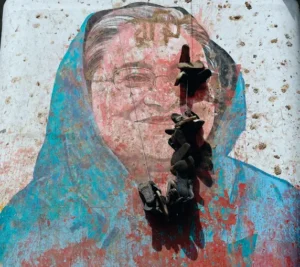 After weeks of mass protests that have resulted in scores of deaths at the hands of Bangladesh police, Bangladesh’s former prime minister, Sheikh Hasina, was left with no other option than to flee the crisis-stricken country in the first week of August. In the country’s 53-year political history, her hasty departure can be referred to as a landmark moment, leaving the second-largest Muslim nation in South Asia facing an enormous power vacuum into which the country’s army has stepped seemingly for the time being. Now, the incumbent government, set up under the leadership of Nobel laureate Muhammad Yunus as chief adviser, has taken its place with the determination for an all-inclusive, democratic government free of corruption and graft charges. The good thing is that student leaders do not favor an interim government formed without their input, while Jamaat-i-Islami Bangladesh and Bangladesh Nationalist Party (BNP) leaders are vying for positions in the interim setup. Amid the ongoing crisis, political transitions are coming out to be quite volatile and challenging, and there has been a never-ending spate of incidents of arson, looting, and violent protests around the country, targeting the country’s religious minorities, serially the Hindus. This must stop immediately as the formidable damage done to Bangladesh, otherwise booming due to the current political turmoil, will lead the country to further crisis.
Shahab Uddin,
Dhaka, Bangladesh.
3-year Rule of Taliban
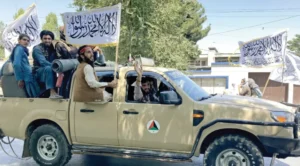 Since the return of the Taliban to Afghanistan back in August 2021, Afghanistan is no longer the country it was once before the departure of the allied forces. At this crucial time, there is a need to deeply introspect what has happened since the Taliban returned to power in the war-torn country. The Taliban forces came back to power in Afghanistan as the previous government led by Ashraf Ghani collapsed, and the former president fled Kabul at the cusp of the Taliban’s arrival amid the NATO and U.S. withdrawal from Afghanistan in the dead of night in August 2021. Since the return of the Taliban to Kabul, the global community, including the neighbouring nations, has pursued a selective engagement with the Taliban regime mainly because of the former’s shabby human rights record. Western countries are still frustrated at the ongoing restrictions on the rights of women and girls, and to punish the Taliban regime, the global community has enforced a series of harsh sanctions, including banking restrictions and asset freezes. Simultaneously, the international powers have devoted sizable funds to mitigating food shortages and averting famine-like conditions developing in Afghanistan. Many countries are in direct contact with the Taliban concerning security issues. Afghanistan’s neighboring nations have also struck trade agreements with the Taliban leadership, which is a good omen for the region and will likely result in a better socio-economic environment for Afghanistan.
Razi Nabi Khan,
Qandahar, Afghanistan.
India-Nepal Relationship
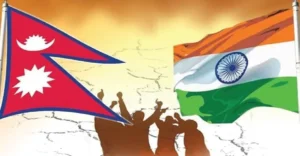 India and Nepal are two of the South Asian nations that have had a bumpy bilateral relationship. Of late, the recent turmoil in Nepal’s politics is not new or an unfamiliar site to India as the former has been engaged deeply yet proactively with Kathmandu because of their ethnic ties, long shared borders, and formidable economic interests. Therefore, New Delhi has been keen on developments across the India-Nepal border to preserve its vested interests, especially considering the increasing Chinese influence on Nepal. For New Delhi, a spate of political upheavals in Nepal has profound implications for India›s stability and security. As Kathmandu is busy forging closer ties with Beijing, New Delhi has seemingly reactivated its efforts to recalibrate its diplomatic relationship with Nepal to maintain much-needed balance given the fast-moving geopolitical dynamics. Therefore, New Delhi’s foreign policy toward Kathmandu needs reassessment and recalibration, as China’s growing influence in the region will impact India’s ensuing diplomatic efforts in the short and long term.
Chetan Sohrab Varma,
Varanasi, India.