



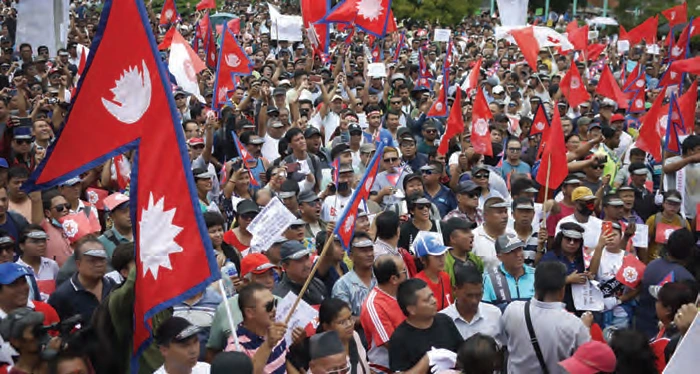
The transition of Nepal from a monarchy to a federal democratic republic has been the subject of several ups and downs through political turmoil. The formal establishment of an independent democratic political system in the country can be traced back to the abolition of the royalty and the advent of a new somber dawning in Nepal in 2008. The political changes with which the political process accompanying the end of monarchy was possible produced changes that differed from the old ones. The new constitution-writing process further exposed the country’s significant political and social differences. It became clear how difficult it is to build a solid democratic system during the demonstrations and delays surrounding the constitution’s proclamation in 2015 when oppressed communities such as the Tharu and Madhesi demonstrated their discontent. The long-term stability of Nepal is still being determined due to the country’s ongoing struggles with political instability that originates from these historical divides. A time of greater volatility began with the announcement of the 2015 constitution, which was both a big step forward and a hindrance. The initial goal of establishing a federal system of government via the Constitution was to decentralize power and make government more approachable to the people. However, new issues arose due to the federal structure’s implementation, as various regional and ethnic groups contested power and resources.
The adoption of the federal system, however, brought additional problems as different ethnic and regional groups fought for resources and authority. The politically unstable atmosphere in Nepal is borne out by the rapid succession of thirteen prime ministers in the fifteen years after the constitution’s implementation in 2015. A long-running power struggle has broken out in Nepal among the country’s three major political groups: the Nepali Congress, the Communist Party of Nepal (Unified Marxist-Leninist), and the Communist Party of Nepal (Maoist Centre). Coalition shakeups are commonplace due to the administration’s focus on short-term political benefits rather than long-term sustainability. This disintegration was further demonstrated by the precarious coalition administration and hung parliament that resulted from the 2022 national elections. Because of this volatility, the government cannot address essential matters like social welfare and economic progress. Ranking 143rd out of 167 nations in political stability and 91st out of 163 on the Global Peace Index are international measures highlighting Nepal’s ongoing issues in its administration.

 The writer is a freelance contributor. She can be reached at
Leave a Reply