The incumbent government would be better advised to address the concerns of smaller provinces over a range of burning issues.
ByAmbassador M. Alam Brohi | September 2024
Nations effectively use an old-age ideology, nationalism, as the most motivating slogan to assert their supremacy over others and motivate the entire nation to defend their country’s political, economic, and social sovereignty against any foreseeable aggression.
The concept of nationalism developed from earlier primordial tribalism and ethno-symbolism, which were limited in nature and scope and could not serve the purpose of modern states. The nation-states as we know them today date back to the Westphalia Treaty of 1648. Nationalism signifies the fundamental right to freedom, self-determination, and sovereignty of ethnically homogenous people or a cluster of ethnically heterogeneous people living within a defined geographical territory bound by a common language, culture, and history, a sense of pride in their historical heritage, and shared aspirations for grandeur and prosperity.
Nationalism is not synonymous with patriotism. While nationalism is a tool for the state to deal with external situations, patriotism is employed to overcome internal difficulties within a state. Instead, patriotic feelings are whipped up to strengthen nationalism in a given situation.
Nationalism is also different from sub-nationalism in its connotation. The former is ignited by apprehensions of foreign military aggression, ideological and cultural invasion, economic sabotage, or overpowering acquisitive designs for territorial gains and financial resources. The latter is a ramification of the former and fueled by the unjust, arrogant, disdaining, and condescending attitude of the majority ethnocultural and religious community towards the relatively more minor components of a nation of society.
Nationalism as an ideology gained prominence in the eighteenth century. Much earlier, the Westphalian Agreement of 1648 had ended the 30-year-long wars in Europe and defined states and the principles governing the coexistence of nation-states—big or small—by geography or population—and their independent right to political development and economic prosperity.
The Westphalian concept of the state as a sovereign entity sustained political coexistence for quite some years but always remained vulnerable to the hegemonic designs of major countries. Finally, it gave way to the growth of nationalism and wars within Europe, which were triggered by irresistible expansionist designs or access to economic resources.
The devastating military conflagrations that included the Napoleonic wars pulverized Europe. The defeat of Napoleon in Waterloo by the General Willington-led grand military coalition brought respite to Europe but failed to extinguish the smoldering embers of nationalism. It resurged in the form of disastrous Nazism and fascism and triggered the two World Wars to the detriment of humanity and human civilization. This proved the tendency of nationalism to transform into military aggression, economic avarice, ethnic chauvinism, and cultural arrogance – unbounded by any faith, morality, or principle.
The two World Wars compelled nations to realize the dangers inherent in nationalism as an ideological concept. This resulted in establishing the UNO as a means of collective responsibility to help sustain the international order emerging from the ashes of the Second World War.
Unfortunately, the European continent is once again veering towards nationalism or ultra-conservatism. The recent wave of nationalist or populist politics posed formidable challenges to the mainstream political parties on the continent even though massive migration has transformed many countries in North America, Europe, and the Pacific into multi-language, multicultural, and multi-ethnic states.
There are many ethnocultural groups living in different countries against their will, which harbor strong feelings of nationalism but do not possess separate territories or occupy their territories. These ethno-cultural groups are bound by common descent, language, culture, and history. Given their pride in their language and culture, these ethno-cultural nationalists resist assimilation into the mainstream polity, causing fissures in the society.
The states require political, economic, social, and administrative systems to blend such sub-nationalists with the national stream. The example of Scots, Welsh, Catalans, Bosque, Andalusians, Sicilians, and Ire landers in Europe, Twaregs in West Africa, Sub-Saharawis in North Africa, Kurds in the Middle East, Uighurs in China, Kashmiris and Baloch in South and South-West Asia could be well cited to explain the ethnocultural nationalism. These people, at some stage in the evolutionary history of nations, have had independent entities and continue aspiring to regain their past status.
The South Asian subcontinent is well familiar with the phenomenon of nationalism and sub-nationalism. The rise of the people of the sub-continent for freedom from the colonial yoke was stirred by feelings of nationalism. The mainstream parties spearheading the independence movement failed to prevent this nationalism from steeping into ethno-communal nationalism. Three strands of nationalism emerged from this fragmentation – Hindu nationalism vying for Swaraj and now Hindu Rashtra, Muslim nationalism aspiring for an independent country comprising north-western Muslim majority territories, and Bengali nationalism asserting itself in Bengal and Assam. These national feelings were so strong that various constitutional schemes - some very feasible – for having one successor state after the departure of the British failed to mollify them.
The two World Wars compelled nations to realize the dangers inherent in nationalism as an ideological concept. This resulted in establishing the UNO as a means of collective responsibility to help sustain the international order emerging from the ashes of the Second World War.
Finally, the subcontinent was partitioned into two states. The original scheme of the partition of the subcontinent, envisaging the entire Punjab in Pakistan and the whole Bengal and Assam as a separate country, was conspiratorially altered at the last moment by the British Viceroy, Mountbatten, in connivance with the Congress leaders, dissecting Punjab and Bengal. The mutual antagonist communal, national feelings have since continued to mar bilateral relations between the two successor states.
Both countries have had to grapple with the sub-nationalist feelings of many ethno-religious groups like Sikhs, and ethno-cultural and linguistic sub-nationals like Kashmiris, Tamils, Goanis, Nagalandis and Assamese in India, and Bengalis, Sindhis and Baloch in Pakistan. A veteran Indian intellectual, MJ Akbar, in his book, ‘India: a Siege from Within,’ has elaborated well on the growth of ethnocultural nationalism in India. He credits democracy as the shock-absorbing tool to prevent ethno-religious and ethno-cultural nationalism from fragmenting India.
The other ethnocultural nationalists might have been pacified, but the valley of Jammu and Kashmir has now been annexed to the Indian Union, removing its autonomy. Kashmiris have made it abundantly clear that nothing less than self-determination is acceptable to them. Scores of precedents in recent history show that people so determined and so resolved to achieve freedom have finally succeeded in realizing their dreams. The precedent of Bosnians, Albanians, Kosovars, South Sudanese, and East Timorese will be pertinent to quote here.
Pakistan has also suffered from ethno-cultural nationalism. It was in its infancy when Bengalis challenged the declaration of Urdu as the national language of the country; the Pashtun ethnonationalism manifested itself in the slogan of Pakhtunistan; the Baloch demonstrated their anguish on the unjust treatment of the Khan of Kalat by revolting against the central authority; the Sindhis rebelled against the demotion of their well-developed language, the declaration of Karachi as a federal city, the imposition of One-Unit and concentration of political, economic, and administrative powers in the central authority.
The genuine demands of the ethno-cultural components of the nation from Bengal to KPK, Sindh, and Balochistan were termed as anti-Pakistan by the ruling aristocracy and the arrogant establishment. From the beginning, Bengalis, Sindhis, and Baloch were stereotyped as non-martial races, unintelligent, incompetent, and anti-state. Unfortunately, this mindset of the establishment remains unchanged.
The subsequent years laid bare the disastrous repercussions of the political and administrative schemes imposed by the ruling aristocracy in utter disregard for the sub-national aspirations of the federal constituents. When this realization dawned on the establishment, it was too late to save Jinnah’s Pakistan. The skies would not have fallen had Bengali, Sindhi, Balochi, and Pashto been declared national languages along with Urdu. As a result of these wrong policies, we had to use the state’s coercive power from time to time to suppress ethno-cultural aspirations. Baloch bore the brunt of four military operations.
The restoration of the 1973 Constitution and the unanimous adoption of the 18th Amendment have primarily resolved the issue of the distribution of financial resources from the divisible pool among the provinces and the thorny question of provincial autonomy. Sindhis and Baloch still harbor apprehensions against the annulment or non-implementation of the 18th Amendment, ignited by the non-serious attitude of the previous governments.
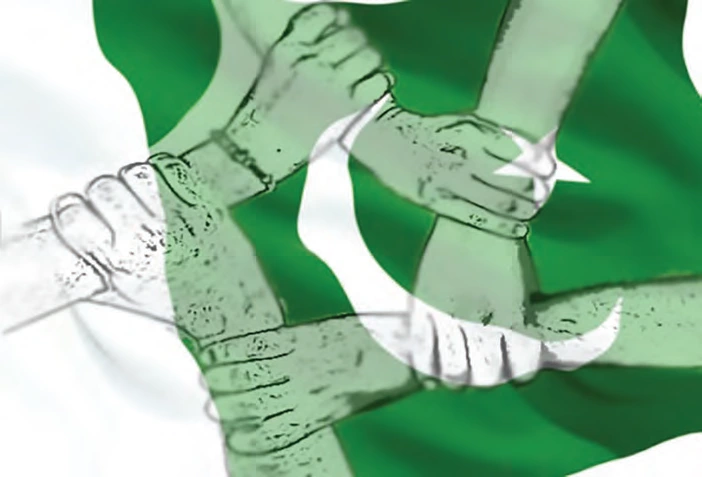
The incumbent government would be better advised to address the concerns of smaller provinces over forced disappearances, NFC Awards, distribution of waters under the Water Accord of 1992, and adoption of provincial languages as national languages as in India, Switzerland, and many other countries. This will curb centrifugal tendencies in the country and defang sub-nationalism. We should admit that Pakistan is a federation of four distinct national, cultural, and territorial nations that were separate and independent regions before the advent of British India.




 The author is a former member of the Foreign Service of Pakistan and has served as Ambassador for seven years.
Leave a Reply