



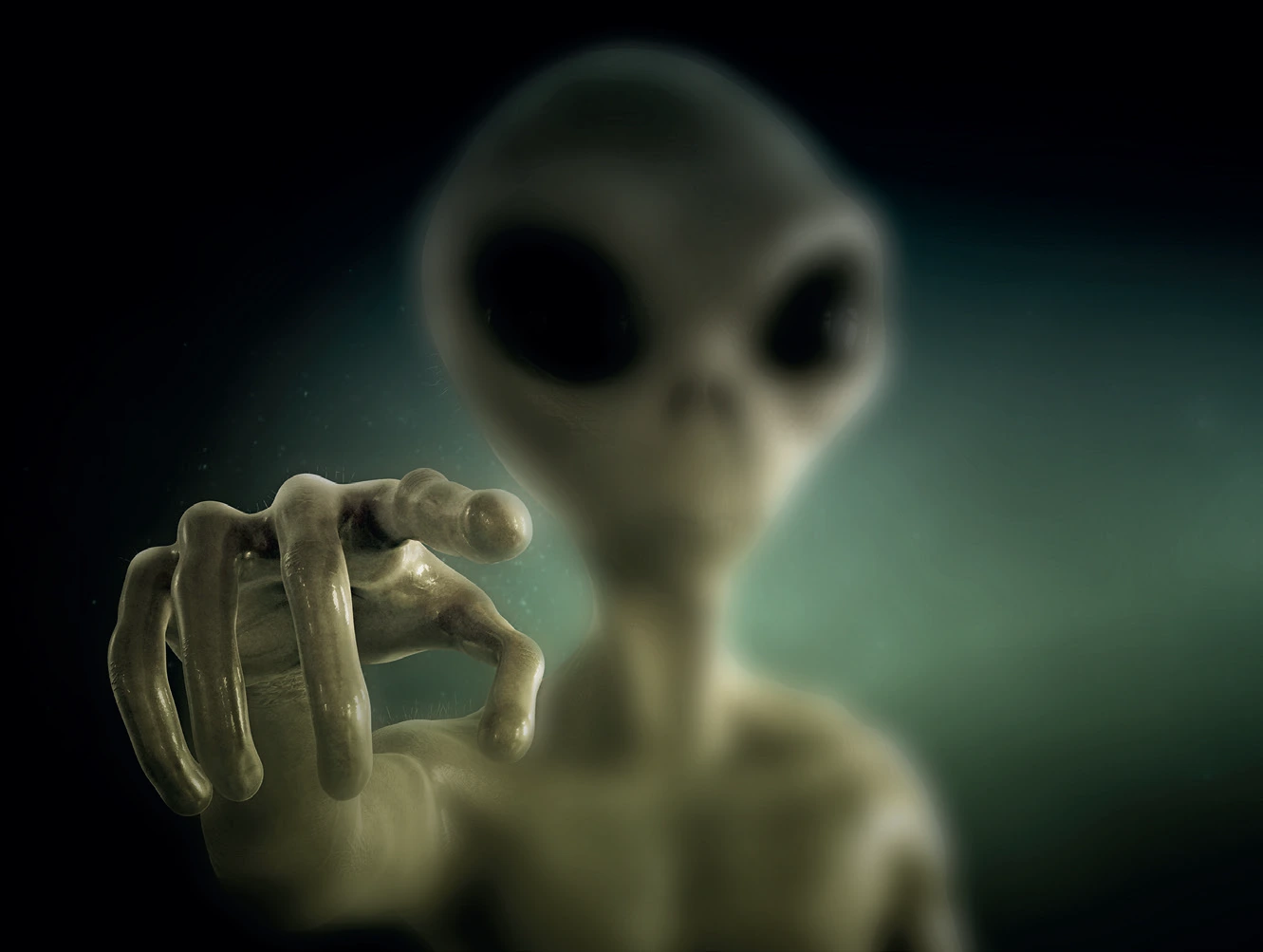
Are we alone in the vastness and immensity of the Universe?
This question has captured the imagination of scientists, philosophers, and science-fiction writers. As far back as the 1800s, Percival Lowell became infamous for promoting the notion that there were Martians who had built irrigation systems on Mars based on what they perceived as canals in the faint images of Mars. Yet, the scientific search for life in the universe really is a recent discipline known as “Astrobiology.”
In 1974, the now-damaged Arecibo radio telescope in Puerto Rico beamed a message out to the edge of the Milky Way galaxy as a testament to our technological ability to do so. The Arecibo Radio telescope continued to monitor signals from nearby stars as part of its SETI (Search for Extraterrestrial Intelligence) programme. We continued to herald our presence in the Universe when, in 1977, the first Voyager mission left planet Earth with recordings of greetings in about 55 languages on the golden record if some intelligent alien life found it.
Then, the random, famous “Wow!” radio signal was detected on August 15, 1977, by Ohio State University’s Big Ear radio telescope in the United States. This signal was never detected again and remains an enigma as to what it was. Some astronomers think it bore the signs of extraterrestrial radio transmission.
There are trillions and trillions of stars in the universe, and ever since the first exoplanet was discovered in the 1990s, it has been recognized that almost all stars have planetary systems associated with them. Thousands of exoplanets have been confirmed within a few decades since the first discovery. Could we be alone in a Universe this vast?
Even if the tiniest fraction of the exoplanets could harbour life (according to the Drake equation, which gives a statistical measure of the number of planets with intelligent lifeforms capable of technological communication), optimistically, the number could be in the hundreds of thousands at the upper limit. This now begs the famous remark from Physicist Enrico Fermi – known now as the Fermi Paradox – “Where is everyone?” Why have we not been contacted by aliens already?
The stubborn fact remains that there has been no conclusive scientific evidence of life in the universe. The absence of evidence does not imply evidence of its absence! The latest scientific mission to Mars is searching for life. The James Webb Space Telescope, launched in 2021, is hunting it down differently by measuring planetary systems’ physical and chemical properties for tell-tale signs.
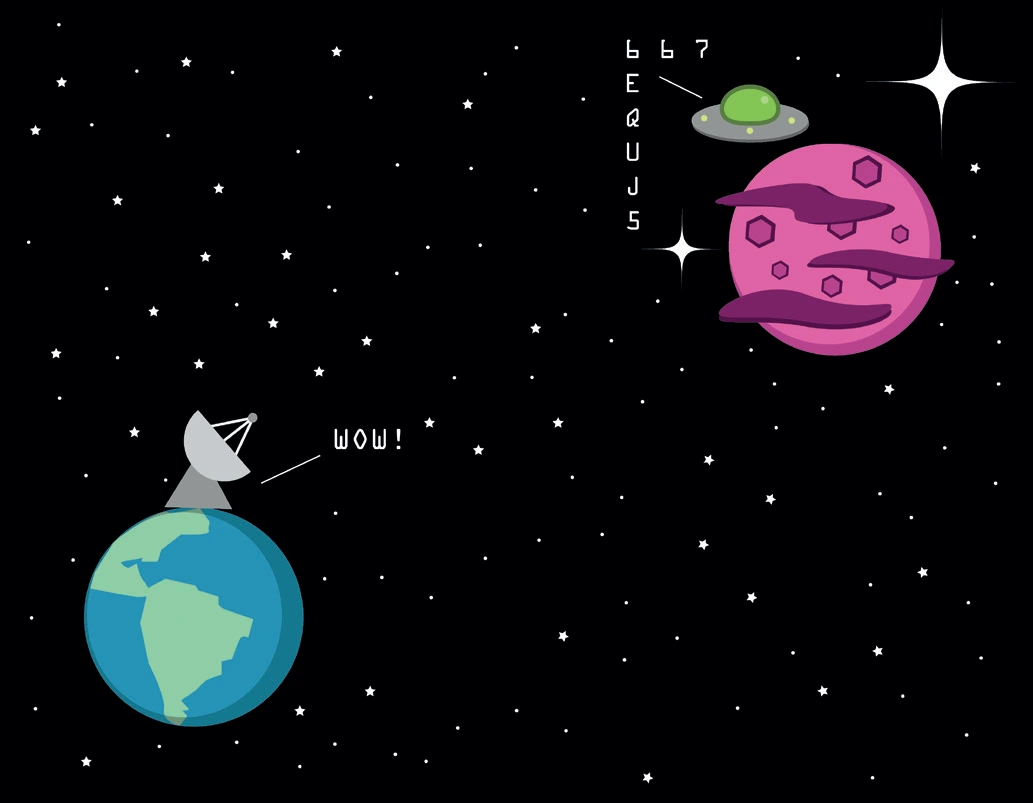
Illustration by Farishta Copilah from Trinidad, West Indies
Life on planet Earth is organic, made primarily of carbon, hydrogen, and oxygen atoms in configurations that make up amino acids, which are the fundamental units of proteins. These elements are plentiful in the universe elsewhere, and it was a breakthrough discovery that there are nebulae in space where amino acids, the building blocks of life, have been found to exist.
So, what do astrobiologists look for when searching for life? Of the eight planets in our solar system, planet Earth is the only one with liquid water on its surface and brimming with life. All evidence points to water’s tremendous importance for life’s evolution. As such, astronomers try to identify exoplanets in what is known as the “habitable zone.” The habitable zone around a star is where the temperatures and pressures are such that liquid water can be present on the exoplanet. Have we found any such worlds? NASA’s Hubble and Spitzer Space Telescopes found data indicating two water worlds orbiting a star 218 light-years.
The presence of methane on a planet is also a biomarker. On planet Earth, 95% of the methane is biogenically produced by microorganisms. Its detection in another world is, therefore, of great intrigue. Sunlight quickly destroys methane, so its presence on a planet means it is being replenished. It is one of the reasons why Mars is of such interest to astronomers in the search for life, as methane has been detected on Mars. Titan, Saturn’s largest moon, has also been of great interest due to its hydrocarbon lakes and evidence of methane in its atmosphere. For these reasons, in a seemingly unlikely place like Trinidad, we were able to engage in research to try and answer questions about life in the Universe.
The natural resources of the Pitch Lake and the mud volcanoes in Trinidad are both sites where methane is emitted and are a very toxic environment for microbial life. Here, we search for extremophiles – microorganisms capable of surviving in extreme environments. Novel strains of archaea have been detected, telling us that life can be very compliant.
While Edwin Hubble was speaking about galaxies in 1936, the thoughts are equally applicable to our search for life in the Universe in the present era:
“At the last dim horizon, we search among ghostly errors of observations for landmarks that are scarcely more substantial. The search will continue. The urge is older than history. It is not satisfied and will not be oppressed.” 

The writer is an astrobiologist. She is currently associated with the University of the West Indies, Trinidad and Tobago. She can be reached at shirin.haque@sta.uwi.edu
Leave a Reply