



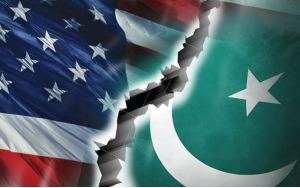
The year 2022 brought several challenges for Pakistan. One of them was how to perform optimally on the foreign policy front, especially in dealing with the United States, the reportedly sole superpower in the world. Three major signs defined worsening Pak-US relations.
The first sign surfaced on January 1, 2018, when US President Donald Trump tweeted that the US had “foolishly given Pakistan more than 33 billion dollars in aid over the last 15 years,” but Pakistan returned this favour by “giving us nothing but lies and deceit, thinking of our leaders as fools. They give safe haven to the terrorists we hunt in Afghanistan, with little help. No more!” Next day, the US announced that it would continue withholding $255 million in aid over Pakistan’s failure to fight terrorism sufficiently. A tweet battle ensued between Washington and Islamabad, offering an opportunity to the latter to retort that despite the fact that the Pakistanis had nothing to do with the causation of 9/11, Pakistan grieved over around 60,000 casualties and spent billions of rupees fighting the war on terror, which was not Pakistan’s war.
Though Trump has gone but his tweet still defines the contours of Pak-US relations. In early-2021, Trump’s successor President Joe Biden decided to withdraw troops from Afghanistan without taking Pakistan into confidence. Like Trump, Biden is also wary of Pakistan’s role. The Biden administration deems Pakistan a traitor of the US. Washington considers Pakistan a saboteur who colluded with the Taliban to undermine the Afghanistan project meant otherwise for a regime change and the introduction of democracy. In the case of withdrawal, the US preferred to negotiate directly with the Taliban in Doha. Pakistan was excluded from the talks by both the US and the Taliban leadership.
The Afghan ambassador Abdul Salam Zaeef aka Mullah Zaeef, whom Pakistan detained in 2001 and handed over to the US, remained a prisoner in the Guantanamo Bay detention camp till 2005. The deed created bad blood between Pakistan and the Taliban. Despite the fact that Pakistan revels in its ties with the so-called Quetta Shura and the Haqqani network, these relations are short of being profitable. To placate the Taliban, Pakistan may yearn for recognizing their government in Kabul, but it is not so easy as it was on May 25, 1997, when Pakistan declared the Taliban the legitimate rulers of Kabul.
 The US projects the impression that Pakistan is a regional peace spoiler. The Kargil war of 1999 made the US think unfavourably of Pakistan’s regional role and the Mumbai attacks of November 2008 reinforced its animus against Pakistan. The attacks have not only been a source of acrimony sullying Pakistan-India relations but are also a reason for the action of the Financial Action Task Force (FATF) against Pakistan. The resolve of the US to give a follow-up to the Mumbai attacks is the second sign of waning Pakistan-US relations. On July 17, 2019, US President Donald Trump tweeted “After a ten year search, the so-called ‘mastermind’ of the Mumbai terror attacks [Hafiz Muhammad Saeed] has been arrested in Pakistan. Great pressure has been exerted over the last two years to find him”. Pakistan might have thought that the story would end there but in vain. The FATF, a global watchdog against money laundering and terrorism financing, has been putting pressure on Pakistan to deliver on the ground by imprisoning the culprits and avoid falling into the blacklist. In February 2020, a Pakistani court convicted Hafiz Saeed, founder of Lashkar-e-Taiba, for five years for financing terrorism and sent him to the Kot Lakhpat jail in Lahore. Nevertheless, both the US and India think that Pakistan is faltering on its commitment to chastise the perpetrators and has been offering relief to Hafiz Saeed outside the jail.


The writer is a freelance contributor and can be reached at qaisarrashid@yahoo.com
Leave a Reply