



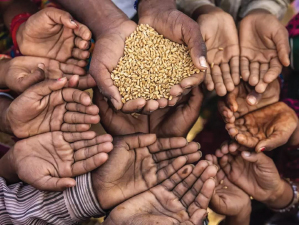
 Often, gross domestic product (GDP) of a country is seen as a good measure of the economic prosperity and, thereby an increase in GDP is always celebrated by various governments as a success. But more often it is ignored that GDP fails to encompass the multi-dimensional nature of “development”, and to account for inherent inequalities in income and wealth.
Before discussing if GDP per capita is a good measure of national progress in Pakistan or not, it is imperative to look at the historical evolution of the concept of GDP.
GDP can be traced back to the pre-industrial revolution era; it was brought to discussions of development economics by Nobel Laureate Simon Kuznets in the 1930s. Later, GDP was adopted majorly by developed countries as a measure of national growth after the Bretton-Woods Conference in 1944. In this sense, it has been a long time since the concept was modernized and adopted by different countries to measure growth, development and prosperity of a country.
While Kuznets proposed measurement of economic growth in terms of domestic characteristics and goods, he warned about the potential misunderstandings and misuses of the terms as well. For Kuznets, it was essential to keep in mind the distinction “between quantity and quality of growth, between costs and returns, and between the short and long run. Goals for more growth should specify more growth of what and for what.” While saying this, Kuznets believed that growth measure through domestic production in the long run, can be taken as a good measure. His belief rested on his research of market and economic evolution of European economies, where initially as markets grew inequalities also grew, but then inequalities reduced with more growth. For this, he proposed his very famous Kuznets’ curve.
After Kuznets, GDP has been questioned for long now. Nobel Prize Laureate, Amartya Sen, is a big name among the critics of measurement of growth in terms of production and income – as done through GDP per capita. Sen has added a human capital dimension to national progress – thus making development a multi-dimensional notion. Sen considered GDP an incomplete measure, thus a daft one.
Apart from adding the dimension of human development, if we measure growth in pure income terms, GDP does not stand as a real measurement of national growth and development. Lately, another well-known economist Thomas Piketty in 2013 published a popular book “Capital in The Twenty-First Century”, in which he analyzed economies of an array of countries including the developed and developing. According to his thesis, inequalities have grown far more then possibly predicted by middle twentieth century economists like Kuznets. According to Piketty, income inequality now is at the level of inequality that prevailed in the nineteenth century. This brings the measurement of growth and prosperity in question.
If we think of Pakistan in the light of these discussion, it would be easy to understand that GDP per capita is not a real measurement of national growth, development, and prosperity. Two factors can be prominently noticed that stop GDP from being a real measurement of national growth, development, and prosperity. This includes income inequality and wealth distribution.


The writer is a development practitioner. He has done Master's in Governance, Development and Public Policy from the Institute of Development Studies, University of Sussex and has also earned his Master's in Philosophy of Humanities from the IIS London. He can be reached at shakeelahmedshah@yahoo.com
Leave a Reply