



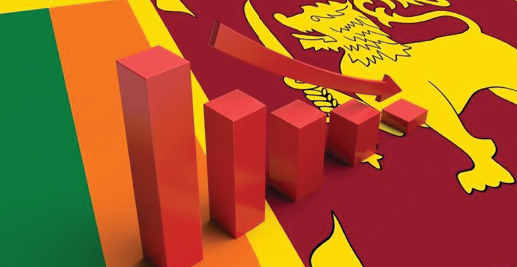
The dismal performance of Sri Lanka’s economy continues after Covid-19 as the country is facing numerous challenges. The domestic economy is heavily dependent upon the tourism sector and, according to estimates, around 10% of the GDP is linked with the tourism industry. However, the lockdown restrictions have badly affected the tourism sector and tourist earnings. Tourism earnings decreased by 81% in 2020 and an even further decline was observed in the current year. The Travel & Tourism Council warned that the economy may suffer a loss of LKR 8.2 billion each month.
Overall, economic growth decreased by 3.6% in 2020 which affected fiscal sustainability. The government also failed to achieve revenue collection while national debt has also risen sharply. The currency has fallen more than 7% against the US dollar this year which exerts further pressure on the domestic economy. The exports level decreased due to transport restrictions and weak consumer demand which reduced the foreign exchange earnings level.
In the distressed economic circumstances, the misery for the common people intensified when the food crisis occurred. Shortage of basic items such as sugar, cooking gas and milk powder was observed. The government imposed price control on key food items to bridge the gap between rising demand and limited supply. The government has also imposed a ban on imports to save foreign exchange reserves which have depleted in the recent past. The government has dollars that can cover less than 2 months of imports. Due to a shortage of foreign exchange reserves, it became difficult for the government to import and maintain the food stock as per the demand. The decision of the central bank to put a limit on forward contracts and spot trading may also affect the supply of basic items. Now an importer may not be able to pay more than the set limit to import goods. In the absence of forward contracts, many traders may not be interested in importing essential items.
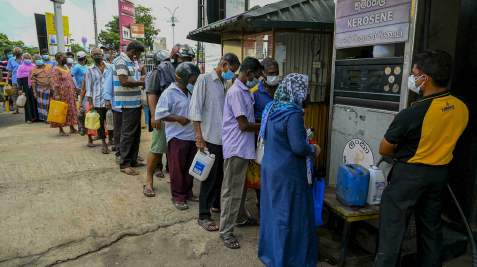 The president announced emergency regulations under the Public Security Ordinance to ensure the supply of essential items. It was decided to provide basic items at government-guaranteed prices to ensure eliminating any market irregularities. It left less incentive for traders to sell new supply to the market in these circumstances. The government claimed that these shortages were artificial as traders wanted to exploit the situation created due to lockdown restrictions. As a result, food inflation increased by 6% on a month-on-month basis in August.
 The United States Food Department has stated that 19.4% of Sri Lanka’s population is food insecure. In this context, it becomes more important to address the food emergency. As the food crisis is mainly related to the economic crisis, the government has to take measures to stabilize the economy. The tourism sector may revive in the coming future with ease in the pandemic situation which will benefit the domestic tourism sector. Recently, tourism promotion initiatives have been launched with Russian and Ukraine, which will help to revive tourism activities in the country. The domestic tourism sector has also linked up with Germany for improving eco-friendly and sustainable tourism. These measures will help in promoting the tourism industry and tourist earnings.

The writer is Senior Research Associate at the Sustainable Development Policy Institute (SDPI). He can be reached at asifjaved@sdpi.org
Leave a Reply