



One More Chance
Pakistan now finds another opportunity to redefine its character and realign amidst evolving regional and global politics.
Read more
Pakistan now finds another opportunity to redefine its character and realign amidst evolving regional and global politics.
Read more
Restricting access to certain online resources and platforms can stifle entrepreneurship, impede the tech industry, and discourage foreign investment.
Read more
As Pakistan grapples with its current political challenges, the decision to ban a political party is a grave one with far-reaching consequences.
Read more
The significance of the Presidential Elections in Sri Lanka this month will profoundly influence the island’s course of action.
Read more
The politically unstable atmosphere in Nepal is borne out by the rapid succession of thirteen prime ministers in the fifteen years after the constitution’s implementation in 2015.
Read more
Despite the Taliban’s past hostility towards India, the Indian government led by Prime Minister Narendra Modi has shown a willingness to engage with the new Afghan rulers.
Read more
For the last few decades, India has struggled to make its navy a blue-water force, a maritime force capable of operating in the open oceans for long durations to project “credible power” in the distant seas.
Read more
Several factors would likely influence the decision to lift the ban on government employees participating in Rashtriya Swayamsevak Sangh (RSS) activities.
Read more
The increased tax rates for salaried class, non-corporates, and exporters, shifting from a 1% fixed tax on turnover to a normal tax regime with rates rising from 29% to 40% on profits, are highly unfair and counterproductive.
Read more
Pakistanis, and more significantly, powerful institutions, must recognize that governance structures and political systems in a democratic nation are not a single man’s job, and running a country requires a systematic synchronization of major institutions.
Read more
The PML-N and the PPP have long been fixtures in Pakistan’s political arena, and their histories intertwine with strategic alliances, tactical manoeuvres, and a quest for power that transcends ideological boundaries.
Read more
Pakistan encountered a significant rise in terrorism, with 573 in 2021, 715 in 2022, and 1210 in 2023.
Read more
As Indian Prime Minister Narendra Modi embarks on his third term, the question of whether he can break the ice with Pakistan is laden with historical baggage, geopolitical complexities, and domestic considerations.
Read more
Narendra Modi remains in office, though his party’s strategy of ramping up anti-Muslim rhetoric miserably failed to secure the expected support from Hindu voters.
Read more
The bias against the Urdu-speaking people continues to this day in varying degrees in nearly all provinces but is most pronounced in Sindh, especially in Karachi.
Read more
A multifaceted strategy is needed to address banditry in the riverine regions of upper Sindh and adjoining Punjab.
Read more

Through continued dialogue and astute diplomacy, Sri Lanka can emerge as a trusted partner for both China and India.
Read more
It is premature to determine whether the new Maldivian government will pivot the Maldives towards China or continue balancing its relations with both China and India.
Read more
The Bhutanese people highly respect the Dalai Lama, but his absence in Bhutan stems from historical, political, and diplomatic complexities.
Read more
The TikTok ban in Nepal has far-reaching implications for economic activity, free speech, and geopolitical relations.
Read more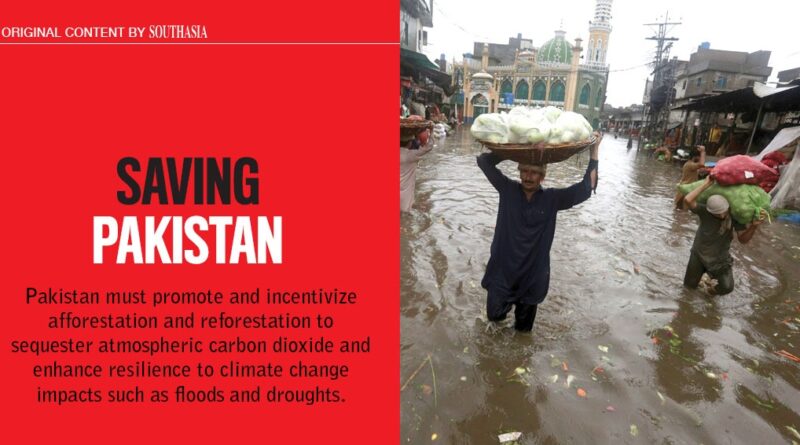
Pakistan must promote and incentivize afforestation and reforestation to sequester atmospheric carbon dioxide and enhance resilience to climate change impacts such as floods and droughts.
Read more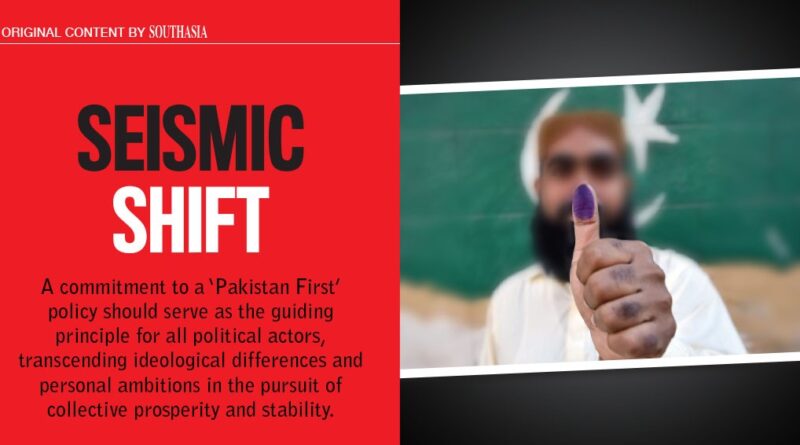
A commitment to a ‘Pakistan First’ policy should serve as the guiding principle for all political actors, transcending ideological differences and personal ambitions in the pursuit of collective prosperity and stability.
Read more