



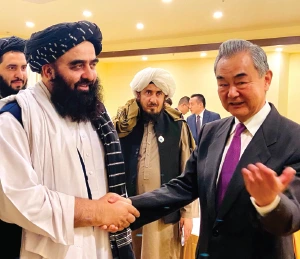
 On January 30th, Chinese President Xi Jinping formally accepted the letter of credence from Maulvi Asadullah, also known as Bilal Karimi, as the ambassador of Afghanistan to China. The move is largely seen as a de-facto recognition of the Taliban government. This development highlights the shifting geopolitical landscape and China’s willingness to engage with the Taliban.
The Taliban has been largely isolated internationally since seizing power, primarily due to its oppressive policies towards women’s rights and freedoms. The subsequent sanctions imposed by the West have had a devastating impact on Afghanistan’s economy. By extending recognition, Beijing has helped the Taliban break through its diplomatic isolation, a move that may pave the way for other countries to follow suit and potentially alleviate the country’s economic woes. The stance of the West, particularly through sanctions, has devastated aid-dependent Afghanistan, leading to rampant unemployment and starvation. According to international agencies, 23.7 million people will require humanitarian aid in 2024, with 13 million facing extreme food insecurity—a number expected to rise to 15.8 million in the months to come. The Taliban’s takeover has also led to a 35% drop in Afghanistan’s GDP, resulting in over 900,000 job losses since 2021. Amidst these crises, the Taliban has found a crucial partner in China.
China’s acceptance of the Taliban’s ambassador marks a significant diplomatic breakthrough, building on its investments and projects in Afghanistan since the US withdrawal in 2021. The collapse of the Western-backed government and the Taliban’s subsequent return to power created an opportunity for China to expand its influence in the region. By extending de facto recognition, it is consolidating its presence in Afghanistan, a move likely to have far-reaching implications for the country’s future and the broader geopolitical landscape. However, the question arises as to what has been pushing Beijing towards diplomatic overtures. China’s recognition of the Taliban’s envoy to Beijing is a calculated move driven by historical, geopolitical, security, economic, and strategic interests in Afghanistan.
Historically, the relationship between China and the Taliban dates back to the 1990s. Jiayi Zhou, a researcher at the Stockholm International Peace Research Institute (SIPRI), suggests that Beijing maintained a decades-long relationship with the Taliban as a “natural consequence” of security, among other factors. “The Taliban are not an unknown entity to the Chinese government, which reached out to them when they were a pariah government in the late 1990s and continued to maintain a working relationship with the Taliban as an insurgency group,” she told Al Jazeera.


The writer is a freelance journalist. He can be reached at alihassanb.34@gmail.com
Leave a Reply