
International ‐ Tehran
War or No War?
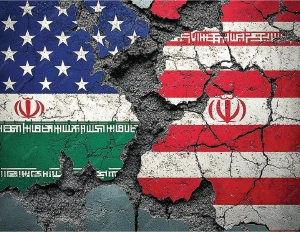
Both Iran and the United States seem to recognize a sobering truth: an all-out war would not resolve their rivalry
Will the United States launch a military attack on Iran, or is the threat primarily a tool of deterrence and diplomacy? How do sanctions, covert actions, cyber operations, and backchannel negotiations fit into the broader escalation ladder? In a word, will the U.S. attack Iran?
I have been asked the aforementioned questions often enough in recent weeks that I have begun to suspect it is more a psychological test than a prediction. The images are dramatic: carrier strike groups repositioned, F-35s redeployed, presidential warnings that “time is running out.” The choreography suggests inevitability. And yet, the closer one looks, the less inevitable war appears.
The more interesting question is not whether the United States can attack Iran. It plainly can. The question is whether it will, and what this elaborate performance of preparation is meant to achieve.
For over a month, Washington has steadily expanded its military footprint in the region. Carrier groups have been moved towards the Gulf. Additional aircraft now sit within operational range. Analysts speak gravely about capability. Israeli officials, especially Prime Minister Benjamin Netanyahu, have made little secret of their preference: a decisive American strike that would cripple Iran’s nuclear and missile infrastructure and, not incidentally, strengthen Netanyahu’s political standing ahead of elections. One need not be especially cynical to notice the timing.
Yet capability is not strategy. And spectacle is not commitment.
Behind the scenes, the constraints are more revealing than the deployments. U.S. officials concede that a sustained offensive would require more assets, broader regional backing, and clearer objectives than currently exist. One carrier group is not an armada, whatever the rhetoric may imply. A second could be deployed - but only at logistical and operational cost. Weeks of strikes would demand air defenses, basing permissions, and a coalition that is conspicuously absent. Gulf states hosting American forces - hardly sympathetic to Tehran - have made clear they do not wish to be drawn into a regional conflagration. They understand that their own infrastructure would be first in line for retaliation.
Seen in this light, the escalation ladder becomes clearer.
Sanctions occupy their lower rungs. Presented as calibrated instruments, they have, in practice, functioned as tools of a prolonged economic siege. Since Washington’s unilateral withdrawal from the nuclear agreement in 2018, Iran’s economy has faced tightening restrictions, with Europe largely following Washington’s lead. The pressure did not produce political capitulation. It produced social strain - runaway inflation, currency depreciation, and mounting public frustration.
It was against this backdrop that protests erupted earlier this year, initially triggered by inflation and broader economic grievance. The state’s response was heavy-handed: internet access restricted, security forces deployed forcefully, casualties mounting. A more restrained approach might have eased tensions; instead, the crackdown deepened public anger and intensified international scrutiny.
What merits closer examination, however, is how swiftly the unrest was incorporated into Washington’s strategic narrative. American officials expressed solidarity and urged demonstrators to persist. Hints suggested that “help is on the way.” The implication was unmistakable: protests could become prelude to systemic collapse, and outside pressure might hasten it.
Above sanctions lie covert actions and cyber operations - tools that exist in the gray zone between pressure and open conflict. Assassinations, sabotage, and digital intrusions have been used in recent years to slow Iran’s nuclear progress and signal resolve. They disrupt and delay. They buy time. They rarely settle outcomes.
Military force sits at the top of the ladder - the most visible and combustible option. It is also the least predictable.
Iran is often described as fragile. Economically, it is strained. Politically, it faces genuine dissent. The state’s response to the protest was severe; it might have chosen a less coercive course and avoided deepening internal grievances. But fragility does not equal military impotence. Iran retains long-range ballistic and cruise missiles, along with a substantial drone arsenal - many inexpensive, mobile, and difficult to neutralize entirely. It need not win a conventional war to alter Washington’s calculus. It would only need to impose costs: damage to Gulf infrastructure, disruption of the Strait of Hormuz, or the death of even a handful of American service members. In a region through which roughly a fifth of the world’s oil flows, escalation would not remain contained.
Here lies the central irony.
The same White House that publicly insists on eliminating Iran’s nuclear future has quietly resumed direct talks. Senior military officials have attended negotiations in Oman. The rhetoric has softened - from promises of a “swift and violent response” to assurances that there is “no rush.” The clock that was once “running out” appears to have been reset. Threat and dialogue now proceed in parallel, each reinforcing the other.
This is not incoherence. It is bargaining.
The United States wields the credible threat of force to shape negotiations, while carefully avoiding the steps that would make force unavoidable. Iran, for its part, seeks sanctions relief without surrendering core capabilities - uranium enrichment, missile development, and regional partnerships it regards as deterrents. Both sides recognize the risks of miscalculation. Both test limits. Neither appears eager for full-scale war.
Israel’s posture complicates the equation. Netanyahu has long pressed for maximalist outcomes: the complete dismantling of Iran’s nuclear and missile programs. Israel would likely support, and perhaps participate in, American strikes. Yet Israel’s own conduct - particularly in Gaza and the West Bank - renders its appeals to international law selective. Settlements deemed illegal continue to expand. Palestinian civilians are killed with troubling regularity, often without consequence. The moral urgency invoked in relation to Iran sits uneasily beside this record. One can oppose nuclear proliferation without assuming that enforcement is guided by a consistent principle.
The United States, too, projects certainty abroad while growing more comfortable with expansive authority at home. Protest is increasingly securitized. Federal power is asserted broadly. The language of threat migrates easily. Lectures on democratic restraint ring hollow when democratic restraint appears negotiable.
For all the bluster, a sustained American attack on Iran would be strategically reckless. It would require weeks of strikes against dispersed and hardened facilities. It would likely invite retaliation against U.S. bases in Kuwait, Qatar, and Bahrain. It could disrupt global energy markets and trigger a downturn that would reverberate far beyond the Middle East. It would almost certainly strengthen hardline elements within Iran, narrowing the space for internal reform that sanctions were ostensibly meant to encourage.
Washington also faces credibility challenges. Claims last summer about the total destruction of Iranian nuclear facilities proved overstated; subsequent assessments suggested setbacks measured in months, not years. Overconfidence - particularly when paired with ambiguous objectives - has a troubled history in the region.
Even those in Washington who favor sustained pressure understand this arithmetic. Military options remain “on the table,” but the table is crowded with caveats.
So will the United States attack Iran?
If one listens only to speeches, the answer seems perpetually imminent. If one examines logistics, regional politics, and economic risk, the answer appears far less certain. The pattern suggests that the threat of war functions as leverage within a broader strategy - one combining sanctions, covert disruption, cyber pressure, and backchannel diplomacy to extract concessions without triggering a conflict neither side can control.
War is not impossible. Miscalculation is a perennial companion of brinkmanship. An overconfident White House, an emboldened Israeli leadership, or an unforeseen incident could tip a precarious balance. But war is not the strategy. It is the failure of the strategy.
For now, the escalation ladder appears designed not to be climbed but to be seen. The carriers are signals. The sanctions are pressure points. The negotiations are the real arena.
Beneath the theatrics, both Washington and Tehran seem to recognize a sobering truth: an all-out war would not resolve their rivalry. It would entrench it - at immense cost to everyone else.
Based in Karachi, the writer is a political-economic analyst and can be reached at syzainabbasrizvi@gmail.com


Leave a Reply