



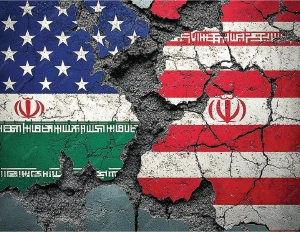
 Will the United States launch a military attack on Iran, or is the threat primarily a tool of deterrence and diplomacy? How do sanctions, covert actions, cyber operations, and backchannel negotiations fit into the broader escalation ladder? In a word, will the U.S. attack Iran?
I have been asked the aforementioned questions often enough in recent weeks that I have begun to suspect it is more a psychological test than a prediction. The images are dramatic: carrier strike groups repositioned, F-35s redeployed, presidential warnings that “time is running out.” The choreography suggests inevitability. And yet, the closer one looks, the less inevitable war appears.
The more interesting question is not whether the United States can attack Iran. It plainly can. The question is whether it will, and what this elaborate performance of preparation is meant to achieve.
For over a month, Washington has steadily expanded its military footprint in the region. Carrier groups have been moved towards the Gulf. Additional aircraft now sit within operational range. Analysts speak gravely about capability. Israeli officials, especially Prime Minister Benjamin Netanyahu, have made little secret of their preference: a decisive American strike that would cripple Iran’s nuclear and missile infrastructure and, not incidentally, strengthen Netanyahu’s political standing ahead of elections. One need not be especially cynical to notice the timing.
Yet capability is not strategy. And spectacle is not commitment.
Behind the scenes, the constraints are more revealing than the deployments. U.S. officials concede that a sustained offensive would require more assets, broader regional backing, and clearer objectives than currently exist. One carrier group is not an armada, whatever the rhetoric may imply. A second could be deployed - but only at logistical and operational cost. Weeks of strikes would demand air defenses, basing permissions, and a coalition that is conspicuously absent. Gulf states hosting American forces - hardly sympathetic to Tehran - have made clear they do not wish to be drawn into a regional conflagration. They understand that their own infrastructure would be first in line for retaliation.
Seen in this light, the escalation ladder becomes clearer.
Sanctions occupy their lower rungs. Presented as calibrated instruments, they have, in practice, functioned as tools of a prolonged economic siege. Since Washington’s unilateral withdrawal from the nuclear agreement in 2018, Iran’s economy has faced tightening restrictions, with Europe largely following Washington’s lead. The pressure did not produce political capitulation. It produced social strain - runaway inflation, currency depreciation, and mounting public frustration.
It was against this backdrop that protests erupted earlier this year, initially triggered by inflation and broader economic grievance. The state’s response was heavy-handed: internet access restricted, security forces deployed forcefully, casualties mounting. A more restrained approach might have eased tensions; instead, the crackdown deepened public anger and intensified international scrutiny.


Based in Karachi, the writer is a political-economic analyst and can be reached at syzainabbasrizvi@gmail.com
Leave a Reply