


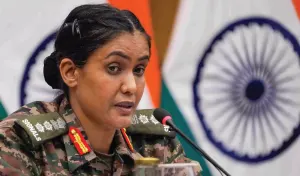
 On May 13, 2025, just three days after a U.S.-brokered ceasefire between Pakistan and India came into effect, BJP minister Vijay Shah ignited another political firestorm. Referring to Colonel Sofia Qureshi - a decorated Indian Army officer who led public briefings during the recent conflict - Shah called her a “sister from the terrorists’ community.”
It wasn’t a slip of the tongue or a poor choice of words. Shah said it deliberately, fully intending it as an insult. While praising the Indian response to the Pahalgam attack during a public event in Ambedkar Nagar, he said, “Those who widowed our daughters, we sent a sister of their own (Col. Sofia Qureshi) to teach them a lesson.”
The insinuation was clear and deliberate - an effort to cast doubt on Qureshi’s patriotism based on her Muslim identity.
The backlash against Shah’s comments was intense and immediate. Opposition parties staged state-wide protests. Shah’s nameplate outside his official residence was defaced. However, the BJP, familiar with such controversies, neither apologized nor disciplined the minister.
What makes this incident particularly troubling is not only the targeting of a senior military officer, but also how sectarianism and communal rhetoric are becoming routine at the highest levels of the Indian government. Contrary to the BJP’s claims, this is not an isolated incident. From terms like “love jihad” to Modi’s past references to Muslims as “infiltrators,” the ruling party has repeatedly used anti-Muslim rhetoric as a strategy to strengthen its political support base.
The deeper tragedy, however, is not just the BJP’s anti-Muslim rhetoric, but the Opposition’s failure – or refusal - to offer a strong and effective response.
Colonel Qureshi’s case momentarily put the BJP on the defensive. But if the past is any indication, the controversy will eventually fade, and the minister will stay in his position. Opposition outrage tends to be short-lived, reactive, and ultimately inconsequential. This isn’t just about political miscalculation—it’s about an underlying crisis of conviction.
In today’s India, opposing anti-Muslim rhetoric has become politically perilous. So thoroughly has the BJP fused Hindu identity with Indian nationalism that defending minority rights is seen as a betrayal. This has left opposition parties in a strategic bind. They can no longer criticize communal politics without being branded “anti-Hindu.” Unfortunately, they often choose to remain silent.
The Indian National Congress, once seen as a champion of secularism, now moves carefully and hesitantly. Its leaders seldom speak out in defence of minorities for fear of being labelled as appeasers. This fear has given rise to a politics of symbolism. Rahul Gandhi’s temple visits and Arvind Kejriwal’s televised Hanuman Chalisa recitations are all token gestures meant to avoid being left out of the Hindutva bandwagon.


The writer, based in Karachi, is a freelance contributor and investment banker. He can be reached at syedatifshamim@hotmail.com.
Leave a Reply