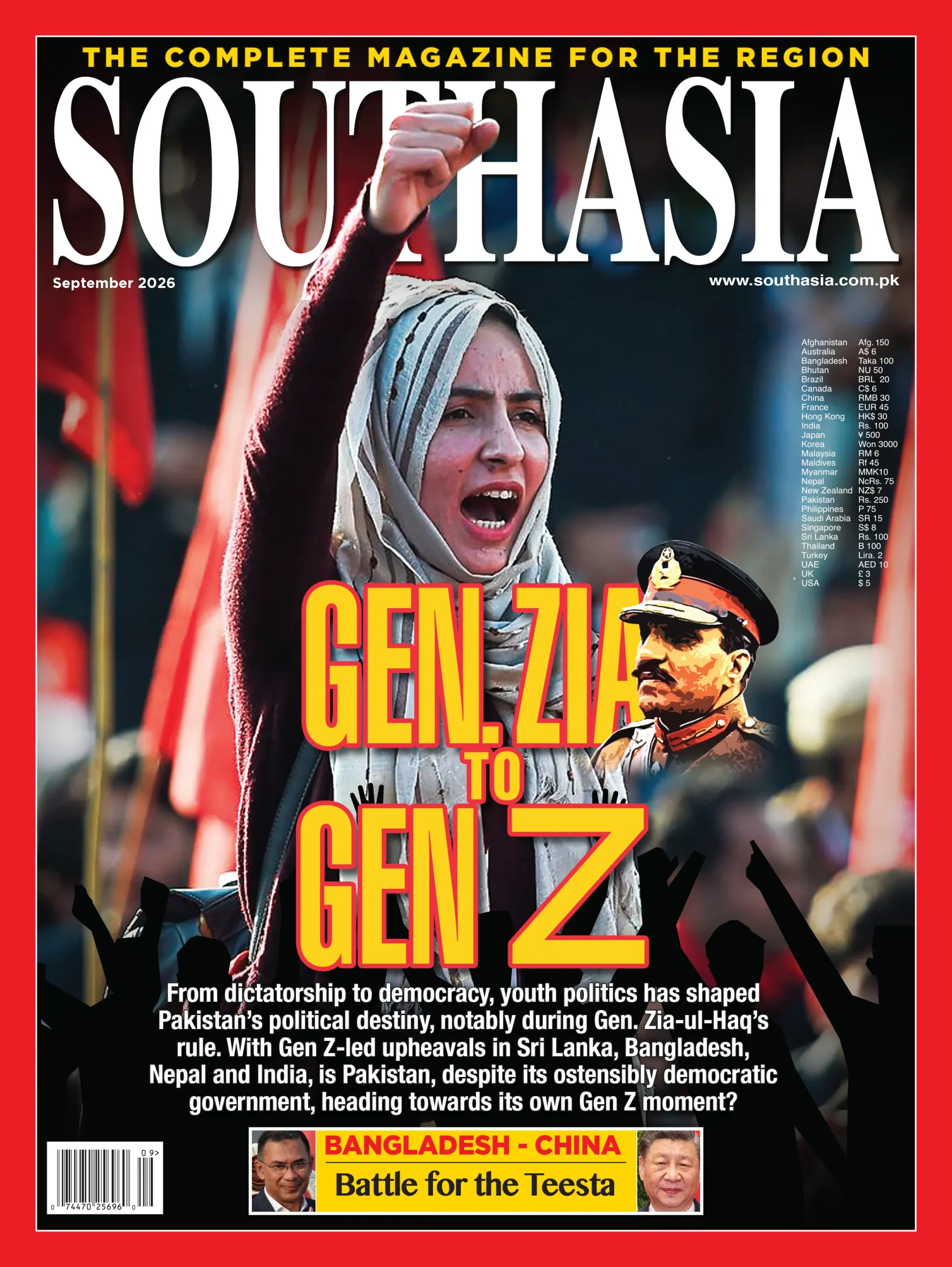



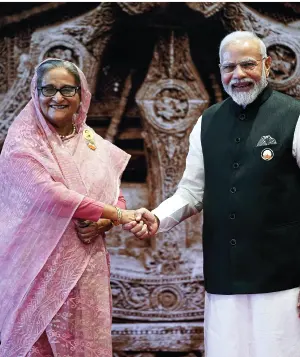
 The student-led uprising in Bangladesh—initially aimed at job quota reforms—quickly escalated into a nationwide movement demanding Prime Minister Sheikh Hasina’s resignation. On August 5, 2024, she fled to India, prompting the Army Chief, General Waker-Uz-Zaman, to announce the formation of an interim government. Three days later, Professor Muhammad Yunus was appointed Chief Adviser. Since then, the new leadership has gradually distanced itself from India, signaling a shift in Bangladesh’s domestic politics and regional posture. Even close observers of the student protests were surprised by the sudden collapse of Hasina’s rule.
The Indian leadership was genuinely stunned by this political upheaval, which also triggered public expressions of anti-India sentiment. Just two months earlier, in June 2024, Sheikh Hasina had been received in India on a state visit. The two countries signed 10 Memoranda of Understanding (MoUs), including new agreements on digital cooperation, green initiatives, the blue economy, and the opening of a new Indian consulate in Rangpur. Hasina’s administration had offered India significant space in domestic politics and diplomatic alignment. The interim government’s engagement with Pakistan and a more assertive partnership with China now signal a potential foreign policy realignment. Pakistan, in particular, has welcomed the opportunity to move beyond the acrimony of the 1971 war.
India’s historically close relationship with Bangladesh is clearly under strain. Indian policymakers are unsure how to regain the extensive influence they enjoyed under Hasina. Has India lost all leverage, or can it salvage some influence due to geographic proximity and interdependent strategic interests? To what extent will the new leadership in Bangladesh alter South Asia’s geopolitical landscape? Will India move beyond the 2024 political shock, and will Pakistan transcend the burden of 1971? These are questions deserving of serious inquiry.
Chief Adviser Yunus has already interacted with key leaders, including Pakistan’s Prime Minister (twice), U.S. President Donald Trump, Indian Prime Minister Narendra Modi, and Chinese President Xi Jinping. India appears uneasy about Yunus’s visit to China and his outreach to Pakistan, particularly given the subsequent spate of high-level bilateral exchanges.
Since Hasina’s ouster, Yunus has tried to ease strained ties, including a brief meeting with Modi on April 4, 2025, in Bangkok. He discussed Hasina’s extradition, border security cooperation, and water-sharing agreements on the Ganges and Teesta rivers. India raised concerns about minority rights, especially for Hindus, and stressed avoiding inflammatory rhetoric. Bangladeshi officials described the meeting as “constructive and fruitful.” Earlier, in February, Indian Foreign Minister Jaishankar met Bangladeshi Foreign Minister Touhid Hossain at the Indian Ocean Conference in Oman. Dhaka requested that India consider hosting the long-delayed SAARC Standing Committee meeting. That interaction later turned tense. Jaishankar criticized Dhaka for inconsistency in its diplomatic posture. Hossain, in turn, reminded him that India is harboring Hasina, who continues to issue statements damaging bilateral relations.


The writer, based in Rawalpindi, is a former ambassador and can be contacted at mian.sana@gmail.com.
Leave a Reply