



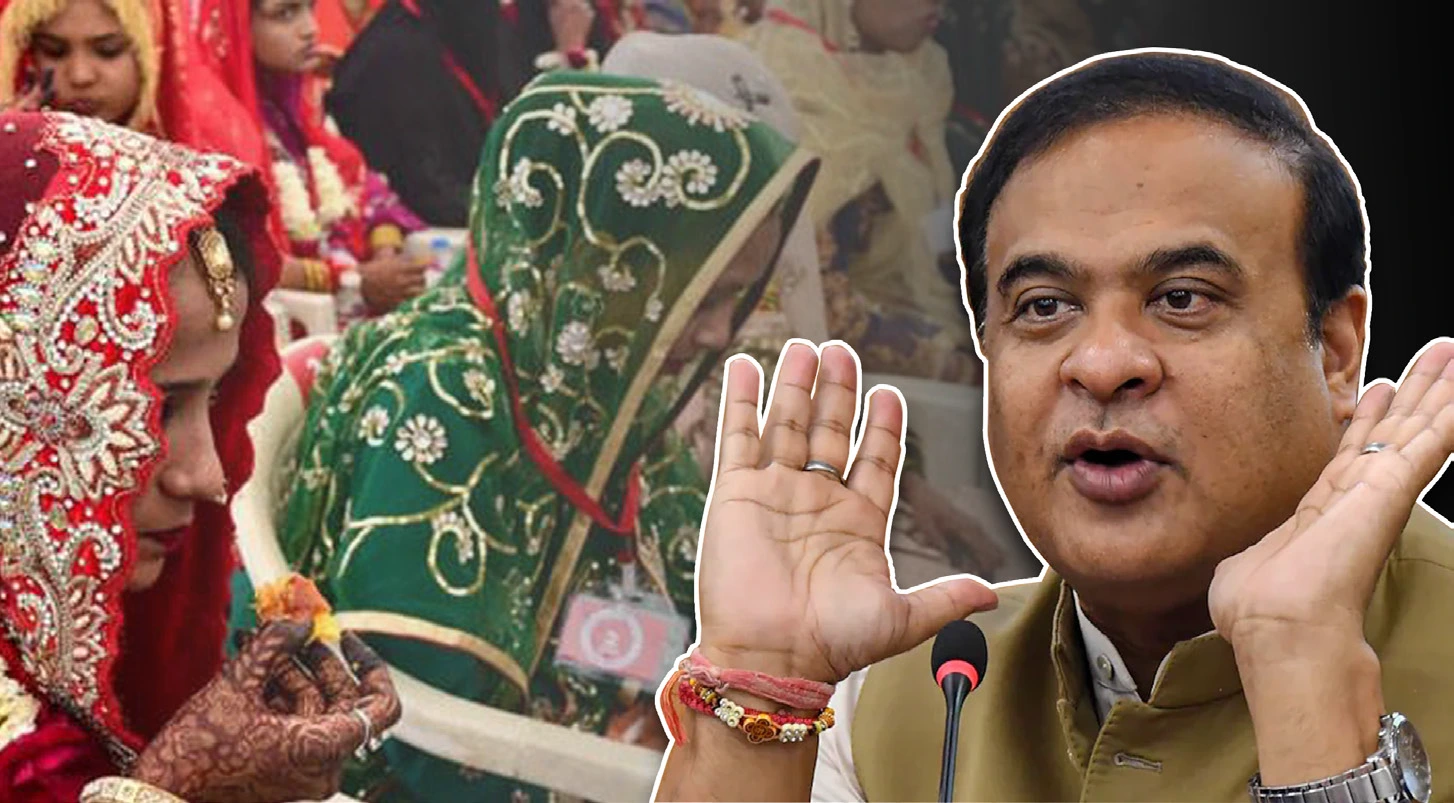
In an unprecedented decision that has sparked controversy and initiated religious polarization, the Indian state of Assam has recently repealed a British-era law governing Muslim marriage and divorce. The community of minority Muslims raised their voices of concern once the Chief Minister of Assam, Himanta Biswa Sarma, announced the decision.
The legislation authorizes the state to issue licenses for the registration of marriages and divorces to individuals identified as “any person, being a Muslim.” Muslim registrars are designated as public servants under this Act, which presents the procedural steps for submitting marriage and divorce applications to the registrar and describes the registration process.
Sarma took to social media to announce the repeal of the Assam Muslim Marriages and Divorces Registration Act, a law that was enacted nearly ninety years ago. According to Sarma, the repealed act had provisions allowing marriage registration even if the individuals involved had not reached the legal ages of 18 and 21, as mandated by the current law. Sarma added that this step was taken to prevent curbing child marriages in Assam. However, the Muslims consider this move as a strategy to influence voters based on religious proximity ahead of the national elections.
The legislation passed and implemented in 1935 recognized legal procedures aligned with Muslim personal law. An amendment was made to make the registration of Muslim marriages and divorces mandatory in the state, as opposed to being voluntary before. Authorities in Assam, governed by Prime Minister Narendra Modi’s Bharatiya Janata Party (BJP), deemed the law outdated and alleged to have been facilitating child marriages.
Legal expert Advocate Nekibur Zaman, a member of a committee appointed by the state government to assess the legitimacy of a polygamy prohibition law, underlined that the regulation principally controls nikah (marriage) and talaq (divorce) within the state. He pointed out that the approved figure for these matters is a government-registered kazi. Zaman asserted that many kazis abuse their authority, sometimes facilitating the marriage of minors and groundless divorces. He also labelled the existing law as “outdated.”


The author is a novelist and science fiction writer. He has a special interest in the social and political affairs of South Asia. He can be reached at omariftikhar82@gmail.com
Leave a Reply