



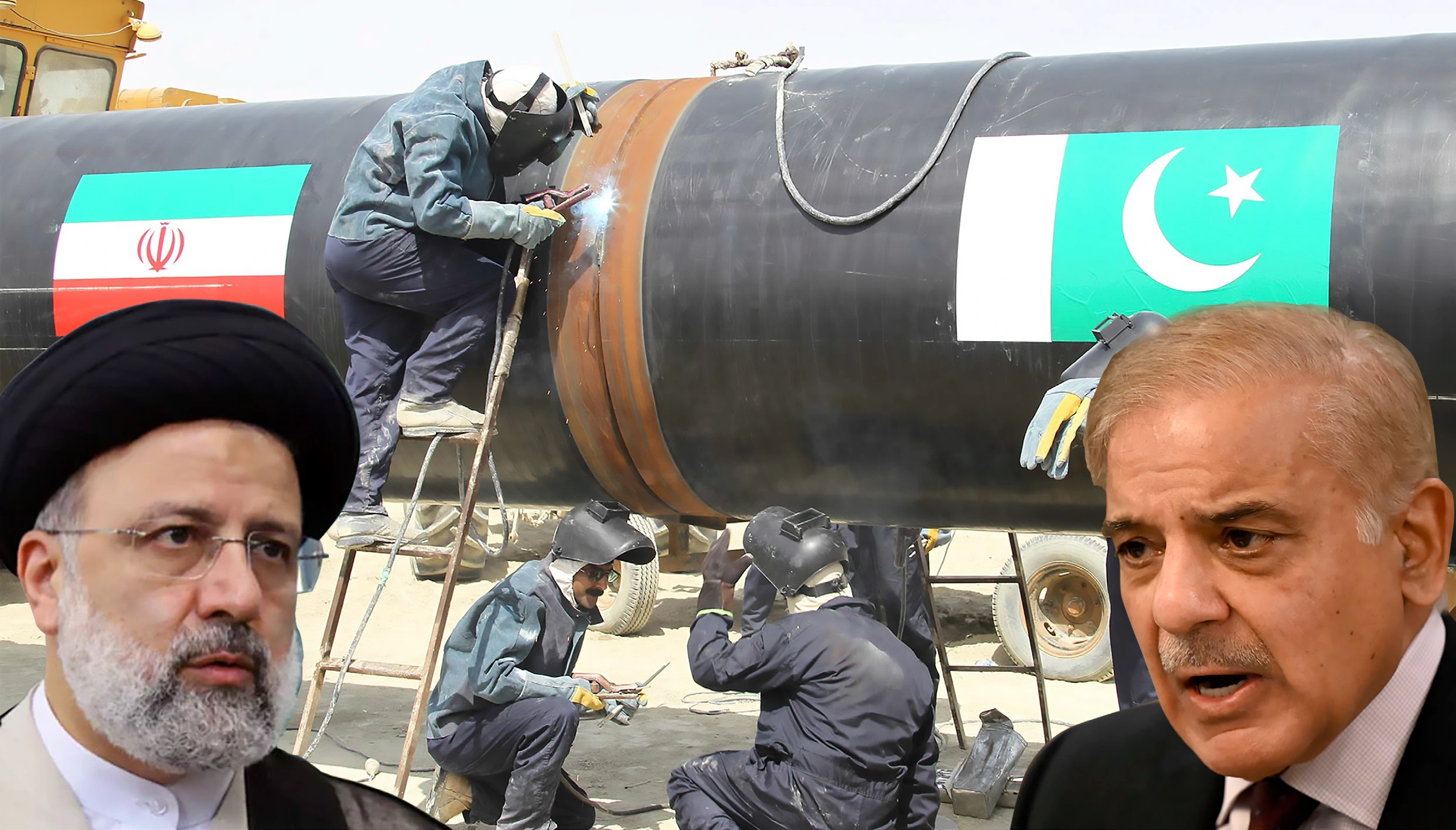
According to the Global Energy Monitor, the Iran-Pakistan (IP) gas pipeline, also known as the Peace Pipeline, emerged from a plan dating as far back as 1994, and the deal was signed between Pakistan and Iran in 2009. The project would bring gas from the South Pars Gas Fields through Balochistan to Nawabshah in Sindh province, where it will be connected to Pakistan’s Sui Southern network.
The IP gas pipeline with a 42-inch diameter is expected to provide 750 million cubic feet of gas per day to Pakistan for the next 25 years, facing a severe energy crisis and relying heavily on imported Liquefied Natural Gas (LNG). The project is also seen as a symbol of friendship and cooperation between the two neighboring countries.
The pipeline’s construction was planned to begin in 2012 and be completed by 2014. Accordingly, the project’s groundbreaking ceremony was jointly conducted by Pakistan’s then-President Asif Ali Zardari and then-Iranian President Mahmoud Ahmadinejad near Iran’s port city of Chahbahar in March 2013.
While Iran has already completed its part of the pipeline, with a length of 1100 kilometers, Pakistan has not yet started the construction of its 780-kilometer section, as the project has stalled a few times due to the risk of US sanctions on Iran, which is under pressure for its nuclear programme. To ease the pressure of energy shortage, Pakistan has resorted to importing LNG from Qatar and LPG from Russia, but at a much higher cost.
In September 2019, the Interstate Gas Systems (ISGS) of Pakistan and the National Iranian Gas Company (NIGC) signed a new agreement based on which Pakistan would be expected to construct its part of the project by February-March 2024, failing which it will be required to pay a hefty penalty of US$18 billion to Iran.
However, in August 2023, Minister of State for Petroleum Musadik Malik informed the National Assembly that Pakistan had suspended the completion of the pipeline until international sanctions on Iran were lifted and stated that the Government of Pakistan was engaged with the US authorities through diplomatic channels, to seek exemption for the project.
As per the Pipeline Technology Journal (PTJ) on 23 February 2024, the caretaker federal cabinet energy committee in Pakistan approved the construction of an 80 km section of the pipeline within Pakistan, extending, from the Iranian border to Gwadar, called Phase 1 of the project, possibly to avoid a potential 20 billion USD penalty. The project, expected to cost roughly $158 million, will be carried out by the private company Interstate Gas Systems, and funded by the Gas Infrastructure Development Cess.
The remaining part of the pipeline from Gwadar to Nawabshah will be constructed subsequently, for which Pakistan is looking at the Petronas of Malaysia and Gazprom of Russia as major international investors, and the governments of Sindh and Balochistan, Pak Petroleum, Oil and Gas Development Company, Sui Northern Gas Pipelines, among others, as domestic investors.
The construction of the IP pipeline is significant economically and strategically for Pakistan. Economically, it is very much a necessity for Pakistan to ease the pressure of using unaffordable high-price LNG and LPG and also to boost its industrial development with a cheaper fuel that will enable the industry to produce goods at a competitive price to substantially increase its exports and meeting its domestic demand of industrial goods.
If India, China, and Bangladesh decide to join this project later, then Pakistan can earn transit fees of about $1.8 billion annually. The pipeline construction will also help develop Pakistan’s Balochistan and Sindh and create more job opportunities in both provinces. The pipeline is also believed to enable the generation of 5,000 megawatts of electricity for Pakistan, which would help address electricity load shedding.


The writer is also a former Research Fellow of IPRI and a Senior Research Fellow of SVI Islamabad.
Leave a Reply