


The state of Tamil Nadu lies is at the southern tip of the Indian sub-continent. By area, it is the 10th largest state in India, and the 6th largest by population. It also boasts the 2nd largest state economy with an impressive per capita GDP of USD 3,400.
The state of Tamil Nadu is unique in the sense that it has – for decades - remained unscathed by the electoral machinations of India’s’ two political heavy-weights: the Congress and the BJP. These popular parties have always had very little presence in this southern state.
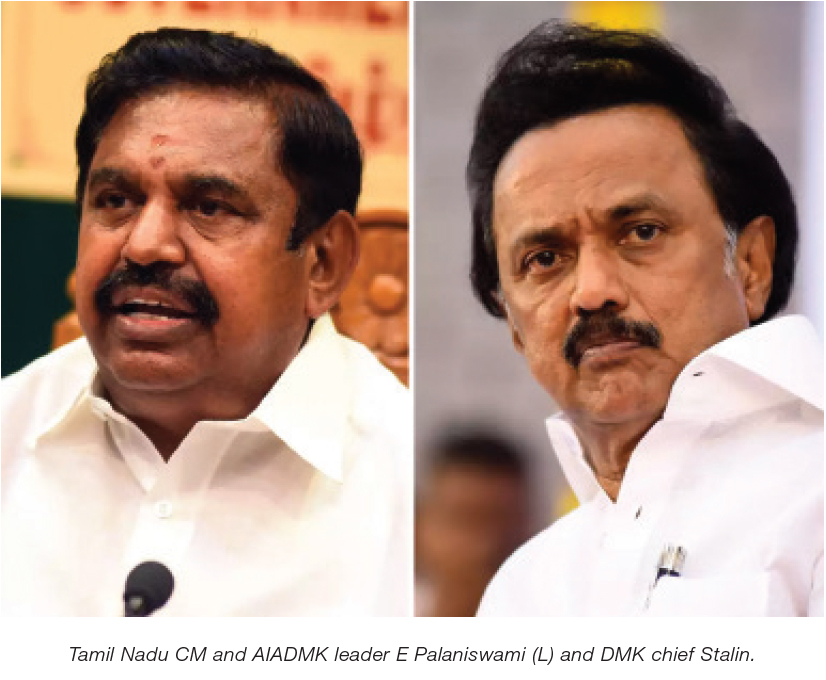
For years, Tamil Nadu has followed its own version of bi-partisan politics with two main parties alternatively ruling the state. These parties are Dravidic Munnetra Kazhagam (DMK) and the All India Anna Dravida Munnetra Kazhagam (AIADMK).
The DMK – currently the opposition party – was founded as a breakaway faction from the Dravida Kazhagam. Since 1969, the DMK was led by a charismatic politician/scholar M. Karunanidhi. After M. Karunanidhi’s demise in 2018, the DMK is currently being led by his son M. K. Stalin.
The All India Anna Dravida Munnetra Kazhagam (AIADMK) is a breakaway faction of the DMK which was founded in 1972. Since 1989, the AIADMK was led by J. Jayalalithaa who was extremely popular with the Tamil populace. After J. Jayalalithaa’s death in 2016, Ottakarathevar Panneerselvam took the reins of the party.
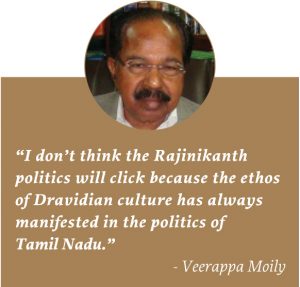
The deaths of these two towering politicians not only left a void in Tamil politics, but also exposed the dynastic character of the two major parties in the state. This is one of the reasons why film star Rajinikanth is getting unprecedented support from the general public. Evidently, the people of Tamil Nadu are looking for a leader beyond the remnants of the Jayalalithaa-Karunanidhi duo.
 Dalits constitute around 20% of the state’s population. They mostly vote for the entrenched political parties like DMK and AIADMK. However, a smaller number of Dalit voters choose to vote for caste-based political entities, to represent them in the assembly. Dalits are also represented – to a lesser extent – in the state’s mainstream political parties which are controlled and led by men and women from the Other Backward Class (OBC).

The writer is a freelancer and an investment banker based in Karachi. He can be reached at syedatifshamim@hotmail.com |
|
Cover Story
|
|
News Buzz
|
Update |
Leave a Reply