
Region
Backtracking on Democracy
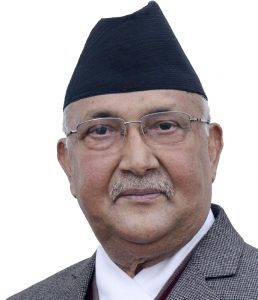
Nepalese Prime Minister K P Sharma Oli has displayed a willingness to prioritize his quest for power over Nepal’s democratic wellbeing.
![]()
Nepalese Prime Minister K P Sharma Oli's recommendation to dissolve the lower house of parliament and its swift acceptance by the president have plunged the landlocked nation into a constitutional crisis. If history is to serve as a gauge, rampant political instability in the nascent democracy was the order of the day before the 2015 constitution came into force. While the long years of civil warfare and a chequered transition to a federal democratic state are a distant memory, the dissolution of the House of Representatives may steer the country towards deeper malaise.
The move is believed to be an outcome of a factional disagreement within the ruling Nepal Communist Party (NCP) over the withdrawal of an ordinance to alter the Constitutional Council Act. The issue steadily morphed into a crisis of leadership within the party, which is a coalition of Maoist and Marxist-Leninist groups led by the prime minister. As the NCP became a breeding ground for conflict, Oli stood the danger of being expelled as party chief and premier. If credible reports are anything to go by, the dissolution came at the cusp of a Standing Committee meeting wherein an investigation was going to be ordered against graft allegations levelled against him. These accusations have been made by Oli’s party co-chairperson Pushpa Kamal Dahal Prachanda.
In addition, Oli faced criticism from his detractors who mounted a legal challenge against his decision to prematurely hold elections. Fuelled by the lack of cooperation within his own party and the opposition’s repeated attempts to drag his government into controversies, Oli decided to seek a fresh mandate.
In his address to the nation, Nepal’s premier denied that the dissolution was an abrupt move. On the contrary, Oli billed his decision as a sincere attempt to pursue a democratic alternative and avoid “unfair practices behind closed doors” to strike a compromise with the opposition. Even so, it is difficult to find a silver lining amid these developments. Insiders have asserted that Oli’s recommendation came as a surprise as he already agreed to withdraw the contentious ordinance that would allow the PM to make important appointments. As a result, the Nepalese premier’s rationale for the dissolution appears wholly unjustifiable. It is, therefore, difficult to view the dissolution of the lower house of parliament as anything other than an attempt by Oli to retain power and combat his growing unpopularity.
Since Oli’s suggestion was inexplicably approved by Nepal’s president Bidhya Devi Bhandari, a vast number of petitions have been filed in the apex court against the “constitutional coup”. Ministers have also resigned from their posts and factions within the ruling coalition and have approached the election commission.
By summarily dismantling the popular mandate, Oli has tampered with the fabric of the country’s national politics.
The fate of the 2015 constitution also appears uncertain. The legal document, which emphasizes secular values and federal ideals, contains specific provisions against the dissolution of the lower house. Leading constitutional lawyers are of the view that an alternative government needs to be put in place before the House of Representatives can be dissolved. Protests have erupted over the blatant infringement of constitutional ideals.
At this critical juncture, the move ought to be condemned as a deliberate attempt to weaken the roots of a federal democratic state. Nepal has been embroiled in a tedious process of state restructuring and requires political stability to stave off any possibilities of systemic collapse.
An editorial comment published in The Hindu, titled ‘Nepal in turmoil: On dissolution of Parliament by K.P. Sharma Oli’ - has criticized Oli’s willingness to prioritize his quest for power over Nepal’s democratic wellbeing. As per the editorial comment, the 2017 victory of the Oli-led Communist Party of Nepal (UML) had sparked hope of a smooth transition to a republican democracy. When the CPN-UML joined hands with the Communist Party of Nepal (Maoist Centre), the resulting NCP forum had the golden opportunity to “steer the fledgling democracy out of its many crises”.
The Hindu has placed the blame for the failures in achieving these goals on Oli’s “authoritarian impulses and refusal to share power with the Maoist faction”. By summarily dismantling the popular mandate, Oli has tampered with the fabric of the country’s national politics. The NCP was predicated on a sense of unity among left-wing factions. It is difficult to envisage whether the individual factions within the coalition will be able to escape the surging hostilities surrounding Oli’s ill-conceived decision. Furthermore, the dissolution is poorly timed as the country is grappling with the economic implications associated with the coronavirus pandemic.
In the absence of a full-fledged parliament, Oli has the authority to rule the country without any checks and balances. Elections are likely to be held between April and May. Till then, the premier will need to reckon with embittered protesters who aren’t satisfied with his governance tactics. He is unlikely to find favour with the Nepal Army, which has agreed to remain neutral during the crisis. Under these circumstances, the prime minister will need to tread with caution and find new ways to restore his public image among his new detractors. ![]()
The writer is a journalist and author. He analyses international issues and can be reached at tahakehar2@gmail.com |
|
Cover Story
|
|
News Buzz
|
Update |


Leave a Reply