

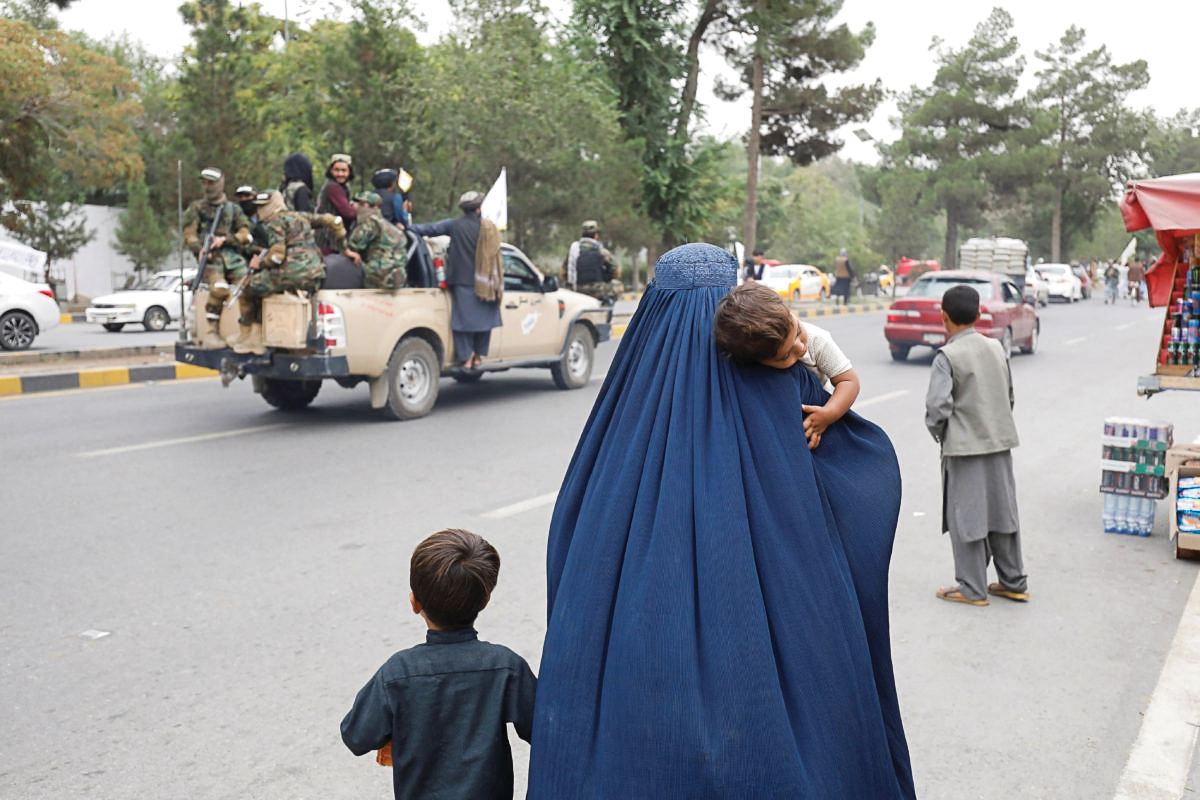
Kabul
Unity, Rivalry, and Consequences
For a long time to come, Afghanistan, a geopolitical arena in which internal stability is shaped by external strategic competition, would remain on the edge

Since the Taliban returned to power in Afghanistan four years ago, the central question has not been whether they can hold Kabul, but whether they can govern Afghanistan as a functioning state. The walkover into Kabul was made easy by the sudden collapse of Afghanistan’s military, yet controlling the country and forming a workable government proved far more difficult. Internal differences soon surfaced as factions struggled over key ministerial positions and provincial governorships. The main contest emerged between the Haqqani Network, which had led much of the insurgency against US and NATO forces, and the Kandahar-based clerical leadership led by Mullah Hibatullah.
The head of the Haqqani Network, Sirajuddin, considered himself second only to Mullah Hibatullah and expected to be rewarded for his wartime services with the post of prime minister and suitable positions for his commanders in the new set-up. It was apprehended that the country may slip into a new phase of instability and lawlessness.
Though the rift persisted, the ideologues based in Kandahar persuaded Sirajuddin Haqqani to join the new government as home minister, with the additional, glorified status of one of the three key deputy Amirs to Mullah Hibatullah. Against expectations, public knowledge of their internal differences emboldened other terrorist and militant groups operating in Afghanistan, which exploited tribal rivalries and used Afghan soil for terrorism across the borders in neighboring countries, especially in Pakistan. The newly formed government either could not control them or did not discourage them, though they had promised in the Doha Agreement that no one would be allowed to use Afghan territory against any country.
The neighboring countries suffered a heightened sense of insecurity and a sharp rise in terrorist activities. It was no longer only Pakistan, albeit still the main target, but also included Tajikistan, Russia, and China. The Kandahari clerical establishment, guardians of the movement’s ideological core, remained unconcerned and ignored the pragmatic counsel of the Kabul regime, especially that of Sirajuddin Haqqani. Apart from raising serious concerns bilaterally as well as at regional forums, these countries issued press statements urging the Taliban government to end the use of its territory against other countries. Nothing seemed to have worked.
With internal differences now spilling into the public domain in the form of leaked videos and denials, the formidable command of the Taliban has eroded. The non-Pashtun armed groups like the National Resistance Front (NRF) and the Afghanistan Freedom Front (AFF) have felt emboldened to step up attacks on Taliban targets in the provinces of Kunduz, Panjshir, Baghlan, Faryab, Badakhshan, Herat, and even in Kabul. Daesh, al-Qaeda, TTP, BLA, ETIM, IMU, and other such groups are likely to flourish if tensions start affecting the tribal makeup and their self-conceived financial share in new taxes and mineral resources.
Unfortunately, as per media reports, the chasm continues widening. In October last year, Sirajuddin and Hibatullah met in Kandahar to resolve the differences. Apparently, the bitterness increased. Haqqani was ridiculed by Hibatullah as an agent of Pakistan and the US for pursuing international commitments, lifting the ban on girls’ education, and restoring the Haqqanis’ share in the government.
Pakistan should review its position on how Afghanistan builds its connections within the region and beyond
Different views persist as to whether the differences were amicably resolved and whether the internal tension has abated. Some analysts regard them as normal for a government facing enormous challenges that has never claimed to be a monolithic group. Its military wing against the US forces, the Haqqanis, was a treaty partner with a distinctive identity, not originally part of the Taliban.
Of course, the well-wishers of the Taliban downplay the rift, but the central issue remains how it would impact Afghanistan’s relations with its neighbors that supported the Taliban’s struggle to return to power. It is none of their concern whether the Haqqani Network gets real power or whether its differences are merely political and administrative.
For the present, it appears that Sirajuddin cannot resign, as he stands little chance against hardliners led by the Kandahari group. His resignation would harm his tribe more than Hibatullah, whose priority is a Sharia- and rawaj-based puritanical society in Afghanistan.
Currently, the Kandaharis hold complete control over Kabul and the provinces. The Haqqanis, supported by moderate leaders, can only resist their regressive policies by taking limited pragmatic steps compatible, to some extent, with international and regional realities. Some media reports in the past suggested that the prime minister is irrelevant in political decision-making.
This quagmire can only be understood in the historical context of how the Taliban failed to form normal government structures earlier and now. They do not have the capacity to build classical governance infrastructure even if they wanted to, which is not the case, at least as long as the Kandahari group remains dominant.
Furthermore, one should not forget that Afghanistan’s instability is also a geopolitical issue. For over forty years, the country has been a theater of proxy competition. After the 2021 Taliban takeover, international isolation, sanctions, and frozen central bank assets contributed to financial collapse and diplomatic isolation. Trade patterns show dependence on neighboring powers such as Iran, Pakistan, and China for imports and markets, indicating economic vulnerability to regional politics. Afghanistan, therefore, serves as a geopolitical arena in which internal stability is shaped by external strategic competition.
From another angle, it appears caught in a self-reinforcing loop — weak institutions encouraging foreign intervention, intervention fueling conflict, conflict undermining the economy, and economic fragility preventing institutional consolidation.
However, neighboring countries are not prepared to drop their charges that the Taliban are failing to contain cross-border attacks by groups either tolerated or inadequately controlled, despite denials by the defense minister, Yaqoob, that Afghanistan would never allow the country to be used as a launch pad for attacks on any neighbor. Obviously, such denials are ignored given the rise in attacks along the borders of Tajikistan, Iran, and Pakistan.
For a long time to come, Afghanistan would remain on the edge. Regional or individual recognition may ease the Taliban’s situation. Pakistan should review its position on how Afghanistan builds its connections within the region and beyond.
Afghanistan’s instability is not temporary; it is structural, as a revolutionary movement seeks to operate a state without institutional capacity while managing factional legitimacy and external pressure simultaneously. Countries such as China, Pakistan, Iran, and the Central Asian states face a difficult balancing act: they want stability on their borders but are wary of endorsing extremist governance models outright. For the time being, the Kandahari group is enjoying an unfinished Afghan state.
The writer is a former ambassador and can be contacted at rahimmkarim@gmail.com


Leave a Reply