



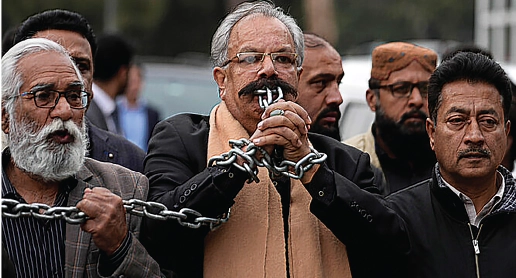
Silence, on one side, is a symbol of inner peace and contemplation, but on the other, it becomes oppressive when imposed. In societies where freedom of expression is lost, silence is no longer a choice; it is imprisonment.
Since its inception, Pakistan has witnessed a consistent pattern of suppressing journalistic freedom. Both military and civilian regimes have used censorship, intimidation, and violence to silence dissenting voices in the media. Journalists were flogged, imprisoned, and heavily censored, with press freedoms virtually suspended. Such silenced minds breed unrest, and a muzzled society loses its identity. True freedom thrives where expression flows freely.
Yes, there were always state-approved journalists who echo state-permitted narratives while posing as independent voices. Though they speak loudly, their words serve power, not the whole truth. Genuine criticism appears to be absent. Such journalists maintain the illusion of a free press while reinforcing censorship and gradually weakening public trust in media and democracy.
But at the same time, we cannot ignore the existence of journalists who receive funding from foreign bodies and promote narratives aligned with external agendas rather than national interests. Their work can subtly influence public opinion, destabilize local discourse, and undermine sovereignty. These journalists often highlight selective human rights or governance issues while ignoring broader realities, thus serving as tools of soft power.
The real question is, “How long can Pakistan’s genuine journalists survive the silence?” This seemingly simple question demands exploration from multiple angles; far too many to cover in just a few hundred words. Still, let’s attempt to unpack some of them.
Firstly, this pattern of controlling information, suppressing voices, and financing compliant journalists is not unique to Pakistan. Even Western nations that present themselves as champions of democracy face growing concerns over the erosion of free expression. Political polarization in the United States has fuelled heated censorship debates across university campuses and social media platforms. In the United Kingdom, laws targeting “hate speech” often blur the line between harmful rhetoric and legitimate opinion. France has drawn criticism for restricting certain religious expressions in the name of secularism. Meanwhile, in Canada, legislation like Bill C-11 has sparked fears of government overreach in regulating online content.
The banning of RT (Russia Today) across Western platforms after the Russia-Ukraine war sets a troubling precedent for freedom of expression. While concerns about propaganda are understandable, the outright censorship of an entire media outlet erases alternative narratives and limits public access to diverse perspectives. In the name of countering misinformation, many Western governments and tech companies suppressed Russian viewpoints; often without open debate or legal transparency. This raises critical questions: Who gets to decide what constitutes “truth”? Excluding Russian narratives, however biased, undermines the principle of free speech and exposes a selective commitment to open dialogue in global discourse.


The writer is a Research Assistant at the Centre for International Strategic Studies Sindh (CISSS), Karachi. He can be reached at alihamza@cisss.org.pk
Leave a Reply