



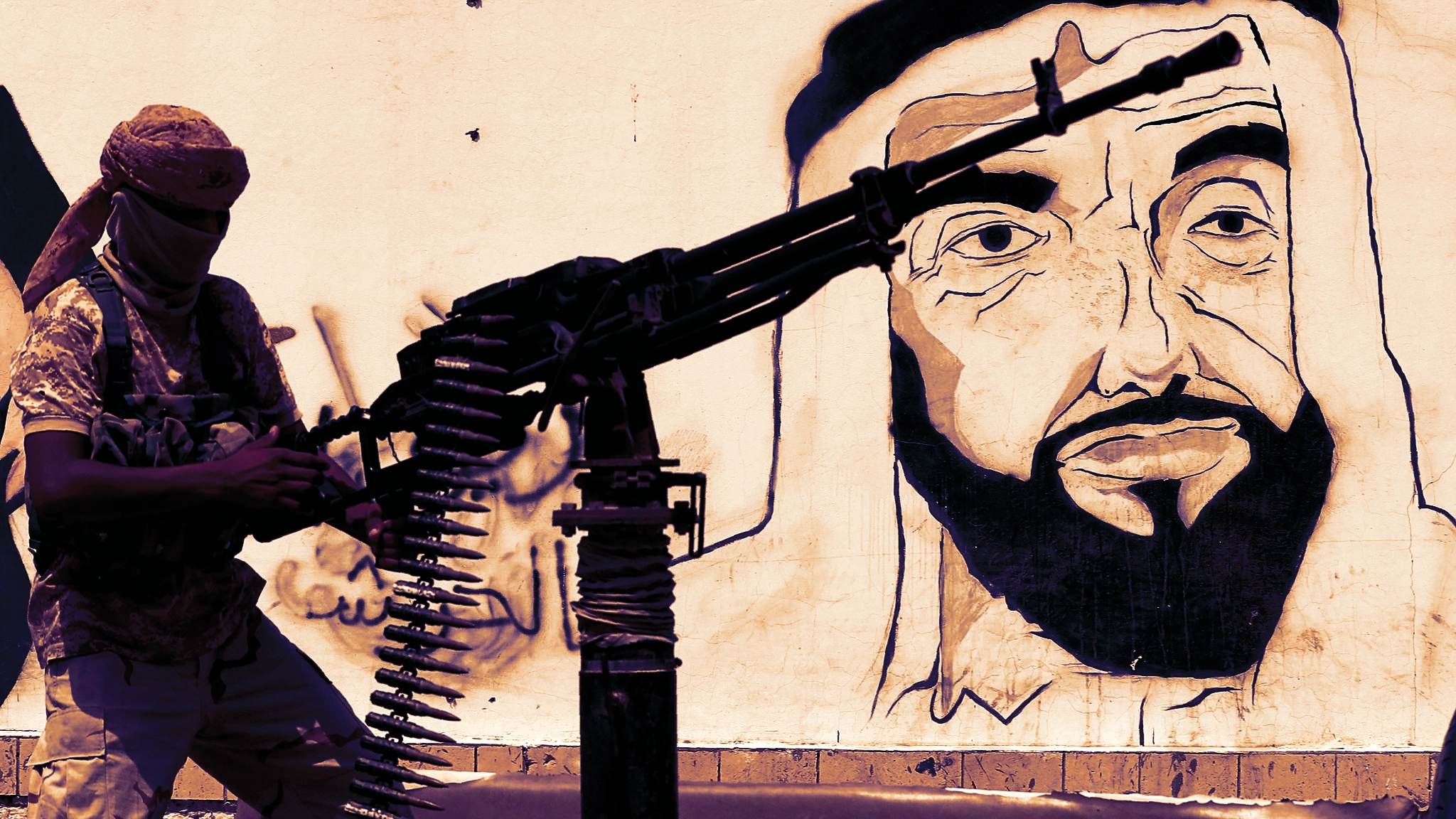
The rift between the two powerful states of the Arab world, the Kingdom of Saudi Arabia, and the United Arab Emirates, has not only overshadowed the Gulf Cooperation Council (GCC), it has overcast the horizon of the Middle East, particularly at a time when the geopolitical and geostrategic dynamics in the region have been changing rapidly with Israel determined to establish its dominance from the Red Sea to the Mediterranean shores, giving a debilitating blow to the defiant Iran. The rift surfaced at a time when the region needed unity, coordinated political and strategic policies to stop the strident Jewish expansionism.
The rift seems more deeply rooted in the growing antipathy between the two rulers, Muhammad Bin Suleman (MBS) and Muhammad Bin Zayed (MBZ), than in any serious geopolitical or geostrategic divergence in the region. This aversion to each other emerged soon after the formation of the Islamic Alliance Force back in 2017, which was hastily assembled to counter the strident advance of the Houthis in the impoverished Yemen.
Hoathis were considered as a proxy militia of Iran and a perennial threat to the Saudi territorial integrity, and the smooth flow of Gulf oil to the world market. This was done during U.S. President Donald Trump’s visit to Riyadh in May 2017, where he used harsh language against Iran.
The main contributor to this force was Egypt. The irony of history would not have been more striking than this. Egypt, under the Arab nationalist leader Abdul Gamal Nasir, had supported the nationalist and leftist leader of South Yemen, Ali Abdullah Saleh, in establishing the People’s Democratic Republic of South Yemen, with its capital in the historic city of Aden.
The impoverished Yemen remained divided between the South and the North for decades, and reunited in May 1990 after the disintegration of the Soviet Union. The Saudi oil export, then and even today, depended heavily (over 80 percent) on the historic Aden Seaport. The kingdom had good political, economic, and trade relations with the British suzerains of South Yemen until 1967. North Yemen was freed from the Ottoman Empire in the early 1900s.
The separatists of the South, at the behest of some Middle Eastern and European powers, raised the banner of rebellion to restore the Southern Democratic Republic. However, the country’s unity prevailed, and the rebellion was countered with the help of the Saudi Kingdom. Later, the Houthi rebellion shook the country’s territorial integrity, posing grave risks to the smooth functioning of seaports and sea lanes serving the outbound oil trade of Gulf countries.
After consulting Iran, Pakistan allowed its former Army chief, General Raheel Sharif, to lead the Islamic Force in terms of organization, training, or non-combative tasks. This was in sync with our longstanding policy of neutrality in the intra-Arab conflicts. Earlier, Prime Minister Nawaz Sharif and Army chief, General Raheel Sharif, were invited to the Saudi Kingdom and asked to lead the contribution to the Islamic Alliance Force, a request they politely declined, to the fury of the Saudi and UAE leaders.
It is irrelevant to see how effectively the Islamic Alliance dealt with the Houthi rebels or how far it managed to weaken their fighting strength. However, the war in Yemen brought to the fore the political and strategic divergences between the two powerful leaders of the Arab world. The Islamic Alliance appeared to have raised the stature of Muhammad Bin Suleman (MBS) in the region and globally, given US support, and the tension that then existed between his kingdom and Iran.
Though this did not diminish the stature and influence of Muhammad Bin Zayed (MBZ), it went a long way toward hurting his Arab ego, pride, and vanity. Within a year or so, he lost interest in the Islamic Alliance Force and adopted a cold attitude towards MBS. This clash of personality between the two colossal leaders was bound to happen. However, they have much deeper political and strategic divergences in the region than what meets the eye.
MBZ, being senior in age and leadership, expected the young Saudi Crown Prince to give him space on regional matters or to respect the obvious UAE foreign policy interests in the Middle East. But how long? They had a divergent approach towards Pakistan, India, Sudan, Israel, Iran, and the civil wars in Syria and Libya, though historically the two countries have been part of the moderate Arab camp. This so-called radical and moderate equation in the Middle East was shattered by the Arab-Israeli wars and the Arab Spring.
The modernization project of MBS in his kingdom is building new cities where luxury, wealth, and comfort, as witnessed in Dubai, would flow freely. This, as observers of the Middle East believed, was irksome to MBZ, as it would certainly claim a large share of Dubai’s economic, financial, and technological appeal. Dubai owes its prosperity exclusively to its status as a hub for travel, tourism, and the free flow of wealth, property, and capital.


Based in Karachi, the author is a seasoned professional who previously served as a member of the Foreign Service of Pakistan and enjoyed a seven-year tenure as an Ambassador. Feel free to get in touch at brohialam7@gmail.com.
Leave a Reply