



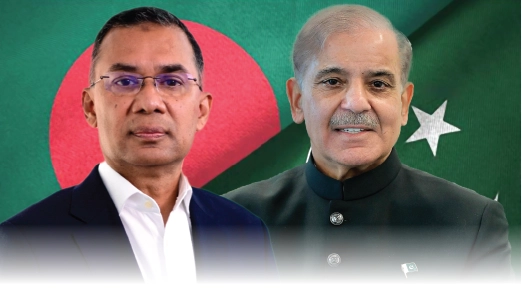
After months of speculation, elections were held in Bangladesh on February 12, which led to a landmark victory for the Bangladesh Nationalist Party (BNP), securing a two-thirds majority with 212 seats in a house of 300. The Jamaat-e-Islami-led alliance, including the National Citizens Party (NCP), won 77 seats. Along with the elections, a referendum was also held on the same day, which concerned constitutional reforms based on the ‘July charter.’ The majority of voters approved the referendum, which aims to limit the Prime Minister to two terms, to form a caretaker government before general elections, and to implement other reforms such as curbing executive power, promoting good governance, and combating corruption.
Tarique Rehman, the son of former President Zia-ur-Rehman and Prime Minister Khaleda Zia, who remained in exile from 2008 till late 2025, became the leader of the majority party and the Prime Minister of Bangladesh. It means that, after decades of persecution at the hands of the Awami League, both the BNP and the Jamaat will dominate Bangladesh’s power and political scene.
Challenges ahead for Bangladesh following the results of the February 12 general elections and referendum are numerous. Unlike during Sheikh Hasina’s tenure, which lasted more than 15 years, the country’s economy after the regime change in August 2024 deteriorated. It was to the credit of Prime Minister Sheikh Hasina that Bangladesh witnessed the modernization of its infrastructure, a surge in its foreign exchange reserves and per capita income, and the empowerment of women. But during the 18 months of the interim government of Dr. Mohammad Yunus, Bangladesh plunged in almost all indicators of human development and economic progress. How the new regime of Prime Minister Tarique Rahman will address the enormous challenges facing his country will be observed over the first 100 years of his rule. Like the Awami League, the BNP also remained in power for years, and both were blamed for augmenting corruption and nepotism. Will Tarique Rehman, who had to leave Bangladesh and seek exile in the UK following his arrest on charges of corruption in 2008, be able to restore his credibility and implement his election agenda focusing on the economy and governance, or will his party again resort to large-scale corruption and nepotism?
Both India and Pakistan have congratulated Tarique Rehman on securing a landslide election victory and expressed their hope for better ties with Dhaka. Certainly, India will be happy with the exit of the interim government of Dr. Mohammad Yunus, as it was during his tenure that relations between Dhaka and New Delhi deteriorated. It remains to be seen how the BNP government will deal with Sheikh Hasina, who has been in exile in India since fleeing the country in August 2024. Will India hand over Hasina to Bangladesh, or will it continue to protect her?
The implications of the general elections and the referendum in Bangladesh need to be examined from three perspectives. For the first time in Bangladesh’s history, the Awami League will not be represented in the national assembly because the Yunus regime banned its political activities. The two former allies, BNP and Jamaat-e-Islami, which faced relentless persecution during Sheikh Hasina’s rule, will be part of the assembly: the former in power and the latter in the Opposition. It means the paradigm shift in Bangladesh following the February 12 elections will exclude the Awami League from the assembly. In Bangladesh’s 55-year history, the Awami League has been in power for more than 25 years. Despite facing its predicament since August 2024, the Awami League is counting on its erstwhile adversary for political relief, as its voters and supporters, who were prevented from participating in elections, have supported the BNP. It means the vote bank of Awami League, which is still intact, sided with BNP because of a tacit understanding with Tarique Zia that, after coming to power, his government would not persecute Awami League and would give political space.


Based in Karachi, the writer is a Meritorious Professor of International Relations and former Dean of the Faculty of Social Sciences at the University of Karachi. He can be reached at amoonis@hotmail.com
Leave a Reply