




Politics of Hatred
This refers to the cover story published in the December 2025 edition of Monthly SouthAsia. The ruling party in India, the Bharatiya Janata Party (BJP), is fostering a culture of abusive language and discourtesy, along with a politics of insult and intolerance, under the leadership of Prime Minister Narendra Modi. India has increasingly become a hostile environment for minorities, with Muslims in particular being pushed outside the framework of the so-called Hindu Rashtra. This trajectory is not limited to the policies of the current government; it is explicitly articulated in M. S. Golwalkar’s vision of a Hindu Rashtra, which denies Muslims a rightful place in a unified society. Revealing a harsher reality, the veneer of secularism that has masked India’s true character since 1947 is now being stripped away. Indian minorities are facing violence, coercion, and intimidation, including being forced to chant pro-Hindu slogans. These developments indicate that India is moving steadily towards authoritarian nationalism and religious fascism.
Saad Ahmed,
Quetta, Pakistan.
Another Bilkis Bano
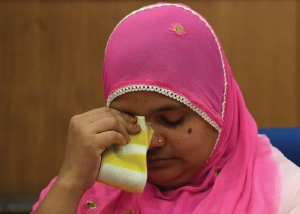 Thousands of victims of the 2002 Gujarat riots are roaming the courts for justice, but the killers are roaming free due to the decisions of the lower courts. The BJP government in Gujarat is continuing to patronize the accused as usual. In 2022, the Indian government pardoned 11 convicts serving sentences in the Bilkis Bano case, releasing them from prison. Despite the court’s conviction, the government encouraged the convicts by pardoning them. A protracted legal battle was fought in the Supreme Court, and the court ultimately succeeded, overturning the Gujarat government’s decision and ordering the convicts to be returned to jail. Like Bilkis Bano, the widow of former Congress MP Ehsan Jafri, is also seeking justice in court. It is hoped that the judiciary will punish the criminals in the Ehsan Jafri case like that of the Bilkis Bano case. The mastermind leaders of the Gujarat riots are now in power in New Delhi, and the victims’ last hope is the Supreme Court.
Zohra Nabi Butt,
Muzaffarabad, Azad Kashmir.
No End to Inflation
 Pakistan has been struggling with political, economic, and social problems for a long time, but in recent years, the severity of inflation has made people’s lives unbearable. From daily expenses to basic necessities, the prices of everything are skyrocketing. The middle class, which was once considered the backbone of the country’s economy, has now joined the ranks of the downtrodden. Children’s education has become a dream, and healthcare facilities have become a rare blessing. Even basic commodities like vegetables, pulses, meat, milk, flour, and sugar have become out of reach of the common man. Prices increase every week, but income remains the same. The condition of the salaried class is even worse. The primary reasons for skyrocketing inflation include poor government policies, corruption, the devaluation of the rupee, and a reliance on imports. Inflation becomes inevitable when a country becomes dependent on foreign markets for its needs. This is also the case in Pakistan.
Shahab Uddin,
Karachi, Pakistan.
Electricity for Cryptocurrency Mining
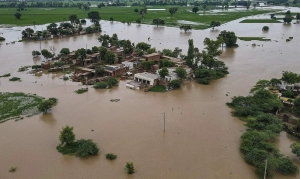 Last year, the Pakistani government announced that it would provide 2,000 megawatts of electricity for cryptocurrency mining and artificial intelligence. The Pakistani people are facing a crisis of expensive electricity. In such circumstances, the IMF has reservations about the announcement of providing electricity for crypto mining at Rs 22 per unit, which is also justified. Pakistan has an abundance of electricity for crypto mining, but reservations about its rate seem unjustified. Pakistan can currently generate about 48,000 megawatts of electricity. But that is expensive electricity, which can increase the oil import bill and increase pressure on the dollar. Pakistan is already among the countries affected by environmental pollution. Coal-generated electricity can increase environmental pollution. Bitcoin mining consumes approximately 130 terawatt-hours of electricity annually, which is more than the total electricity consumption of Argentina or the Netherlands.
Ahmed Jameel,
Skardu, Pakistan.
Water Terrorism
Indian encroachment on rivers that fall under Pakistan’s share under the Indus Waters Treaty is open water aggression and a serious threat to peace and stability. There is no doubt that a particular section of our country has been involved in making all national water projects controversial, from the Kalabagh Dam to the Diamer Bhasha Dam. If it were up to our eternal enemy, they would not let even a drop of water reach Pakistan. Be it the Indian occupation of Bhutan’s water resources under the guise of energy projects or the floods in Bangladesh, it has always been using the water resources of neighboring countries to achieve its nefarious goals. The history of India’s water aggression in the region is not hidden from anyone.
Mukhtiar Masih,
Lahore, Pakistan.
Revision in NFC Award
 Currently, there is a debate about creating new provinces in the country. New provinces are the need of the hour for the distribution of resources and problems. Currently, the federation is facing an increasing burden, making a change to the NFC award inevitable. Defense and interest payments are not only the responsibility of the federation but of the entire country. Therefore, before giving the provinces’ share, the amount of interest and defense expenses should be deducted, and the remaining amount should be distributed among the provinces. This will result in the federation’s burden being 42.5 per cent and the provinces’ 57.5 per cent. The remaining funds can be distributed according to a predetermined method based on population. Reducing the burden on the federation will strengthen the currency, allowing the provinces to focus more on increasing their revenues.
Faisal Razi,
Islamabad, Pakistan.
Road to Economic Recovery
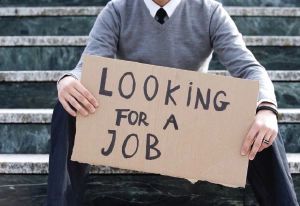 At present, people in Pakistan are taking their lives due to economic hardship and unemployment. How can we call this an economic improvement? Our very survival and independence are at risk. If we refuse to live in humiliation and despair, we must firmly reject becoming victims of the debt trap. We cannot abandon our faith, ideology, or freedom. Our leaders face two choices: either submit to American economic policies or rally our oppressed yet proud nation to restore financial stability. Our economic experts warn that if we refuse to repay loans, we will be labeled as defaulters and isolated globally. As a consequence, exports will halt, and Letters of Credit (LCs) will not be opened. This narrative, which has been passed down to us from the West, is based on a flawed assumption that our exports will cease. In reality, we can continue to trade with China, Afghanistan, Iran, and other Islamic and Arab countries, where no restrictions can be imposed. This opens the possibility for Pakistan to form a new trade bloc. Our most significant expenditure is on oil, and in exchange, we can export rice, wheat, and other foodstuffs to oil-producing nations. While some experts claim the economy is recovering, this is a blatant falsehood.
Dr. Asif Mehdi,
Karachi, Pakistan.
Manholes or Open Graves?
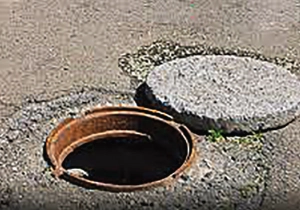 In one of the world’s largest cities, such as Karachi, open manholes have become the city’s open graves. Budgets are allocated, projects are initiated, and sizeable funds are released every year, but nothing changes on the ground. Other countries have been using modern sewage systems for years, while we have not yet been able to modernize the outdated sewage system. Every contractor should be required to install at least two strong iron or plastic net-like bars inside each sewer so that even in the case of theft or breakage of the cover, the sewer does not remain completely open, and even if older people or children fall into the manhole due to the lack of a cover, they may get stuck in the net. A complete record of each manhole should be compiled, and this record should be readily available at the union council level, ensuring that supervision is transparent and effective. Thanks to modern technology, cities can even run without manholes, as has been done in many countries. The government’s intention lies elsewhere, and the journey of change in the right direction does not begin.
Syed Warda Najam,
Karachi, Pakistan.