



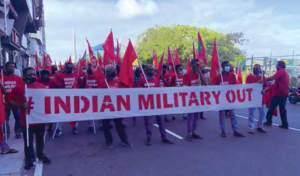
 In recent diplomatic discourse, a spotlight has turned towards the relationship between India and the Maldives, cantering on the removal of Indian troops, thus raising questions about the potential consequences for diplomatic ties with India.
In his recent interview with SouthAsia Magazine, Dr. Mohamed Muizzu, President of the Maldives, said India would respect the democratic decision of the Maldivian people concerning the presence of Indian troops. However, examining this situation requires a nuanced exploration, subtly favouring the democratic will of the Maldivian population.
The question of whether urging the withdrawal of Indian troops will strain diplomatic ties hangs in the balance, sparking a complex debate that involves considerations of sovereignty, democratic principles, and historical alliances.
President Dr. Muizzu’s recent statement adds a layer of complexity to the ongoing dialogue. By affirming that India would respect the democratic decision of the Maldivian people, he implicitly aligns with the desires of those within the Maldives who seek autonomy in determining their nation’s course. This emphasizes the importance of democratic principles in shaping diplomatic decisions, underlining a commitment to allowing the citizens of the Maldives to express their will.
The Maldives, like any sovereign nation, values its independence. The call for the withdrawal of Indian troops reflects a desire among some Maldivians to exercise their autonomy and shape their destiny without the presence of foreign military forces. While India’s military cooperation has historically contributed to regional stability, evolving sentiments within the Maldives present a diplomatic challenge that requires careful navigation.
It’s essential to consider the historical context of India-Maldives relations. Beyond military collaboration, these nations share a history of economic aid, disaster relief, and mutual support. However, the presence of Indian troops has become a point of contention for some Maldivians, who perceive it as a potential infringement on their sovereignty.
The impact of urging the withdrawal of Indian troops extends beyond military matters. Diplomatic relations are multifaceted, encompassing economic ties, tourism, and regional influence. A shift in military dynamics could lead to a recalibration of these aspects, influencing security as well as broader socio-economic dynamics.
Dr. Muizzu’s statement indirectly lends support to the sentiment of those in the Maldives advocating for the withdrawal of Indian troops. By emphasizing the importance of respecting the democratic decision of the Maldivian people, he suggests that any resolution should align with the wishes of the citizens. This reflects a global trend where nations prioritize self-determination and national autonomy.


The author is an education professional and can be reached at tania.74912@gmail.com
Leave a Reply