



Time to Act
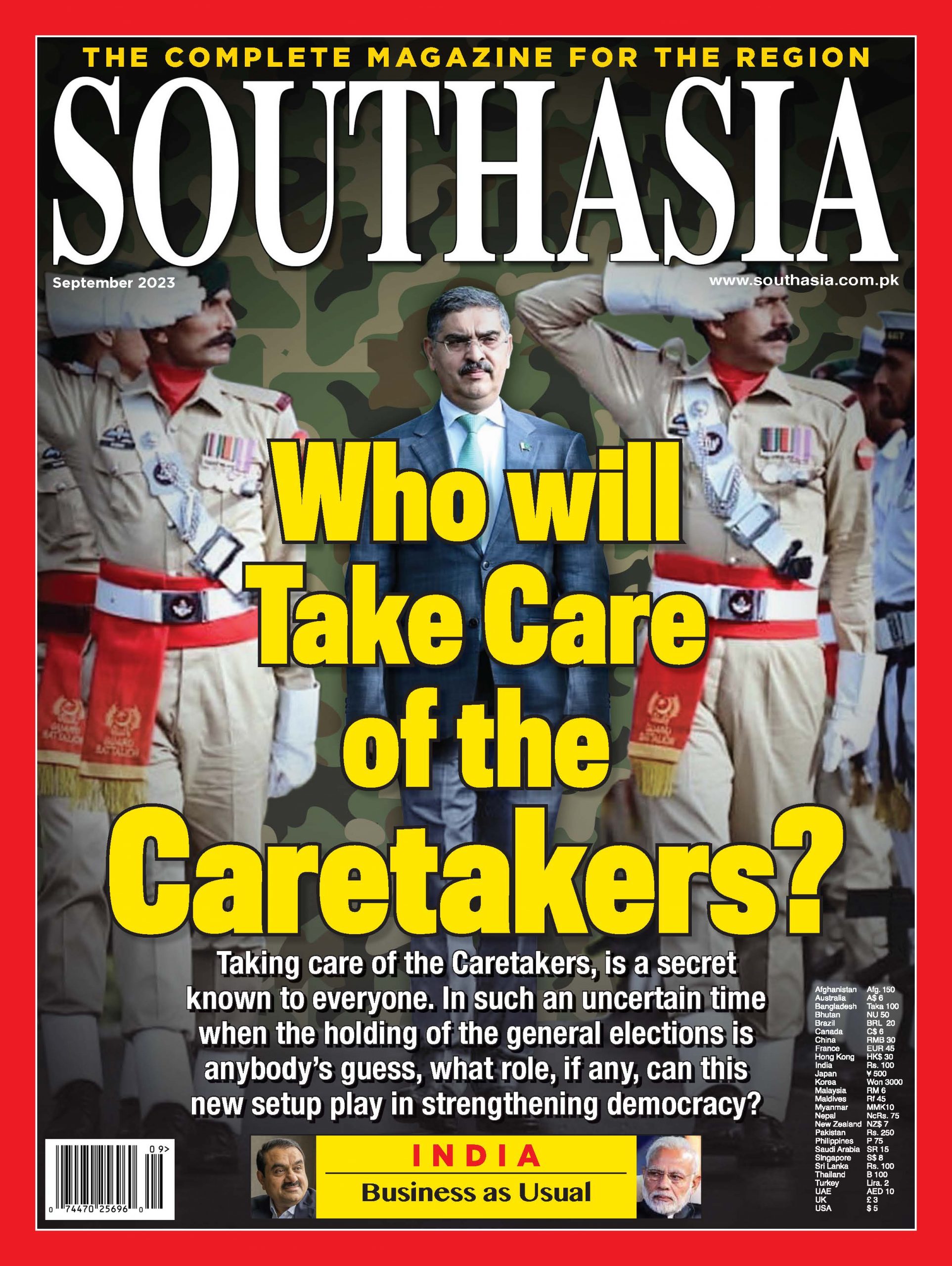
This is with reference to the cover story titled ‘Who Will Take Care of the Caretakers?” which appeared in the September 2023 issue. Rising to the occasion, Pakistan’s Caretaker Prime Minister Anwaar-ul-Haq Kakar has expressed his candid views on many important issues of the time. Among those pressing issues are doubts and suspicions regarding the holding of the general elections in Pakistan, the situation of freedom of expression in the country, the role of the establishment in government affairs, human rights violations in Occupied Jammu and Kashmir, Pakistan-Afghanistan relations, and the Islamabad’s increasing diplomatic isolation in the comity of nations. Since the caretaker prime minister is the representative of Pakistan both at the local and international levels, he must take some decisive actions to turn his views into concrete steps and play a decisive role in restoring democracy in Pakistan and getting rid the inflation-hit masses of perpetual socioeconomic crisis once and for all.
Mehtab Sultan,
Sargodha, Pakistan.
India and Nuclear Weapon Proliferation
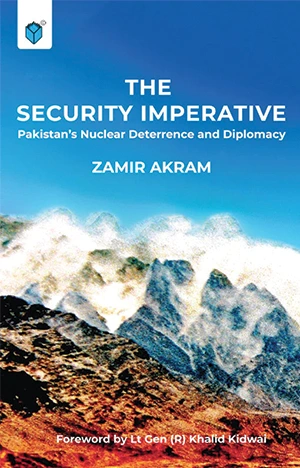 The book, The Security Imperative: Pakistan’s Nuclear Deterrence and Diplomacy, by Zamir Akram has recently vanished without a trace from Amazon website after having been featured there for a few weeks.
While several books have been written on Pakistan’s acquisition of nuclear weapons, most of them, particularly those published in the West and in India, reflect a hostile narrative that portrays Pakistan in largely villainous terms. The book authored by Zamir Akram, one of Pakistan’s most distinguished diplomats, is a meticulously-researched, widely-referenced, invaluable narrative of why, when and how Pakistan was compelled to develop its nuclear weapons as a deterrent to India’s nuclear ambitions. The book lays bare how the 2005 United States-India nuclear deal and India’s illicit proliferation of missile technology escalated dangers to an unprecedented level in South Asia, and even globally. The book also identifies the strong possibility that India itself may have been a secret, indirect customer-beneficiary of the allegedly privately conducted nuclear proliferation attributed to Dr A.Q. Khan. However, the book and its publishing credits have been removed from the Amazon website, reportedly without any reason being provided. This action is nothing but an assault on freedom of expression, and is a pitiable attempt to prevent sharing of irrefutable facts that implicate both India and the US in conducting discriminatory, clandestine activities that have increased nuclear weapon proliferation to endanger the whole world.
Former Senator Javed Jabbar,
Karachi, Pakistan.
IMF and Fiscal Policy
 Pakistan timely sought help from the IMF for the improvement of the country’s financial stability. The IMF has emphasized economic stability and reduction of budget deficits in line with traditional economic policies to reduce debt and control inflation. According to the IMF, Pakistan should focus on financial stability to increase economic output and employment. It has become clear from the recent experiences of several European countries that the traditional policies of the economy, in which economic stability is prioritized, have lost their effectiveness. In short, although the overall deficit or government debt depends on the overall stability of the economy, it is essential to take into account where the deficit money is being spent constructively. In this context, the quality of expenditure is of utmost importance. Meanwhile, a low tax rate to GDP is a significant obstacle for developing countries to use fiscal policy for constructive purposes. Similarly, by broadening the tax base and tax structure, improving the efficiency of tax administration, and making tax rules and regulations more stringent, the funds required for the constructive roles of fiscal policy can be obtained. Is Pakistan willing to implement this fiscal policy?
Haroon Ali,
Karachi, Pakistan.
Perpetual Economic Crisis
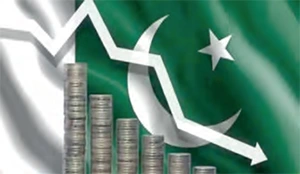 In the last five years, due to economic mismanagement and bad governance of the previous government, not only the country’s economy was severely damaged, but it also weakened important institutions like the State Bank of Pakistan, the Ministry of Economy, the Planning Commission and the Federal Board of Revenue. Economic output has declined over the past five years to an annual average of 3 percent, resulting in a failure to create substantial new job opportunities each year and increasing unemployment. The budget deficit in GDP last year exceeded 7 percent to 8.8 percent. Due to the existence of a substantial fiscal deficit and the depreciation of the exchange rate, public debt rose to alarming levels. Similarly, there was a sharp increase in inflation during the previous regime. In short, Pakistan is currently facing a decline in economic output, a huge budget deficit, rising inflation, and an unprecedented increase in public debt. However, there is no end in sight.
Durdana Nawab,
Islamabad, Pakistan.
Unbridled Population Growth
 Since I have been in America for more than a decade and my job includes traveling around and visiting other cities within a few hours’ distances, many scenes of this untouched and diverse country in the world are in my mind. How much the advancement in technology has affected ordinary life was not even possible to imagine a few years ago. Then, in this ultramodern environment, the harsh realities of life polluted by cruelty and injustice are hidden somewhere and clearly visible. Similarly, Europe has its own identity. But China is a distinct feature of the modern era. Now, the question of what we can learn from which country is not an easy one. Now, see that the whole world considers education to be the basis of development and prosperity, and we still haven’t learned how to run a primary school. Population growth is leading us to disaster. Does our system have enough power to try to solve this problem by following China’s path?
Dr. Kaleem Aijaz,
Chicago, United States.
Declining Agricultural Productivity
 In the past, Pakistan has been self-sufficient in wheat, rice, maize, and cotton production. In marked contrast, today, the country is forced to import them by spending a lot of foreign exchange to meet local needs. Pakistan’s current imbalanced economy has been limited to benefiting from the agricultural sector to the extent that it has to export a significant portion of its rice production instead of meeting its domestic needs. Most of the countries with agrarian economies have revolutionized their output per acre thanks to science and technology. Indonesia, which was buying 90 thousand tons of rice from Pakistan, has increased its demand by 200,000 tons. Although this is an encouraging situation for Pakistan, the local needs of the country cannot be neglected. Pakistan also has its complete infrastructure, including universities and competent scientists, which farmers should benefit from.
Chowdhury Jawaid Akbar,
Lahore, Pakistan.