



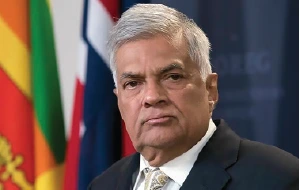
 Sri Lankan President Ranil Wickremesinghe addressed the Sri Lankan nation during the Independence Day celebrations on February 4, 2023. As expected, his speech started with the mention of the crisis-hit Sri Lankan economy, and the dire need for implementing painful austerity measures demanded by the International Monetary Fund (IMF).
Sri Lankan President went on to stress the need for national unity in the face of current crisis. In this context, he announced his intention to implement the 13th Amendment. The 13th Amendment is part of the Constitution since 1987, but it has never been completely implemented owing to the controversy surrounding it.
Seeking to resolve the island’s long-standing ethnic conflict, the 13th Amendment was passed in 1987 as part of an agreement between Sri Lanka and India. The constitutional revision led to the devolution of certain powers to the provincial administrations including health, education, housing, agriculture and housing. However, the most important aspects of the amendment – land and Police – were never implemented.
The 13th Amendment was controversial since its inception. It was opposed by Sinhalese nationalists because they deemed it favouring minority Tamils at the behest of India. Tamil separatists rejected it because they thought it did not address all their grievances. However, mainstream Tamil politicians thought it was a modicum of accomplishment that could be built upon for furthering their demands for equal rights. Successive governments deemed the issue too risky to handle and thus, the amendment remained in limbo for more than three decades.
Reaction to President Wickremesinghe’s recent announcement was predictable. Two of the three main nationalist parties - Freedom People’s Alliance (FPA) and National Freedom Front (NFF) - opposed the full implementation of the amendment with the latter threatening violence. The third party - The National People’s Power (NPP) – refrained from showing direct disagreement, but it did say that implementation of the 13th Amendment will not provide a permanent solution to the ethnic issue.
The powerful Buddhist clergy has registered its opposition to the president’s proposition in very strong words. They fear that the move will encourage separatism and if the president goes through with it, he will have to face widespread public condemnation.
Tamils are sceptic. Their main political party, Tamil National Alliance (TNA) has been pressing for full implementation of the 13th Amendment as a means of accomplishing a comprehensive political settlement. However, there has been no tangible government action regarding repeated demands for putting stop to continuous land grabbing in the North and East, and arbitrary police detentions. Tamils have lost faith in the process and see the latest announcement as President Wickremesinghe’s political ploy to remain in power.
While some politicians are criticizing the president for bringing up this highly controversial topic at such a crucial time, others see Indian machinations behind Wickremesinghe’s untimely announcement.


The writer is a freelancer and an investment banker based in Karachi. He can be reached at syedatifshamim@hotmail.com
Leave a Reply