



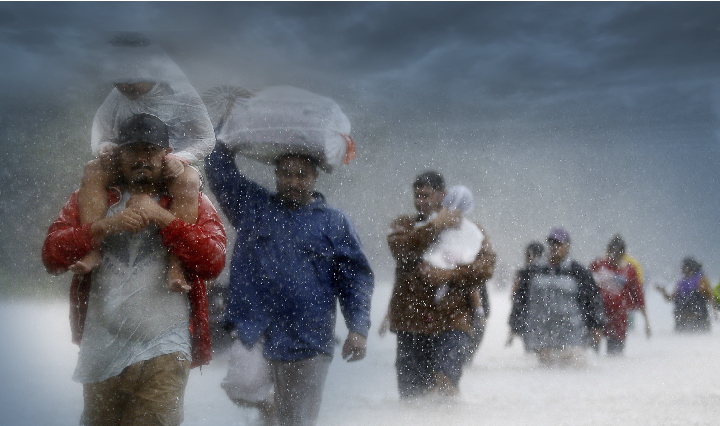
Sranding at the cusp of a climate crisis, the region of South Asia finds itself ensnared in a very alarming situation. The gradual upsurge in global temperature is likely to create a surfeit of impediments for South Asian countries. Thus, a region that has historically been enmeshed in geopolitical conundrums and marked by socio-economic turmoil, will now likely face a climatic predicament as well – one that is going to leave a scar so deep that removing it would become a wild-goose chase.
According to a recent report by the United Nations Intergovernmental Panel on Climate Change (IPCC), South Asia is predicted to face one of the most alarming climate crises ever. With a forecast highlighting hotter weather marked with much longer periods of monsoon in conjunction with severe draughts, South Asian countries have now become severely vulnerable to weather patterns and extremely hot temperatures. The IPCC has further emphasized that by 2040, there will be a gradual rise of 1.4 degrees Celsius and with global temperatures having the potential of peaking at about 5.8 degrees Celsius by the turn of the new century, the world and South Asia in particular will succumb to one of the harshest environmental conditions ever faced. Just for context, a mere 1.4 degrees rise in global temperature, will leave about 14% of the world’s population at the risk of facing one heat wave after every five years - the kind of heat wave we are currently facing.
With a 2 degrees rise, this percentage would encompass 37% of the global population. What’s more alarming is how two South Asian countries – India and Pakistan – find themselves at the top 20 countries that are most likely to be affected by climate change, according to the Global Climate Risk Index. This seems to place the whole region of South Asia in an environmental limbo and create a plethora of negative implications for the region.
One of the many consequences of the rising temperatures in South Asia is severe glacial retreat. South Asian countries such as Pakistan and India are home to one of the largest glaciers in the world that are primarily situated in the Himalayan region. These glaciers have also become subject to rising temperatures which has resulted in the melting and disappearance of glacial ice sheets. As per NASA, the Himalayan glaciers are the most rapidly depleting glaciers in the world. One such example of glacial disappearance occurred when Pakistan’s Shigar Glacier lost 800 meters of its length. Thus, it can be said that rising global temperatures will cause irreversible damage to the existence of glaciers in the Himalayan region.
With an increase in glacial retreat, the global sea level will also rise inevitably. This is going to be a severe blow for the coastal regions of South Asia. As a high population resides near coastal belts such as Karachi and Mumbai, rising global sea levels could mean life-threatening tsunamis and flooding throughout the region. Global sea levels are rising by 8 inches every year. This is likely to lead to more severe marine geo hazards and leave countries like Sri Lanka and the Maldives in dire straits.


The writer is a journalist based in Islamabad. She can be reached on Twitter @iAnumSheikh
Zabardast