

New Delhi
Uneasy Partners
There is a fine line that both India and Russia are walking in the latest global realities.

The Russian invasion of Ukraine has put the world in a quandary. Despite its location away from the conflict, India is battling hard with the situation for various reasons. India and Russia still carry the heritage of Indo-Soviet closeness in the domains of political, economic and military affairs. Indian public opinion has been largely on the Russian side since the start of the invasion on February 24, 2022.
The Indian approach to the situation is understandably expected and is more tilted towards Russia. However, India has also been sending aid to Ukraine in these testing times to prove its neutral stance which it displayed while abstaining to vote against the resolution tabled at the UN against Russia. It’s a fine line that India is maintaining so far despite frustration expressed from some quarters, including the US. The UK’s trade Minister Anne-Marie Trevelyan termed India’s response to the situation as very disappointing but called India as an important trade partner.
India and Russia enjoy strategic relations since the erstwhile Soviet Union and both have been supporting each other in different spheres. Despite geographic non-contiguity both have been walking along various international issues politically. Right from the beginning, Moscow found India, a plausible option in countering American and Chinese influence in the region. It has been supporting India on various international forums politically, such as resolutions against India in the Goa crisis in 1961, Kashmir in 1957, 1962 and 1971. In 2019, when India scrapped Article-370, Russia did not criticise India, describing it as an internal matter of the country. The annual summit between the Indian premier and President of Russian Federation is the highest forum between the two countries. Besides, the 2+2 Ministerial Dialogue is also in place.
Delhi and Moscow over the course of history have signed various agreements and MoUs to perpetuate closeness in their relations. In 1971 India and the USSR signed a Treaty of Peace, Friendship and Co-operation to formalise an alliance, aimed at thwarting American and Chinese influence in South Asia. Most notably, in 2000, a Declaration of Strategic Partnership was signed to supplement their traditionally close and friendly ties for mutual benefit in politics, economy, trade, science, technology, culture and people to people connections. On completing a decade of the agreement, both countries signed a Special and Privileged Strategic Partnership in 2010, further augmenting their rapport.
On international forums, both have been resolute in supporting each other on critical issues. India has been supported by Moscow on Kashmir on a number of occasions. Besides vetoing UNSC resolutions on Kashmir, Moscow has mostly termed Kashmir as an internal issue of India and does not subscribe to discussing it on international forums. However, it has aspired for normalisation of relations with Pakistan and been averse to any armed conflict between the two nuclear neighbours. For India, Moscow’s veto in the UNSC holds great prominence. Although it has been vying to get the veto status for itself yet its reliance on Moscow remains crucial. India has either been voting against or abstaining from voting during resolutions tabled against Russian interests in the UN.
Economically both countries have enjoyed cordial relations. Until its collapse, the USSR was India’s biggest trading partner. Soviet economic and technical contributions have been the bedrock of India’s domestic industries, including oil, gas and mining. Culturally, both countries have been engaging each other intensely through exchange of scholars.
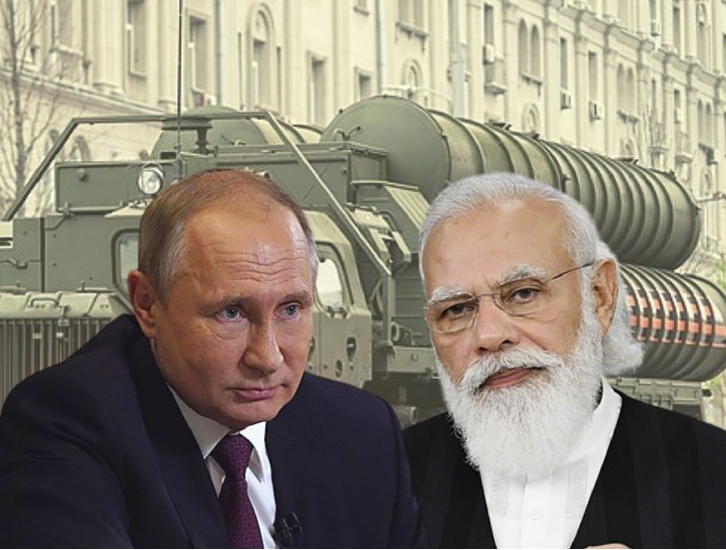
On the military front, Moscow has always been a firm supporter of India, especially when it comes to hardware supply in air, land and sea equipment. It has been providing the most modern equipment of the time to India. Around 85 percent of India’s defence arsenal is of Russian origin which makes it heavily dependent on Moscow’s continuous support. For Russia it’s a good chunk of money and a consistent form of revenue. According to Stockholm International Peace Research Institute, Russia was the second largest global arms exporter to India between 2016 and 2020. As its largest importer, India received 23 percent of Russian hardware. There are several recent deals in the pipeline including the S-400 Air Defence system and development of AIP powered conventional submarines.
India and Russia are also trapped in a web of intertwined political compulsions. For Moscow, China is a reliable and important partner which is adversarial to India. Likewise, India has developed cordial relations with the US and EU which may not be to the liking of Russia. India’s inclusion in the Quad may not bode well with Russia. Similarly, India’s pomposity of being a non- aligned country also restricts it to align clearly with any political block.
Since the start of the Russian invasion of Ukraine, the US and EU have come up with economic sanctions against Russia. Criticism against President Putin has increased manifold and the world at large has demanded Russia to stop the war. India’s muted stance has been a disappointment in the eyes of its new found love with the US and EU. There is also a growing criticism against the Indian government on this muted response, especially in the wake of India’s casualty of students.
Will the Indian government succumb to this growing pressure? However, it is anticipated that India will be able to maintain walking this fine line because of two important factors; one that India has demonstrated this balance earlier also with Iran when it continued to enjoy waiver from the US on oil imports from Iran. Secondly, because India enjoys a key position in America’s Indo-Pacific strategy, it is important for it to maintain its critical military capabilities so that its stature as a net security provider in the region not only remains preserved but is improved upon. For this, continued Russian support stands critical for its existing military hardware inventory to keep running. The US will most likely provide another waiver to India in line with its grand strategic design enshrined in the Indo-Pacific strategy.![]()

The writer is associated with the Institute of Regional Studies, Islamabad. She has interest in international politics and South Asian security dynamics and can be reached at reema.asim81@gmail.com


Leave a Reply