



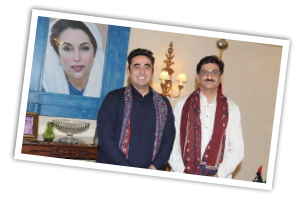
Having seen better times when Karachi was a beautiful, functioning, warm, hospitable and welcoming city, I grieve at the city’s abject decay, accelerated further during the thirteen-year spell of the Pakistan Peoples Party (PPP). Just how could it be otherwise, with nearly the whole Bhutto-Zardari dynasty busy milking it dry. Unfortunately, things are not much better elsewhere in the country either.
As against one Bhutto and one Sharif, we now have their third and second generations steering the course of the country’s politics, together with their friends, associates and like-minded cohorts. With so many profit sharers in the limited national revenue, there could be little left for the public. Both these political dynasties have perfected their system of exploitation by placing their incompetent favourites in important positions - regardless of merit - to facilitate their corruption. As a result, the ruling dynasties’ landed property and hoards of wealth stashed abroad and at home keep rising steeply while many citizens can’t meet even their basic needs.
Another problem is that in rural areas, the feudal system is very much intact. And ruled by Waderas, Chaudhries, Maliks and Sardars, the oppressed people, with little or no education, are unable to stand up and demand their rights. Elsewhere, their deliberate division based on ethnicity makes it easier to manipulate them by employing ‘divide and rule’ policy, hurling threats of using Sindh card and raising slogans like ‘Jaag Punjabi Jaag’, etc.
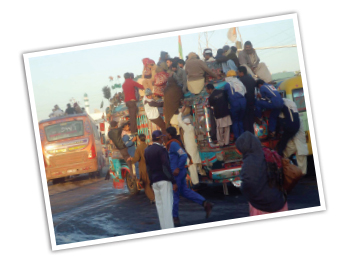 Some years back, with dog-bite cases running into thousands per year, the Sindh government started culling dogs. However, Aseefa Bhutto Zardari objected to this cruel practice. No doubt the act was cruel and the real solution was to use humane ways of controlling the dog population. But with even humans lacking basic health services, the Sindh government could hardly care to spend more money on dogs.
And it is the same with education, as evidenced by a January 3 editorial in the News International, titled ‘Shutting schools’, which states that the Sindh School Education and Literacy Department has announced closing for good 4,901 ’non-viable schools’. The officials say these schools have no enrolment, no proper buildings, and no teachers. This sounds strange in a country where about a third of children are out of school.
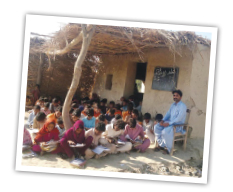 If the schools were declared non-viable because of lacking proper buildings and teachers, the obvious answer was rehabilitating school buildings and recruiting teachers, rather than shutting schools and using premises for money-spinning ventures.
Also the city’s water supply and drainage system is in a shambles. Instead of getting water from the Water Board pipelines, the majority of the population has to purchase it at exorbitant prices from the water mafia, while city roads are in a mess due to overflowing gutters.
Moreover, recently, we read news about the CJP calling on the government to provide basic amenities in Thar.


The writer is a freelance contributor with interest in regional, South Asian and international affairs. He can be reached at hashmi_srh@hotmail.com
Leave a Reply