



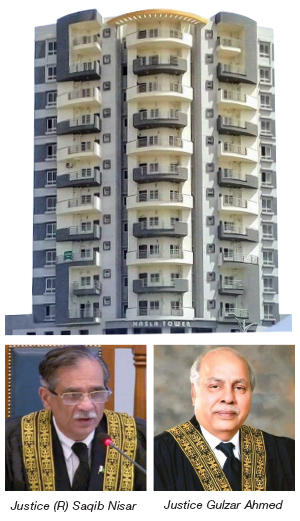
 Commonly referred to as the Quaid’s city, Karachi is an economic hub and financial capital of Pakistan, with great potential to lead the country to greater heights of progress. Unfortunately, the city fell prey to an insatiable greed of all and sundry. In the last four decades in particular, this ‘City of Lights’ was thrown into the dark and the cruel forces turned the place into a den of gangsters and criminals. Mafias of varying kinds control its social, political and economic life. Educated, cultured and socially advanced classes of Karachi, which were once a beacon to the less privileged and economically challenged classes, were silenced by force and terror. The abysmal state of Karachi and its plight was further fuelled by an unending exodus of struggling classes from other parts of the country which required shelter and food. Thus, areas adjacent to posh and planned localities were converted into slums and shanty-homes and open public spaces and parks were reduced to a jungle of concrete, by land grabbing, china-cutting mafia. Mushroom growth of unapproved hundreds of multi-storied flats/apartment buildings, where the needy invested their hard-earned life savings to fill their long dream of decent living, were allowed to be built, promoted and sold right under the nose of regulatory authorities and temples of justice-courts which used to grant stay orders against actions of the municipal bodies. A noble soul and a friend of Karachi, the late Ardeshir Cowasjee, blew a whistle long ago, but it fell on the deaf ears. The damage was done long ago.
Alongside these malignant developments that destroyed Karachi’s natural and built assets and its infrastructure, politics, political and civic institutions and were taken over and allowed to be run on ethnic and lingual divides which incessantly bred hatred and mutilated Karachi’s soul. Last few decades witnessed mindless blood-shedding of innocent people. All social, political and economic ills resulting from criminal negligence of organs of state turned Karachi into a huge environmental catastrophe. It also threatened marine and ecological life in the Arabian Sea, with the inflows of toxic materials that would ultimately cause a collective death of its over two hundred million inhabitants.
Due to climatic changes, a more recent and common phenomena are torrential rains, occurring as a result of global warming which brings along misery and plays havoc in Karachi with the failure of all civic services. To make matters worse, the money meant for public utilities is syphoned off and laundered abroad to buy palaces and townhouses in America and Europe.
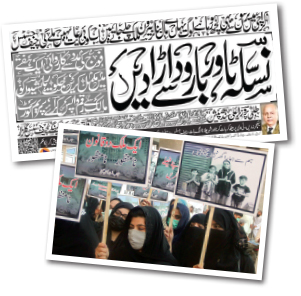 Moved by the common these sites of daily and unending plight of the city Karachi and its people, apparently the Supreme Court of Pakistan launched a judicial crusade under the command of the Chief Justice of Pakistan. On the face of it, the judicial route has been taken to address mammoth problems of Karachi, singly focusing on the betterment of the city as other organs of the state had become either party to the crime or were ambivalent and heartless to these issues.
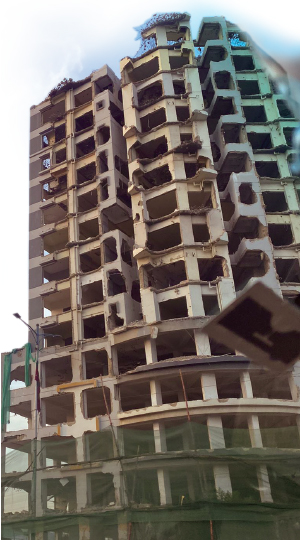 These actions were taken by the Supreme Court in the exercise of the original jurisdiction of the Supreme Court under Article 184(3) of the Constitution, originally meant for the enforcement of fundamental rights of a larger group. The suo motu jurisdiction is the most effective weapon in the armoury of the judiciary for reforming the society and the newly restored Judiciary (after the 2007 Lawyers Movement) used this jurisdiction for different purposes. This exercise of judicial power has been the continuous topic of a huge public debate at different levels, raising several constitutional, social and political issues.

The writer is an advocate of the Supreme Court and former Additional Attorney General of Pakistan. He holds an LL.M. degree from Harvard Law School and is the co-author of a book ‘Comparative Constitutional Law.’ He can be reached at mwaqarrana@yahoo.com
Leave a Reply