



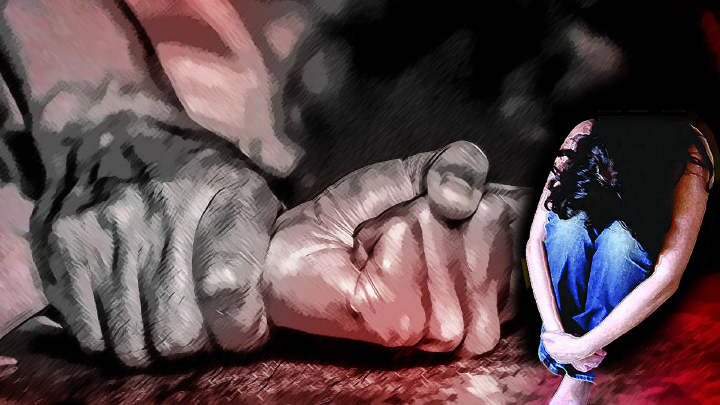
India is the biggest democracy in the world but the biased treatment it gives to women is a sobering reality that how compromised women really are in this part of the world. The deep-seated patriarchy, cultural constraints, gender discrimination and unequal growth make women a vulnerable segment in this giant country. Even after their continuous struggle and their resolve to bring change, women in the country are still grappling with old-age traditions that invariably act as a stumbling block for them to break the glass ceiling that hampers their advancement.
The Gender Gap Index Report 2020 released by the World Economic Forum placed India at 17th from the bottom and declared it to be the third-worst performer in South Asia. The underlying reasons of such low ranking was primarily Indian women’s labour force participation rate that fell from 24.8% to 22.3%, the ratio of political empowerment that dropped from 23.9% to 9.1%, low economic participation and unequal education opportunities. Given the lack of social protection for women and unequal job opportunities, a great number of women decided to work from home and earn financial stability. This shift in women’s choices has reduced the prospects of them reaching the top and senior positions were scarce due to limited field and professional work. As per the data collected by the WEF, the share of women in senior and managerial positions in India is far less than their male counterparts. Some 46% of these positions are occupied by women and there are only 8.9% firms with female top managers. The ratio of working women in India has become lower than even Saudi Arabia.
Indian society, as a whole, is governed by patriarchy where men are regarded as the controllers of the lives of their family and household. Women in Indian society sit at a subservient position and men enjoy superiority. Women are treated as objects and their male counterparts as subjects ordering the former to fulfil their tasks by considering it a religious obligation. Such a mindset has created cultural barriers for women and prevent them from acquiring and maintaining an equal status in all domains of public life.
The deplorable state of women in India, when seen through the lens of patriarchy, enables us to see how miserably they are surviving in a male chauvinistic society. The peaceful co-existence of women with men in India has been marred by unequal opportunities and gender discrimination. In the field of education, healthcare facilities, employment opportunities, et cetera, women have to surrender to the societal oppression meted out to them as a result of having a weaker sex.
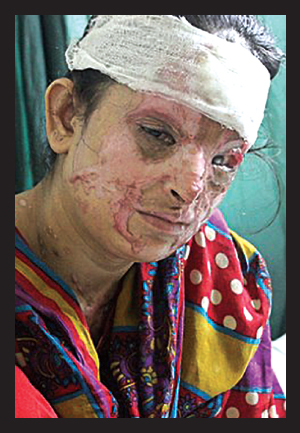 In India, girls schools are limited in number and the girls are married off before they finish their primary education or, in some case, their secondary education. Among a host of other problems, due to the sanitation issues alone that are experienced by young women, almost 23 million of them have dropped out from school. Parents, on the other hand, do not regard it a necessity for girls to pursue education owing to the archaic mindset that “a girl is born to serve her husband and it is better for her to stay at home.” When women are threatened to be killed or dismissed from home on showing defiance, they submit to their elders in silent acquiescence rather than protesting the biases.


The writer is a polymer engineer with keen interest in politics and current affairs. She can be reached at mehmilkhalid@gmail.com
Leave a Reply