



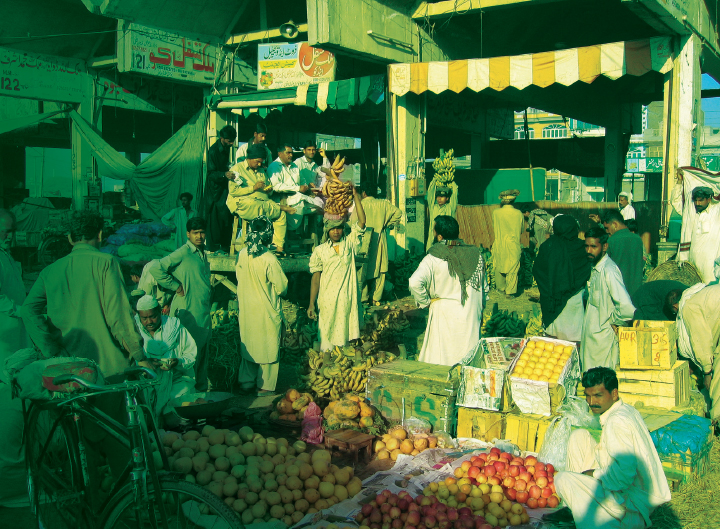
Pakistan is one of the world’s largest wheat and rice producers. Wheat and rice play a primary role in the diet and food choices of Pakistanis, accounting for more than half of their daily consumed calories. The production of these crops in Pakistan is in mega tonnes. In 2020-2021, Pakistan produced roughly 25 million tonnes of wheat and around 8 million tonnes of rice. Along with wheat and rice, many other agri-food crops are being produced in Pakistan in huge quantities, including sugarcane.
Reports published by reputable organizations working on the theme of agriculture and food security, like the Food and Agriculture Organization (FAO), the World Food Programme (WFP), and the International Fund for Agricultural Development (IFAD), still reveal that Pakistan is facing high levels of food insecurity. This fact is further substantiated by other similar studies and surveys carried out by the Pakistan Bureau of Statistics (PBS) and the Future Directions International (FDI). According to the Pakistan Social and Living Standards Measurement (PSLM) 2019-2020 surveys conducted by PBS, as much as 16.44 percent of the households in the country face severe or moderate food insecurity. At the provincial level, food insecure households are rather less in Punjab (15.66%) and KPK (14.44%) as compared to Sindh (17.52%) and Balochistan (23.36%). These figures are the government’s official figures. The food insecurity rate calculated by other stakeholder organizations are way higher than these figures, with WFP saying it is 36%. The prevalence of food insecurity in the country raises the question that why does such insecurity prevail despite Pakistan producing surplus food?
This is very significant and it is pertinent to understand what food security and food insecurity mean?
A widely agreed definition of food security is one that is used by the FAO which defines food security in terms of “physical, social and economic access to sufficient, safe and nutritious food”. In the light of this definition, scholars like Walter Fraanje and Samuel Lee-Gammage have tried to understand food security in terms of “availability of food” and “access to food”. Availability is concerned with the supply side, that is, the physical presence and inflow of food in a country or a market. Access, on the other hand, is concerned with the ability of households and individuals to buy and consume the available food.
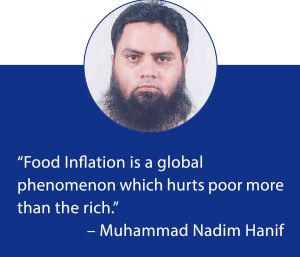 In the context of Pakistan, it is agreed by almost every stakeholder in the field of agriculture and food security that the issue is not with the availability of food. This stands mostly true, except in some instances recently when wheat and sugar were scarce in the market due to hoarding by influential people involved in the trade of these items.


The writer is a development practitioner. He has done Master's in Governance, Development and Public Policy from the Institute of Development Studies, University of Sussex and has also earned his Master's in Philosophy of Humanities from the IIS London. He can be reached at shakeelahmedshah@yahoo.com
Leave a Reply