Region
Missing ‘Rape Culture’ Shield
Although women are protected by law in Pakistan, in practice this is not systematically enforced because of an inadequate justice system, coupled with deep-rooted social, cultural and economic barriers and prejudices.

There is something perversely specific about sexual crimes that makes it even harder for victims to obtain justice in Pakistan. There is the narrative that statistics bolster and experts in panel discussions rightly expound on points to the practical on-ground problems that the victims have to encounter at every stage of the criminal justice system. The act of filing an FIR can be riddled with apathy, discouragement or the constant pressure to compromise, and investigations are frequently led by police officers and medical examinations by medico-legal officers who are not trained or equipped to handle evidence in rape cases nor sensitized on how to treat a victim.
An environment where officers, judges and prosecutors are rarely women, routine questioning in courtrooms is a triggering ordeal combined with lack of appropriate institutional or familial support and can especially alienate victims. Lack of rape shield laws that protect a victim’s past sexual history from being dragged into proceedings and reductive definitions of rape, coupled with judicial gender bias against victims, make convictions a rarity.
The situation does not exist in a vacuum. Explanations elaborating the underlying reasons are seeping into the vernacular of at least a small section of society. Simplistically put, at the root cause is the societal adherence to end perpetuation of harmful gender stereotypes that cage the potential of what both men and women can be. In the particular context of sexual crimes, it involves viewing women not as individuals but as either fetishized repositories of male honour that need to be guarded from other “men”, therefore policed more heavily, or sexual deviants who need to be punished – the Madonna-whore complex thrives.
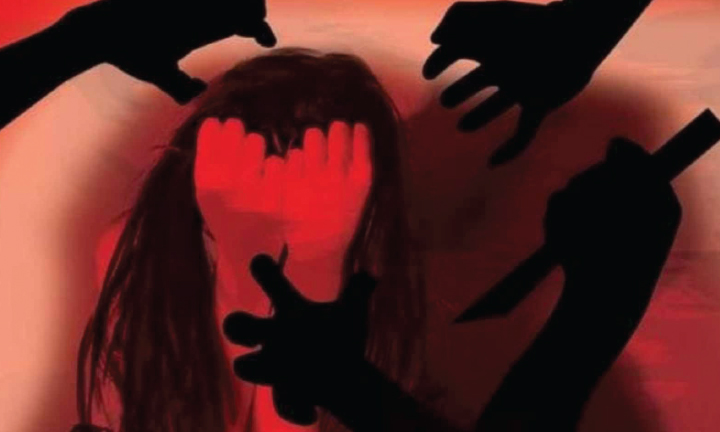
This narrative also disservices men, by terming sexual crimes as an understandable loss of control – as if to rape is not a choice. Both form part of an overarching “rape culture” where violence is seen as a normal societal response to anything that a woman should have anticipated or prevented and perpetuate victim blaming tendencies. Why do women expect to not be violated if they do not take the necessary steps to protect themselves – from methods as arbitrary as wearing more clothes, making fewer public appearances, becoming less visible, and become less in general? The problems faced by rape victims in the criminal justice system only mirror this societal narrative, and are not separate from it.
An environment where officers, judges and prosecutors are rarely women, routine questioning in courtrooms is a triggering ordeal.
Does this mean that eradication of practical problems and slow change in societal narrative would make it easier for victims to obtain justice? I am still skeptical. The legal justice system in itself, inherently, is predicated on the dominant male perception of what justice should look like.
Legal definitions showcase male understanding of what violence is, such as the requirement in our workplace sexual harassment laws that sexual harassment should be of a “sexual nature”, discounting that it is often not driven by lust but as a means of perpetuating power and sex discrimination.
Superior judicial decisions may interpret evidence to rule in the favour of a rape victim but discount evidence where there are added complexities that cut across religion, caste, class or hierarchy and don’t produce the male perception of what a rape victim should behave like.
When men plead the defence of grave and sudden provocation in cases where they murdered a partner or female family member after discovering a love affair, the law can assess that the culprit deserves a lesser sentence on the basis of the reasonable “man” standard – what would a reasonable man do? Because reasonable women rarely murder their spouses, and almost never their male family members for sexual indiscretion, in a fit of rage. Lack of availability of alternative sentencing options or adherence to a restorative form of criminal justice system also showcases the patriarchal notion of justice: punitive, focused on only putting away poorer men behind bars, with little focus on what victims want.
This theoretical vacuum left by the inadequacies of our criminal justice system has also allowed another worrying trend to fill it up. In the age of social media hashtags, where the public demands and decides who should be the recipient of speedier justice, some cases and victims are likely to get more traction than others. Where the society gets to decide which case causes it greater moral outrage, only a select few make it to the top – in this paradigm not all victims are equal as justice demands they should, and privilege, class, and narrative that again display our Madonna-whore complex – steer the subjective wheel of our calls for justice.
A reorientation of the criminal justice system in itself, with more female and minority voices shaping the change is imperative for a theoretical shift in our notion of justice, and is a legitimate way of granting a more diverse cross-section of society a say in what it should mean. ![]()


Leave a Reply