



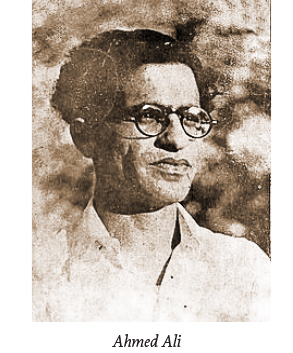
 The 20th century witnessed the emergence of postcolonial literature with the writings of Chinua Achebe in Africa and Ahmed Ali’s Twilight in Delhi. Prior to this, people from colonized countries were familiar with English literature or their indigenous literatures, while post-colonial literature carried partly the flavour of indigeneity and partly that of foreignness. As such this genre of literature was neither purely foreign nor totally indigenous. Th genre existed as a mixture and amalgam of both, and as Bhabha would call it, in third space, which can be liminal in nature and claimed hybridity of its compositional elements. Most of the producers of this genre belonged to the formerly colonized countries and were responsible for bringing this form of literature, especially fiction, from non-existence to existence but, nonetheless, this existence was in the third space.
Achebe, in his Things Fall Apart, narrated a story of his people being colonized and, so, captured the entire process of dominance by the British colonizers. Similarly, Ahmed Ali in his Twilight in Delhi wrote during British colonization but focused more on the layers of Muslim Mughal culture which was almost on the verge of collapse under the powerful dominance of British colonialism. The Untouchables by Mulk Raj Anand goes one step further and narrates the moments of the struggle of the Indians to liberate their country from the British with an equal struggle of the British missionaries to convert the untouchables to Christianity, because of their vulnerability of being outcasts from mainstream Indian Hindus.
From this humble yet powerful acclaim of the South Asian postcolonial fiction, the third space for postcolonial fiction was created and has been vigorously guarded by generations of writers in the Indo-Pak subcontinent. For example, in the fourth quarter of the 20th century, Bapsi Sidhwa spoke about her Parsi people and culture and narrated the ways through which the Parsis existed as a minority in Muslim-dominated Pakistan. Her Crow Eaters is the tale of Parsi survival in the subcontinent. But The Bride traces the resistance story of a young girl Zaitoon in the backdrop of Partition. Her Ice Candyman focuses exactly the moment of Partition and independence of India-Pakistan subcontinent and the atrocities associated with that. Sidhwa weaves the complex tale of Pakistani Parsi’s tale of rubbing shoulders with the Americans. Similarly, Rohinton Mistry, from India provides stories of loss of Parsi culture in India.
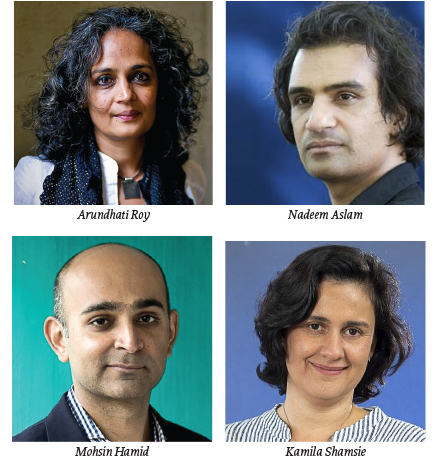 The 21st century has seen major developments in the genre of post-colonial fiction because of the game-changing events in the world, especially the attack on the World Trade Centres in New York. Writers from South Asia have maintained their stances in this world of the American New World Order and Globalization. These writers have in fact enlarged their fields of play by becoming more international rather than restraining themselves within their indigenous territories. Their fictional tales carry the original flavour of indigeneity yet attach them with foreignness. For example, Arundhati Roy’s award winning The God of Small Things narrates a complex yet beautifully romantic tale of the middle eastern Christian who migrated and settled in India. The story generates a web of complex relationships between the Untouchables and the minority Christians heavily impacted by Indian culture and traditions.


The writer is a PhD doctor. He serves as Adjunct Faculty at ISP, Multan, Visiting Faculty at NUML and BZU, Multan and Chairman, Dept. of English at GEC, Multan. He has authored many research papers and can be reached at zeadogar@hotmail.com
Really enjoyed it on today’s breakfast. The whole stories of all the novels are encapsulated so beautifully in simple and understandable sentences. This is what students like me need. The end gives an idea to design a research proposal for young researchers like
Global politics in contemporary South Asian fiction