



Climate change is a pressing issue of our times and Pakistan is the world’s fifth most vulnerable country facing this serious threat. The adverse effects of climate change are evident in increased levels of carbon dioxide, rapidly melting glaciers, droughts, rising global temperatures and sea levels.
Several factors are responsible for climate change. The burgeoning demand of cars, houses and fuel combined with the construction of factories, high-rise buildings, airplanes and ships, is resulting in massive global warming. In addition, clearing vast tracts of land to build roads and housing societies is culminating in deforestation, which is also a primary cause of increasing temperatures. The release of greenhouse gases, burning of fossil fuels, black carbon and deforestation are all detrimental to the health of the world.
Such human interference in the natural scheme of coexistence is resulting in the atmosphere, land and oceans to become warmer. Addressing climate change in Pakistan, the root cause appears to be urbanization and resulting deforestation. Reckless human behaviour, such as mismanagement and illegal commercial harvesting by the Forest Department of Pakistan (FDP) also engenders the ecology. Another factor responsible for deforestation is the heavy dependence on agriculture and the livestock sector, due to exponential population growth. Moreover, industries such as brick kilns, tobacco, construction, furniture and sports are all users of wood.
Pakistan faces immense problems with deforestation and forest degradation. Less than five percent of its total area is under forests. The rate of deforestation of 1.5% is very high and alarming. The need of the hour is effective planning and management of forests and wildlife. Afforestation, preventing biodiversity and tree preservation, is needed and updating technical infrastructure to enhance effective management. To curtail the problem of climate change, the government can focus on a two-tier program of short term and long-term solutions.
The short-term agenda can include plantation of trees, proper and efficient waste disposal, especially of plastic, clean public transport and incentives to scientists and the upcoming generation, such as financial support to execute research on environment and implement it. The long-term solution can focus on restricting population growth through giving incentives, such as tax relief for a small family unit and spreading awareness of contraception.
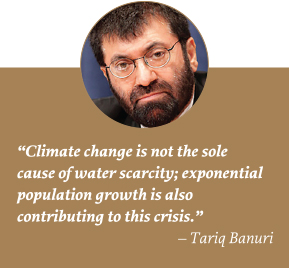 Pakistan has an alarming population growth rate which is the reason for its gargantuan pollution and fast depletion of natural resources. The atmosphere and environment, both are at stake because of the imprudent behaviour of humans in the realm of nature. Introducing climate savvy architecture and ‘thermal delight’ (to reduce reliance on mechanical cooling), shifting to hydro-electric power and wind/solar energy, introducing non-polluting industrial techniques and environment-friendly agricultural techniques are a few long-term steps that can be endorsed. Adopting an eco-friendly lifestyle such as practicing veganism, recycling, walking instead of using vehicles and curtailing technology, can be implemented. It is not a surprise when you say: ‘These things pay for themselves down the road.’


The writer has a double Masters in English Literature with experience in magazine journalism. She has a passion for reading South Asian fiction and about environmental issues. She can be reached at beenishmhmd@gmail.com
Leave a Reply