



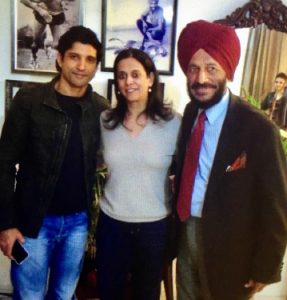
“Wherever I ran, India and Pakistan both ran with me,” said the legendary athlete Milkha Singh, who was given the title of “The Flying Sikh” by General Ayub Khan, on the occasion of an India-Pakistan sports meet in Lahore in 1960. Upholding the spirit of affinity and allegiance to his birthplace, the Indian champion, proudly hailed himself as a “product of both the countries”.
Milkha Singh had braved the massacre and mayhem unleashed by Partition as a teenager. He passed away on June 18 this year at the age of eighty one and left behind a legacy of greatness and heroism. “Bhaag Milkha Bhaag”, were the words of his dying father as he fought a blood-thirsty attacker. They became the ultimate maxim of his life. He held the record of being the only athlete to have won a gold medal for 400 metres, both at the Asian Games as well as the Commonwealth Games.
Milkha Singh’s daughter, Sonia Sanwalka, remembers him as a person who was up front and honest and never let the fears of consequences get the better of him. In a candid conversation about her father’s myriad memories, his achievements, his glorious legacy and a life without his towering personality, Sonia finds herself inundated with overwhelming emotions. “He was a great father, who was larger than life and always taught us all to be kind and courageous,” she says. Along with her siblings, she was raised in a simple atmosphere with great stress on acquiring qualities of a good human being. Sonia recalls how he adhered to the deep-rooted values in his life. He never shunned fans desiring a selfie with him and even when he was hospitalized, he always thanked the doctors with folded hands. Perhaps this is the rich legacy; Sonia feels she has inherited from her father - to be a good human being.
When one leafs through “The Race of My Life,” Milkha Singh’s autobiography, which took shape with Sonia’s assistance, one can feel his profound recollections melting away page after page. With unflinching honesty and simplicity, he has provided readers a peep into his life right from the moment when he was born in a small village of Gobindpura, Tehsil Kot Addu, which is now in Pakistan. Amidst the heart-wrenching tales of bloodbaths and brutalities that took away lives of his family members, Sonia tells me that her father always recalled with gratitude an incident that saved his life. To escape the carnage, he boarded a train and soon realised it was a ladies’ compartment – packed with Muslim women. However, humanity and kindness defeated the hatred that played havoc with lives outside and Milkha Singh was ensured by the passengers that authorities would not come to know about his presence.
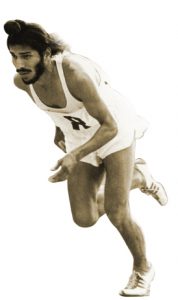 The Partition narrative his children have heard from him, remains free from the venom of hatred and prejudice. Sonia brings up the fair-minded lessons he handed over to his four children, when she says he never identified the perpetuators of violence on the basis of religion. “They were outsiders” he would always say. She feels he deeply believed circumstances drove people to insanity and the dance of death and destruction witnessed by many during the Partition was orchestrated by political conditions and manipulations. Though the horrors of Partition and the killings haunted her father, he still gladly visited Pakistan several times. On the one hand, it pained him that there was no trace of the mud house or the madrassa he studied at, but, on the other, he would be overjoyed by the love and warmth people showered on him - it reinforced his faith in humanity. “Religion is in the heart,” she repeats her father’s words.


The author is a freelance writer based in Bangalore. She can be reached at shazmanshariff@gmail.com
Leave a Reply