


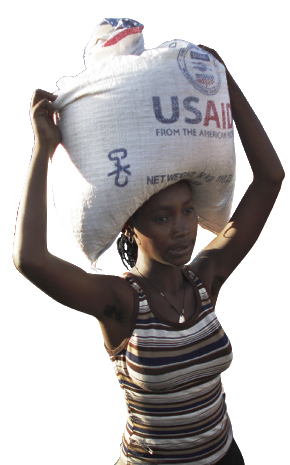
 Much has been written about foreign aid and its benefits since the process started. However, there is a counter-narrative that is quite critical. Donors carve out their positions by employing foreign aid to exert influence over recipient countries. The emerging complexities are explored here.
The current pattern of foreign aid is traced back to the post-World War II era, when the USA poured dollars into Europe as part of the Marshall Plan. The aid program was meant to help seventeen Western and southern European countries so that they could restore and stabilise their democratic institutions. Mostly, foreign aid is directed to another country, ostensibly with the same goals, but many research investigations reveal a different story. Linking it with economic development and democratisation has proven elusive. The relationship between foreign aid and foreign policy of a donor country vis-à-vis the recipient country is discussed in the following paragraphs.
Political influence through foreign aid is indeed a welcome topic of research and analysis in the grand halls of inter-state relationships. Delineating the contours of influence, it reveals multiple facets and interplay between a donor and the recipient state. According to the Organization for Economic Cooperation and Development (OECD), foreign aid, through the introduction of external resources such as financial contributions, technical assistance, direct commodity provision in the event of a natural calamity or an emergency like war and military assistance, discreetly interferes with the sovereignty of the recipient country. Donors have increasingly adopted diplomatic, military and economic patronage roles in swaying the internal power balance in favour of or against the recipient state’s leadership. For example, during the Cold War, foreign aid was used as a diplomatic tool to contain expansion of communism. According to the Harvard International Review , US Agency for International Development (USAID) has been chastised for its apparent use in destabilising existing governments in recipient countries such as Bolivia and Russia.
Foreign aid cannot be seen in isolation in realpolitik, as it has its ulterior motives and well-defined strategic interests, which cannot be acquired otherwise. Whether the donor is a single country, coalition of states or multilateral organizations (UN, NATO and the World Bank), foreign aid depends on the strategic importance of the region and not ethical or moral values. Countries with perilous security situations are supported through international organizations’ peacekeeping missions. Conversely, dollar aid to the economies of countries such as Syria, Libya, Iraq, and Afghanistan is used to impose a western version of democracy, establish mercenary armies and stockpile state-of-the-art military weapons. Foreign aid may have appeared to be a good show of power projection but ignorance of cultural and religious norms, little engagement with local populations and flawed assessment of their needs throughout the process, has resulted in more confusion and chaos.
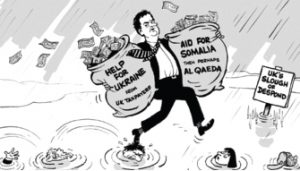 One of the most noticeable aspects of foreign aid is the collusion between the donor country or agency and the ruling class of the recipient country that engenders a symbiotic relationship between the two, in order to preserve each other’s interests. Ironically, the target audience/population for whom the aid programme is designed, remains at the bottom of the priority list. The donor country/agency guarantees that monies are redirected to its own business(ies), primarily the arms industry. The following statistical data backs up this claim. America allocated $21 trillion of foreign aid on establishing the Afghan national defence force. Out of this hefty figure, $16 trillion went to the military and military contracts. War veterans received $3 trillion; Homeland Security received $949 billion; and the US federal law agency received $732 billion .
The cash being siphoned off into personal bank accounts in recipient countries and the fleeing of the whole Afghan administration, including former President Ashraf Ghani, with boxes stuffed with dollars, was a deplorable state of affairs. The poor Afghans who were meant to be the beneficiaries were the last to get their share in monies in billions in the entire chain of payment. According to the International Committee of the Red Cross, 18.4 million people in Afghanistan require immediate humanitarian aid; 7 million people don’t have access to health care; 40 million lack sufficient food and 3.1 million children are at risk of acute malnutrition.
Foreign aid also protects politicians in donor countries from domestic accountability, as it is frequently promoted as humanitarian help or as a means of bringing countries closer to Western democracy. Adventures were made in Afghanistan, Libya, and Iraq in order to depose autocratic regimes and save the world from terrorism. It was the most effective method for moving public attention away from the issue of transferring funds to military aid. Ironically, time has proved these claims to be completely false. The crumbling of the Afghan Army in no time after the haphazard withdrawal of the Allied forces led by the USA from Afghanistan, shows the ill intended ‘democratization’ campaign, which resulted in a comfortable Taliban victory.
According to a study published in the Oxford Research Encyclopaedia of Foreign Policy Analysis , donors use aid as incentives or payments for approved behaviours, or to signal a desire to expand political relationships and strategic interests between donors and recipients. Funds from the EU for poverty alleviation were transferred to donors’ darlings instead of the ‘orphan countries’. Pakistan is an example of being a donor’s darling during the Afghan Jihad. It was rewarded with dollars from America as an incentive to advance the latter’s interests in the region. The same Pakistan is now in the list of orphan countries, with the exception of a few years since 2012, and on the FATF grey list, along with heavy sanctions. The reason is America’s newly established strategic partnership with India.
Foreign aid will continue to be a seemingly strong political instrument because of its usefulness and flexibility.

The writer is a PhD in Defence Studies with special focus on militancy in Balochistan. She has been working for the Government of Pakistan for over 20-years and can be reached at seemashafiq71@icloud.com. Twitter: @seemashafiq71
Leave a Reply