



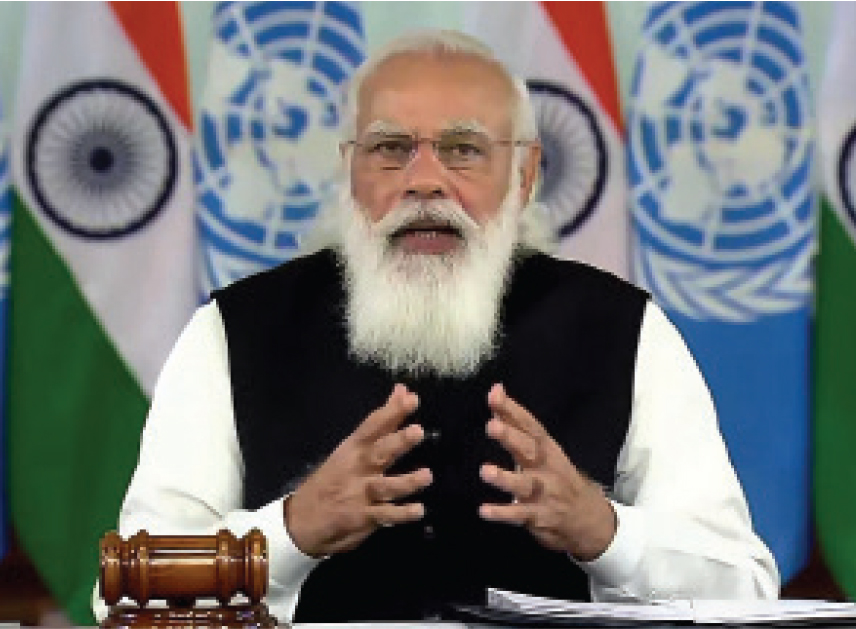
The United Nations Security Council (UNSC) is an elite club of five permanent members. They are the US, Russia, China, France and the United Kingdom. India - the world’s largest democracy - has been trying to become a permanent member but the road has been rough and the door to the seat at the UNSC has not budged for New Delhi. India had to go through the election phase and acquired a seat as a non-permanent member of the UNSC for two years. But it was named as the President of the UNSC for August 2021.
Previously, India has been elected as a non-permanent member on seven occasions. Its eighth stint began in January 2021. India wants to receive a permanent member status at the UNSC to exercise power and influence at the regional and global levels.
As President of the UNSC for August 2021, India was scheduled to organize meetings to focus on key areas such as security, peacekeeping, counter-terrorism and maritime security.
In a Twitter post in August, Indian External Affairs Minister S. Jaishankar said, “As we take over UNSC Presidency for August, look forward to working productively with other members. India will always be a voice of moderation, an advocate of dialogue and a proponent of international law.”
A video message from India’s permanent representative to the UN, T.S. Tirumurti, said,“The Security Council will also have on its agenda several important meetings including Syria, Iraq, Somalia, Yemen, and the Middle East. The Security Council will also be adopting important resolutions on Somalia, Mali, and UN Interim Force in Lebanon.” He added, “It is a singular honour for us to be presiding over the Security Council the same month when we are celebrating our 75th Independence Day. India and France enjoy historical and close relations. I thank France for all the support which they’ve given us during our stint in the Security Council.”
Pakistan has been closely monitoring India’s relations at the UNSC and its rise to the Presidency for August 2021. In a statement, Pakistan’s foreign office spokesperson said, “We hope that India will abide by the relevant rules and norms governing the conduct of the Security Council Presidency.”
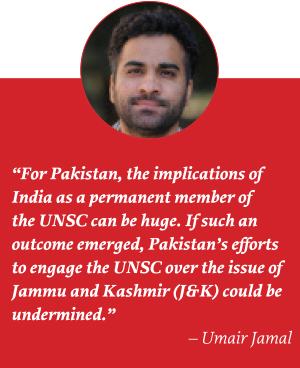 Along with India, other contenders aspiring to secure a permanent seat at the UNSC are Germany, Japan and Brazil. India has plans to restructure the UNSC. New Delhi has been openly debating to change how UNSC has been operating. It is pursuing the theme of “reformed multilateralism” vital to its diplomacy. India views that the UN’s very foundation is “anachronistic” and needs an immediate transformation.


The writer has a special interest in social and political affairs. He can be reached at omariftikhar82@gmail.com
Leave a Reply