



Generosity is an essence of human goodness. To many people, a generous gesture happens to be an occasional move carried out of instantaneous mercy and a sense of positive disposition towards the needy. To a smattering of sympathetic individuals, however, the act of mercy tends to be a raison d’être of their existence, leaving behind them an enviable legacy of compassion and charity in the form of educational institutions, hospitals, orphanages and welfare trusts.
Boasting of a commonplace appearance typical of a man on the Clapham omnibus, such an accomplished businessman as the late Graham Layton, was a human extraordinaire at heart. So was Zaka Rahmatulla. What set them apart from the rest was the fact that both Layton and Rahmatulla had a long-shared dream to provide free-of-cost treatment to the poor and needy suffering from different eye ailments.
The dream came true when the Layton Rahmatulla Benevolent Trust (LRBT) was established in December 1984 with an initial fund of Rs. 1 million. At the start, it launched a mobile outreach service for eye care in Tando Bago in District Badin, some 250 kilometres from Karachi.
Truly a beacon of light, LRBT today is the largest eye care facility in Pakistan. It comprises a chain of 19 hospitals and 58 primary eye-care centres and clinics which provide a full range of both inpatient and outpatient ophthalmology services to the needy. They otherwise run from pillar to post in search of healthcare solutions they can ill afford. LRBT is also the world’s largest eye-care provider to have treated over 47 million patients and performed over 4.6 million eye surgeries merely in a period of 35 years. The number of patients registered in its OPD has crossed over 10,500 per day.
Since its inception, the organisation is guided by a set of founding principles encapsulated as ‘The Spirit of LRBT’. According to its central tenets, for instance, all treatment at LRBT should be totally free for the poor so that no one succumbs to blindness because one cannot afford the treatment cost. The cure must be appropriate and based on state-of-the-art methods and equipment, since a charity does not mean meting out substandard and second-rate treatment to poor patients. In addition, patients should be treated with compassion and dignity and with zero tolerance for discrimination on the basis of gender, colour, caste, ethnicity, language, religion or sect.
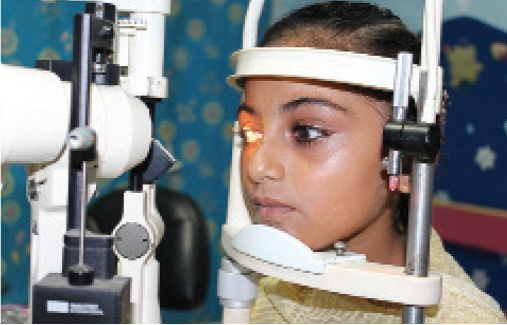
Through its purpose-built and appropriately-equipped hospitals, LRBT provides comprehensive eye-care, ranging from simple refraction to the most advanced retinal surgery and corneal transplants. Giving vision to the visionless, LRBT envisions creating a better Pakistan by preventing the suffering caused by blindness and other eye ailments, such as low vision, refractive errors, cataract, glaucoma, retinal diseases including diabetic retinopathy and macular degeneration, cornea, lacrimal and orbital disorders and external eye diseases. It has a fully-equipped facility for diagnostic tests and procedures and also offers oculo-plastic services, a dedicated unit for paediatric eyecare as well as a separate clinic for uveitis disorders.
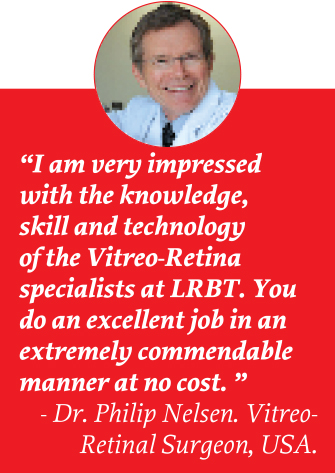 LRBT’s network of hospitals, primary eye-care centres and outreach clinics cover major cities, districts and far-flung rural areas of all four provinces of Pakistan.


The writer is a member of the staff. He can be reached at faizan@southasia.com.pk
Leave a Reply