



Society is commonly defined as “A group of individuals who are involved in persistent social interaction, or a large social group sharing the same spatial or social territory, typically subject to the same political authority and dominant cultural expectations.” [Source: Wikipedia] However, I personally believe that the society is made by those people, who tend to live together, feeling and espousing some emotions. An ideal society is the one in which people sacrifice their inner selves and put down their egos for the sake of happiness and joy of the rest.
 By the same token, one must be able to discern the significance of the society. A society, by and large, helps one to live and work together. As a rule, a collective thinking leads to have a positive change and it also serves as a strong support system in life. A country becomes successful and achieves enviable growth, thanks to the honesty, dedication and hard work of its citizens and inhabitants.
On the whole, there are three types of communities that live in a country.
1. People upon which the country depends on for its development and growth as well as to run everyday matters of life.
2. People who depend on others for their living, for instance, beggars.
3. People who don't belong to a particular gender (also referred to as the 'Third Gender').
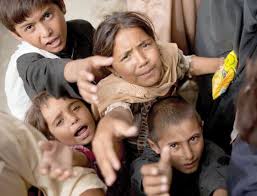 In terms of their social ranking and status, people of the third gender are considered as the lowest community in the society; they are not given due respect and are commonly subject to social stratification and marginalisation. Honestly speaking, the rest of the people feel themselves superior to the third gender. Despite an independent nation, Pakistan is the land ruled by discrimination and prejudice and its citizens don't pay heed to gender equality and social inclusion. Known as 'Khawaja Sara’, 'Hijra' and 'Khusra', these people are considered as the third community just because of their distinctive appearance. But how could they be blamed for being different to the rest of the people, when it's not their fault? In fact, the people of the third gender deserve equal rights and should always be treated as humans, with an equal access to education, employment and everything one needs to lead a quality life without any obstacles, hindrances or gender bias.
There are some challenges, as mentioned below, that the people of the third community face in the society:
• Poverty
• Social stigma, harassment and discrimination
• Lack of legal protection
In general, people lack awareness and acceptance regarding the third community, which is often treated with mental and physical torture, not to exclude emotional torment. Since the third gender is less accepted in the country, they have limited opportunities in life vis-à-vis the mainstream genders. Take the example of Riffie Khan, a member of the third community, who has a double Master’s degree. However, despite her academic accomplishments, Khan is not able to find a decent job because of belonging to the 'other' gender group.
Riffie was hired by the National Medical Centre in Karachi, as its front desk officer, a job way below to her educational qualifications. Unfortunately, she was forced to leave the job as she could not fit in. Riffie is just one example out of the numerous others suffering from discrimination based on sex, age and other factors, both in their professional and personal lives. “It’s the educated people who upset me the most,” Riffie Khan says. “When they discriminate against people like me, it hurts even more,” says Khan. [Source: Wikipedia]
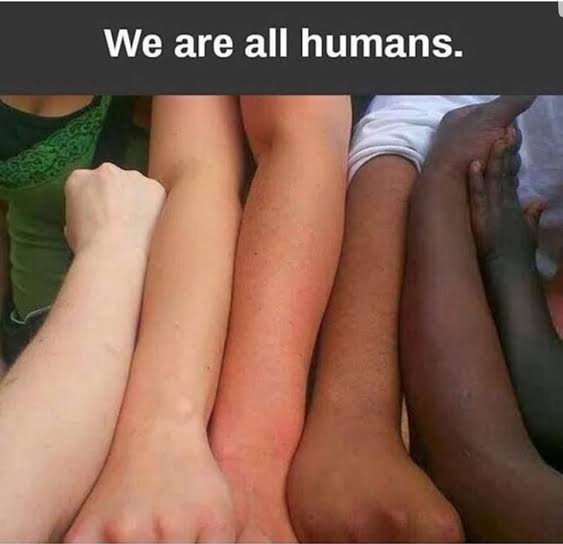 Briefly put, we must raise our voices for the rights of the third gender. We should try to stand with them, help them as much as possible and make them feel that they too are part of our society. If this happens, it will make the world a more desirable place to live in. I know that saying is easier than ding, but as it is said, “Everything is possible, even impossible says I'm possible”. This could also apply to us, especially when it comes to change our perception and attitude toward the third gender.
Leave a Reply