



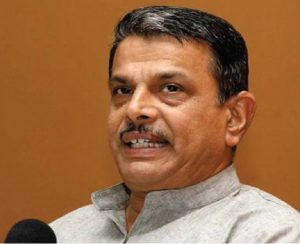
The Rashtriya Swayamsevak Sangh (RSS) has purportedly geared itself up for an ill-conceived paradigm shift. Following the changes in leadership in March, a series of new faces have assumed key slots in the right-wing, Hindu nationalist, paramilitary volunteer organization -- albeit under the continued supervision of RSS chief Mohan Bhagwat.
The decision to appoint Dattatreya Hosabale as the general secretary of the Sangh and select two new joint general secretaries has been billed as a an attempt to revamp the RSS. These cosmetic measures will do little to weaken the hammer strokes of saffron terror in India. Any attempt to bring young blood into the RSS cadre will merely soften the image of the Hindu nationalist organization at a crucial juncture when change is a prerequisite to building political muscle.
An editorial published in the Hindustan Times -- titled ‘A realignment in the RSS’ (March 21) -- outlines four key responsibilities that the new team will be expected to fulfil. First, it will be required to preside over the Hindu nationalist organization’s centenary celebrations in 2025. Second, the team will be expected to actively pursue efforts to consolidate Hindu society. Third, it will have to widen the geographical and political scope of the RSS. Fourth, the new team will have to strengthen cooperation between the BJP at the centre and at the state level. In order to achieve these objectives, the RSS requires a suitable spokesperson who can represent the organization’s moderate outlook.
Hosabale is arguably an ideal candidate as he espouses progressive beliefs and appears to be social-media savvy. The 65-year-old RSS leader may, therefore, be in a strong position to persuade India’s youth to accept the Sangh’s ideology. Given that Hosabale boasts a rich repertoire of skills in mobilizing political groups, it wouldn’t be unrealistic to assume that he is capable of accomplishing this feat. He is the first general secretary of the RSS to emerge from the ranks of the Akhil Bharatiya Vidyarthi Parishad (AKBP). As a member of the AKBP, he established a global platform for students and the youth. The RSS leader has also played a fundamental role in expanding the overseas network of the Sangh. However, it remains to be seen if Hosabale will succeed in garnering the support of the youth.
Media outlets have fervidly cited Hosabale’s unflagging support for LGBTQ rights in India as an antithesis to the more conservative line adopted on the issue by the RSS. Analysts have also applauded the Sangh leader’s role in pushing the BJP-led government to demand M J Akbar’s resignation following serious charges of sexual harassment. Even so, it is difficult to predict that a general secretary who values political correctness will galvanize younger people to support a right-wing organization.
 Nevertheless, the RSS leader has the distinct advantage of enjoying close ties with BJP politicians, especially Indian Prime Minister Narendra Modi. Over the decades, this has enabled him to liaise between the RSS and the BJP. In 2014, Hosabale persuaded the leadership of the Sangh to relinquish its apolitical posture and campaign for the BJP during the Lok Sabha elections. While Hosabale’s appointment may result in smooth relations between the BJP and the RSS, not all differences of opinion can be ironed out easily and a few compromises will have to be made. RSS leaders and the government have divergent views on the implementation of economic policies. At this juncture, the Sangh wants to neither refute nor endorse the BJP administration’s policy initiatives. Instead, the paramilitary volunteer organization wants to act as the government’s “conscience keepers”. Since the Modi government assumed public office for a second time in May 2019, the RSS believes that critical decision-making has been conducted without due consultation. The Sangh is also displeased with the rising dependence on bureaucrats to approve key decisions and wants to be actively involved in this arena. Hosabale will need to act as a buffer between the BJP government and the RSS, and ensure that the views of all stakeholders are accounted for in shaping political decisions.

The writer is a journalist and author. He analyses international issues and can be reached at tahakehar2@gmail.com |
|
Cover Story
|
|
News Buzz
|
Update |
Leave a Reply