

Region
Constraints of Friendship
Prime Minister Imran Khan’s recent visit to Sri Lanka highlighted strategic constraints in the bilateral relationship.

The agony of the Sri Lankan civil war has not worn off from history as yet. The 26-year war decimated the foundations of the country and highlighted the separatist fragment of society. The wounds left to fester since have still not subsided, even after three decades. The clash of the Sinhalese and Tamils climaxed in 2009. The recent strike over the rights of the minorities was the forced cremation of the deceased in the line of Covid prevention adopted by the Sri Lankan government.
Sri Lanka, officially known as ‘The Socialist Republic of Sri Lanka’, is a South Asian country forming a tear-drop below the Indian subcontinent. It is located at the south-western edge of the Bay of Bengal. The country was bloodied by an infamous civil war that started in 1983, claiming thousands of lives and consuming countless communities.
When President Gotabaya Rajapaksa came to power in 2019, the Sinhalese Buddhist Nationalist Party (SLPP) had been mongering extremism under the pretence of mob attacks while backing groups like BBS to promote hatred and prejudice. The World Health Organisation (WHO), along with Sri Lankan doctors, rejected the justification provided by President Gotabaya for adopting cremation as a safety measure to prevent water contamination due to rituals related to burial.
Despite the assurance of WHO, the Sri Lankan government not only refused to consider burial as an accepted method but even the country’s Supreme Court spared no time in shunning the petitions filed against the forced cremation law. The UN experts remarked: “We deplore the implementation of such public health decisions based on discrimination, aggressive nationalism and ethnocentrism”.
The spokesperson of the Sri Lankan government, Keheliya Rambukwella, retorted: “We do things only on expert advice and cannot take ad hoc decisions”.

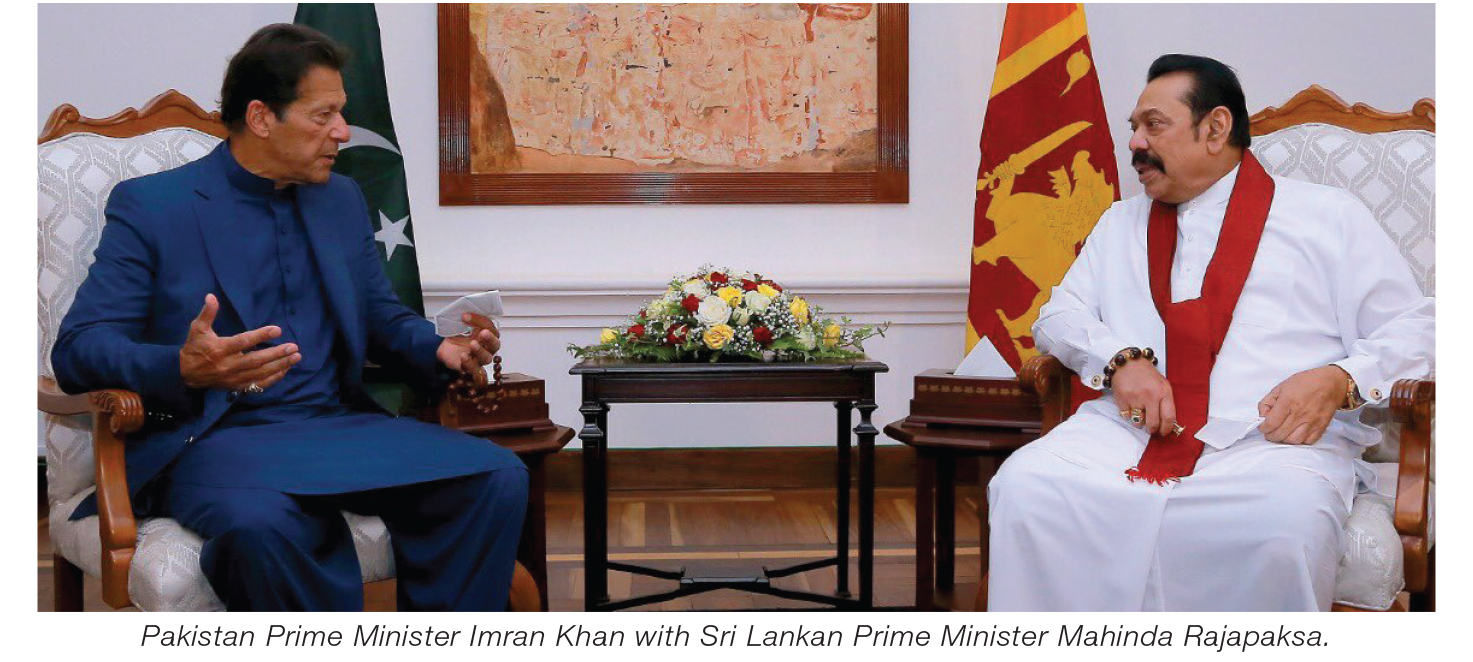
However, the 2-day visit by Prime Minister Imran Khan made a big difference for the Muslim community in Sri Lanka. This was the first high-profile visit from a country’s top official since Mahinda Rajapaksa took office as Prime Minister in November 2019. The diplomatic turn came after Imran Khan requested a reversion of the Ordinance mandating the cremation of deceased Covid patients. Accordingly, the Sri Lankan government made amends to the Quarantine and Prevention of Disease Ordinance passed in March 2020 by allowing both burial and cremation as accepted modes of final disposition. The step was widely hailed.
Ahead of Imran Khan’s visit to Sri Lanka, the government there had already announced that it would stop the forced cremation of people dying from COVID-19, a move that was purportedly meant to appease Islamabad. While the announcement was lauded by Prime Minister Khan, Human Rights Watch said that forced cremations were continuing despite the government’s assurances. It is also being said that while the freedom of burial for Muslims was restored, the measure could prove to be temporary.
The Sri Lankan government has actively sought economic cooperation from Pakistan. An offer was made by the Pakistan Prime Minister to the Sri Lankans to cooperate more actively with Pakistan. A total of 5 MoUs (Memorandums of Understanding) were signed during the visit. The focus was at an estimated $1 billion of bilateral trade annually. The Prime Minister’s visit also served as a channel for Sri Lanka to join the lucrative CPEC in China’s Belt and Road Initiative. The purpose was to strengthen ties between Sri Lanka and other countries in the region.
Imran Khan offered cooperation that had been stalled for a long time. Possibilities were discussed for coordination between the ports of Gwadar and Colombo as this could offer huge opportunities to Sri Lanka to capture trade in land-locked countries in Central Asia. Moreover, a package of Rs. 52 million was extended by the Pakistan Prime Minister in cricket promotions while another tranche of Rs. 50 million was extended as a credit line for military support in the areas of narcotics and anti-terrorism.
However, Prime Minister Imran Khan’s address to the Sri Lankan Parliament was abruptly cancelled. While Sri Lanka’s government cited scheduling issues and COVID-19 concerns in cancelling the address, many believe that may not have been the real reason.
Sri Lankan Prime Minister Mahindra Rajapaksa did say he was grateful to Pakistan for agreeing to open the pilgrimage corridors for Sri Lankans to visit ancient Buddhist heritage sites in Pakistan. Stating Pakistan’s cooperation to tackle militancy, he also noted: “We will continue to work together to fight terrorism, religious fundamentalism and extremism.”![]()
The writer studies at the Institute of Business Administration, Karachi. He can be reached at |
|
Cover Story
|
|
News Buzz
|
Update |


Leave a Reply