



Efforts to examine the scope and influence of Pakistani cinema often fall captive to concerns about its revival and survival. It is difficult to deny the fact that the complexion of the country’s cinema has changed over the last decade. The emergence of multiplexes, overseas screening and film festivals has led film enthusiasts to laud the resurgence of cinema. If the wave of optimism is anything to go by, the crippling impact of authoritarian policies and religious conservatism may have become a forgotten ordeal. Even so, a critical examination of Pakistan’s cinema must move beyond questions of its survival and offer nuanced outlooks on the country’s rich cinematic heritage.
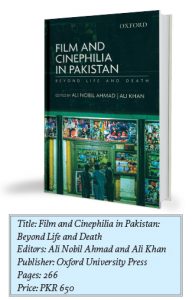
Through its strictly academic focus, Film and Cinephilia in Pakistan: Beyond Life and Death veers away from these concerns and explores existing discourses on the subject. Published by Oxford University Press, the book is a compilation of a diverse spectrum of essays that appraise the influence of Pakistani cinema on international film studies.
Readers with no prior knowledge about Pakistan’s film industry may be tempted to view this book as a useful primer on Pakistani filmmaking. In fact, Professor Rachel Dwyer categorically states in her foreword to the book that Pakistan’s film industry remains “largely undocumented”. Those who have read Mushtaq Gazdar’s Pakistan Cinema: 1947-1997 may not be entirely convinced by this assumption. However, we must remember that Gazdar’s account merely documents the history of the country’s film industry in a social context and cannot be regarded as an academic text. Ali Nobil Ahmad and Ali Khan, the editors of this compilation, have the necessary academic credentials to fill this vacuum with a cohesive glimpse into the subject. The outcome is a collection of essays, research work and an interview that presents the rich tapestry of Pakistan’s cinematic heritage. A vast majority of the pieces published in the book have either remained prisoners of academic paywalls or been neglected in modern discourse. As a consequence, the insights and observations gleaned from these accounts are likely to enrich a reader’s perspective on local cinema.

Leave a Reply