



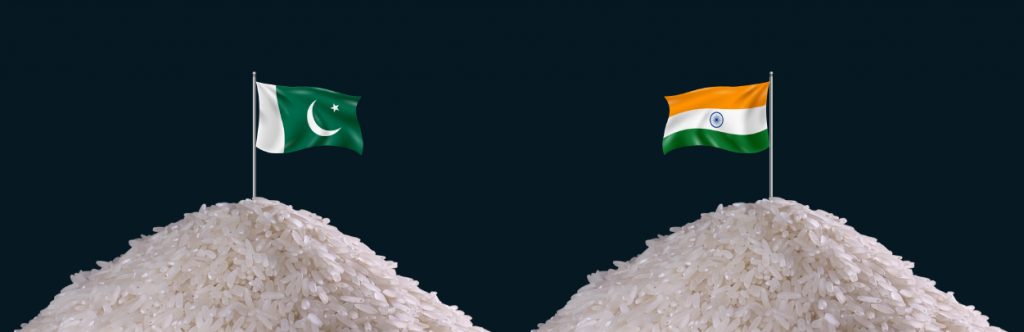
On September 11, 2020, India applied for a Geographical Indication (GI) tag in the European Union for Basmati rice under article 50 (2) (a) of EU Regulation No. 1151/2012, claiming that Basmati rice is of Indian origin. It is pertinent to mention here that during the 1990s and the early 2000s, a US-based company tried to patent Basmati rice in the US against which India and Pakistan took joint action. A joint petition was filed by both nations to the World Trade Organisation (WTO) and the US company lost the case. The recent move by India carries negative implications for Pakistani rice exporters. If the Indian claim is accepted, Pakistan may not be able to export its rice directly and will depend on Indian firms for selling its product in international markets. Pakistan may also lose the EU market which will affect its exports to other markets.
The government of Pakistan has decided to oppose the Indian claims and file a formal case with the EU. As per rules and procedures regarding GI, any country can oppose a registration application within the time limit of three months in which the application should be filed.
A similar attempt by India was made in the past when they termed Pakistan’s Basmati rice as a hybrid of two or three different seeds. Pakistan contested the case in Brussels and the European community accepted Pakistan’s claim.
The Pakistan government’s role has been negligent so far in setting up a local GI registry ao that the fact may be presented that Basmati is GI-protected in Pakistan. Although the GI bill was passed in March 2020 but no further progress was made after that. On the other hand, India passed GI legislation in 1999 and implemented it in 2003.
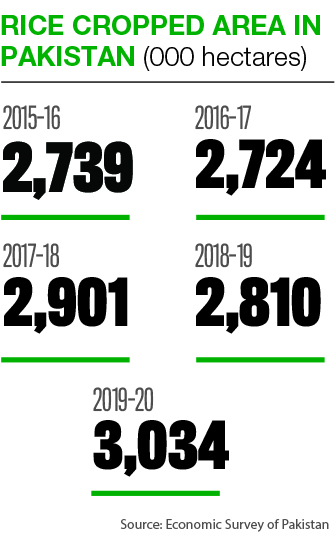 Rice cropped area in Pakistan increased by 8% in 2019-20 as compared to 2018-19. According to the International Trade Center (ITC), total rice exports from Pakistan were $ 2,014 million in 2018 which increased to $ 2,277 million in 2019. The European Union is an important market for Pakistan’s Basmati rice and exports to the EU have improved over the last few years. In 2018, the EU revised the rules for fungicides in crops which further helped in increasing Pakistan’s rice exports. On the other hand, India lost some of its market share as tests pointed to higher levels of tricylazole as compared to the permitted EU standards.

The writer is a research associate at the Sustainable Development Policy Institute (SDPI) in Islamabad. He can be reached at asifjaved@sdpi.org |
|
Cover Story
|
|
News Buzz
|
Update |
Leave a Reply