

Mirpur Khas
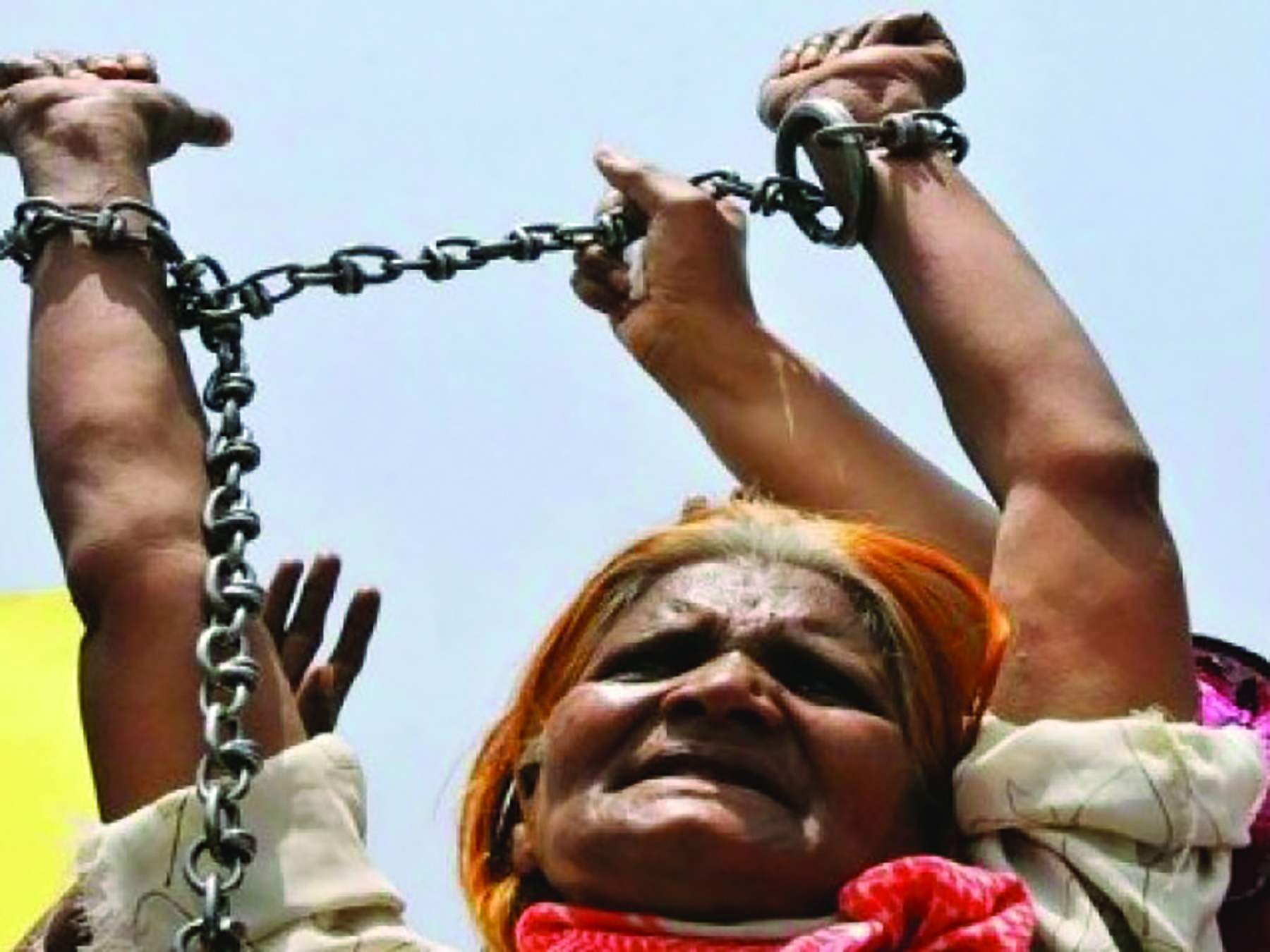
Breaking the Chains
The issue of bonded labour in Sindh has affected the labour community for years but the
government as well as the legislators simply ignore it.
Despite the presence of a plethora of laws to protect peasants’ rights in Sindh, the government fails to prevent the constant exploitation of poor Haris from injustices of local landlords. This is stated in the HWA (Hari Welfare Association) 2019 report titled ‘The State of Peasant Rights in Sindh.
In 2019, the Sindh government took two most promising steps for the betterment of agriculture workers. These are the landmark judgement of Sindh High Court in peasant Ghulam Ali Laghari’s case and the passing of Sindh Women Agriculture Workers Act (SWAWA). But will they be implemented or remain dead letters like the earlier ones?
Previously, peasants in Sindh already had the Sindh Tenancy Act of 1950, the Sindh Industrial Relations Act of 2013 and the Bonded Labour System Abolition Act of 1992 at the local level to seek due protection from injustices of landlords. Internationally, the Universal Declaration of Human Rights 1948, the United Nations Declaration on the Rights of Peasants and Other People Working in Rural Areas, the International Covenant on Economic, Social and Cultural Rights 1966 and many other laws and declarations also support the cause but still landlords in Sindh don’t have any sympathy for their agriculture workers.
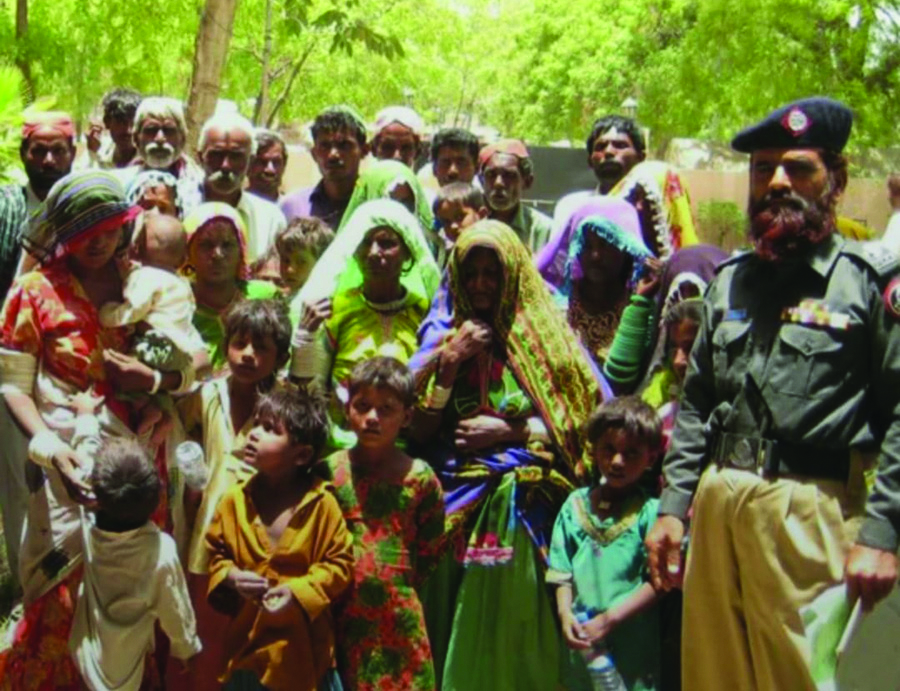
The day by day worsening situation of peasants in Sindh can be measured by the fact that in 2019, 2,309 bonded labourers, including 819 children and 743 women, were released by the police and courts from private jails of landlords in the agriculture and brick kiln sectors. The figure for released peasants was 1,421 in 2018 and 553 in 2017, which means there has been a regular escalation in the number of bonded labourers.
HWA, a Sindh-based non-governmental organization striving for the rights of Sindh’s peasants, has recently released its annual report on the state of peasants rights in Sindh which is fifth in their series of reports since the first report was launched in 2015. This report covers peasants’ rights in terms of development and implementation of related legislation and policies and explores a framework of the overall wellbeing of peasants that includes their socio-economic conditions.
Akram Khaskheli, president of the HWA, explained about the report, “This report is an evidence-based document which reflects the critical situation in which peasants of Sindh dwell. Moreover, it also presents a fair picture of laws and legislation related to peasants’ rights or bonded labourers and the level of their implementation.”
Despite the presence of a plethora of laws to protect peasants’ rights in Sindh, the government fails to prevent the constant exploitation of poor Haris from injustices of local landlords.
According to the report “In seven years, from 2013 to 2019, 5,639 peasants and their family members were released from the captivity of landlords. Of these released bonded labourers, 1,769 (31 percent) were women. In bonded labour practice, women suffer more as they are targeted for sexual abuse and harassment by landlords and their employers”.
The same report says, “More than 70 percent of rural women in Sindh work in the agriculture sector while in certain underdeveloped districts such as Tharparkar, Badin, Sanghar, Dadu and Jacobabad, women’s access to health and education services is extremely restricted.”
The report further says, “In the Provincial Assembly of Sindh for the tenure from 2018-2022, of the total 167 members, 21 MPAs have mentioned their profession as landlords while 13 more describe themselves as agriculturists. Similarly, in the National Assembly of Pakistan, of the total 61 members from Sindh, 35 describe their profession as landlords. Out of these 30 MNAs belong to the Pakistan Peoples Party (PPP)”.
Where the implementation of previously passed Acts is concerned, the Sindh government has surely failed to act as it was clearly mentioned in the Bonded Labour System Abolition Act 1992 that the Sindh government will form District Vigilance Committees (DVCs) in each district of the province to monitor bonded labour practice but, till today, DVCs have been formed in only 7 districts of Sindh out of a total of 29 districts and, shockingly, not a single one has ever conducted any meeting or the members of the committees have any knowhow about their role and responsibilities.
Akram Khaskheli told SouthAsia magazine that peasants only want implementation on laws from the provincial and national authorities but, unfortunately, the majority of the landlords are MPAs, MNAs or close/relatives to one of them so they do not intentionally implement the laws. “Peasants in Sindh have enough laws to be protected from the cruel behaviour of influential landlords but implementation by the government on such laws has been missing since inception of the country. It is said to be a mockery of justice that the Sindh Tenancy Act of 1950 hasn’t been implemented yet by the government,” he said.
Veerji Kolhi, a special assistant to the Chief Minister of Sindh on Human Rights, who has reviewed the HWA’s report and also spent time as a bonded labourer in the private jail of a landlord in Sindh, said, “The issues stand still since peasants are not being registered by the government. Moreover, there are several gaps in legislation which need to be reviewed.” ![]()
The writer is a freelance contributor based in Mithi. He focuses on social and environmental issues and can be reached at abbaskhaskheli110@gmail.com |
|
Cover Story
|
|
Tribute
|
|
News Buzz
|
Update |


Leave a Reply