

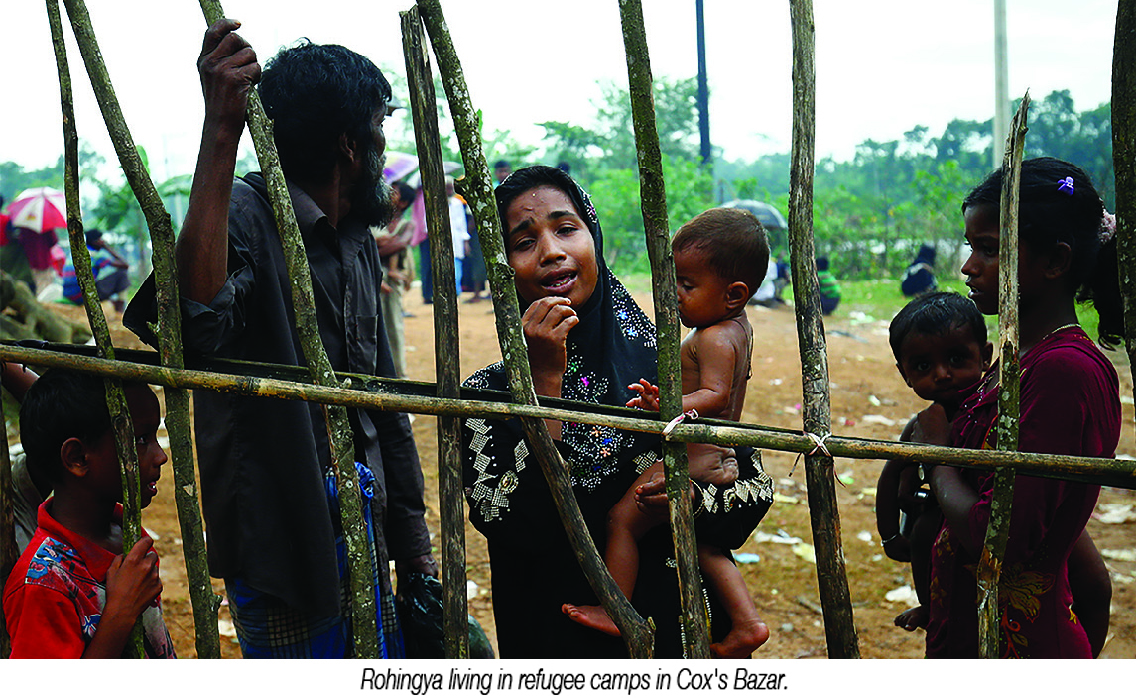
Cox’s Bazar
A Case of Genocide
A case against Myanmar was brought to the ICJ by Gambia,
on behalf of the Organization of Islamic Cooperation (OIC).
Rohingya Muslims have been under siege for decades by the Buddhist-dominated Myanmar government. However, a collective effort by world powers can ensure a better future for these Muslims. Much has been written on the crisis, but nothing solid has been done to rectify the issue. This plight of Rohingya Muslims is getting worse by the day.
Who are Rohingya?
Muslims living in the Rakhine state of Myanmar are ethnically known as Rohingya and constitute one of the biggest minority groups in the region. Their presence is traced back to the Arakan Kingdom of the 16th century. Rohingya Muslims, as a minority, have their own distinctive culture, language and religion, which is the main reason for their plight as far as the Buddhist majority group is concerned.
Before August 2017, over one and a half million out of three million Rohingya were residing in Rakhine. But their population decreased drastically after the genocide by the Buddhist majority, backed by the state and the national army.
Myanmar’s army launched an organized attack in Rakhine state against theMuslims in the name of the fight against militancy. Hundreds of Rohingya villages were burned down and bulldozed, while their women were gang-raped by Myanmar army men. Thousands of people were brutally killed and forced to flee to the neighbouring countries, but their misery didn’t end there.
As per reports confirmed by the UN fact-finding panel, the army even opened fire on fleeing civilians and planted land mines near border crossings used by Rohingya refugees.
The August 2017 massacre caused an exodus of about 750,000 people to Bangladesh, which is right now hosting the largest number of Rohingya refugees – approximately one million people.
A Short View of History
The plight of Rohingya Muslims has a decades-long past. They were forcefully driven out by the country’s army after they overpowered governance in the 1960s. Consequently, Rohingya Muslims began migrating in the 1970s. The Muslim community was deprived of its identity and rights gradually.
The government stripped off their citizenship in 1982 and excluded them from the population census in 2014. If that was not enough, their right of voting was denied in the 2015 presidential referendum.
Why Myanmar Hates its Muslim Minority?
The Myanmar government treats Rohingya Muslims as invaders and their ethnic title Rohingya is not liked by officials and the Buddhist majority group of Rakhine. Buddhists consider them illegally Bangladeshi migrants and want them to go back to Bangladesh forever.
Religious differences seem to be another major element of hate by Buddhists because they have been threatening governments to take exclusionary measures against Rohingya Muslims and are equally obliged by the authorities.
Rohingya – As a Minority in Myanmar
Myanmar has institutionalized discrimination against Muslims by putting restrictions on their social and personal lives. In some areas of Rakhine, Muslim couples are not allowed to have more than two children. Similarly, the poverty rate in Rakhine is 78 percent, making it the least developed state. There are still over half a million Muslims living in the Rakhine state that is at risk of recurrence of genocide.
The UN fact-finding report found that the situation in Rakhine did not get better and also warned about the recurrence of genocide. The UN panel called for their protection as Rohingya Muslims are forced to live like prisoners under tight official monitoring.
Life as Refugees
Similarly, the life of Rohingya refugees is not different from their home country. They have the least or almost no access to health and education facilities. Malnourishment is prevalent. Although Bangladesh and Myanmar reached an agreement for the safe repatriation of refugees, the Rohingya are not willing to go back to Rakhine without constitutional protections and citizenship. The said agreement offers Rohingya a Citizen Verification Card instead of citizenship which is rejected by Rohingya Muslims.
How the World Sees it
The Rohingya crisis caused a hue and cry by humanitarian organizations but couldn’t get impactful attention by world powers. Still, there is hope for Rohingya Muslims as Gambia, an African country, filed a case against Myanmar authorities in the UN court of law on behalf of the Organisation of Islamic Cooperation. The applicant accused Myanmar of committing genocide against Rohingya Muslims.
This judicial effort aims to protect the remaining Muslims in the Rakhine state and there could be punishment for those involved in genocide and immediate end of all attacks on Muslims. The UN court has also ordered to protect the Rohingya Muslims.
Suu Kyi, leader of Myanmar, though being a Nobel laureate, defends the army action in Rakhine state. While appearing before the ICJ (International Court of Justice) in December last year, she supported the stance of the army, terming the massacre of the Rohingya as a clearance operation against militants. On the other hand, the ICJ has launched a full-scale inquiry into the matter - giving hope to this Muslim minority in Myanmar.
The Way Forward
Though the final verdict on this case may take years yet acknowledgment of the crisis by international courts of law is encouraging. However, if the UN fact-finding report is considered, an independent inquiry is completed, and the culprits are punished accordingly, then the coming generations of Myanmar Muslims may have a secure future. ![]()
The writer is a free-lance contributor and can be reached at saimamirza132 |
|
Cover Story
|
|
Social Roundup
|
|
News Buzz
|
Update |


Leave a Reply