SDG and Implementation Policies
A country cannot run smoothly on the road to progress unless it takes strict measures to eradicate poverty. Pakistan’s Ministry of Planning Development and Reforms (MPDR) has launched a Sustainable Development Unit (SDU) which is completely in accordance with the country’s Vision 2025. SDU is divided into four key thematic working areas bearing numerous responsibilities.
The SDU is responsible for representing poverty and other SDGs as a part of domestic development plans. To reinforce the overall performance of the unit at the provincial level, utilizing the available financial resources for the 2030 agenda of the UN, the SDU embraced cohesive and advanced approaches so that it could fast-track developments related to SDGs as a priority. In addition the SDU facilitated the communication channels at provincial level, with each province having technical committees and functional groups. These groups were assigned the task to annually submit a review report related to the overall achievements and outcomes on the key targeted issues, forecasting the policy endorsements and implementation procedures for the emerging plans and projects.
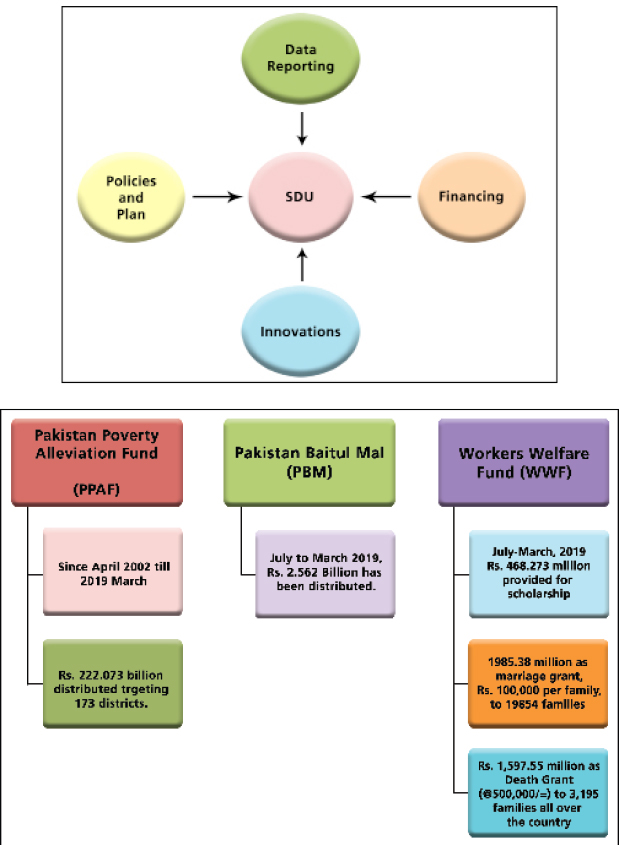
Poverty Alleviation Programs
The government allocates a certain amount as poverty fund in its Fiscal budget every year. Under the medium-term expenditure framework this amount increased from 7.7% to 9.2 % in fiscal year 2014-2018. Similarly, the Benazir Income Support Program (BISP) was providing cash to more than 5.8 million poor families. Waseela-e-Taleem is another such program which is targeting the unprivileged children and facilitating them with education. Under this program, 3.1 million children have received education. Various other poverty alleviation projects are working under the government as a part of its national plan focusing on education.
The Problem Continues
Although Pakistan is striving hard to achieve the ‘zero poverty’ target by 2030, there is still need to address the root causes of poverty. Lack of efficient and functional economic system is isolating Pakistan from the global economic community. This is triggering unemployment, decrease in international investment and exports and inflation. Subsequently, the underdeveloped areas are being dumped under the burden of poverty.
Furthermore, an unjust social system and inequality in the economic sector accompained by strict cultural boundries is also a challenge towards for reduction in poverty and achievement of SDGs. The unequal distribution of resources and income among different segments of society is perhaps a worst condition of poverty which provokes extremism, a sense of inferiority complex, unrest and crime. This eventually causes instability and serious internal security challenges to Pakistan. Now states are interconected and therefore, an unstable security environment prevents foreign investment. If the prevailing situation remains for a long time , it will further increase poverty instead of lowering it.
In sum, being an agrarian economy, Pakistan is greatly dependant on agriculture. It needs to introduce land and agricultural reforms ( along with assets distribution) for small formers in the rural areas in order to improve the socio-economic culture. Furthermore, technical education is a key for growth of the economy and social uplift. Different technical educational programmes, along with basic elementry education, should be introduced all over the country to help people start a local business and set up small industries as a contribution to the economy. Most regions in Pakistan are bereft of basic amenities of health, education, housing, clean drinking water, etc. Distributing resources equally among all the provinces will diminish regional disparities and gaps. The deprived regions should be prioritised for infrastructural development so that they can connect to the remaining parts of the country, thus opening the opportunities of employment and investment. In this manner development and infrastructural projects will connect all parts of the country, thus facilitating the work environment and there will be some progress in the country’s war on poverty. 



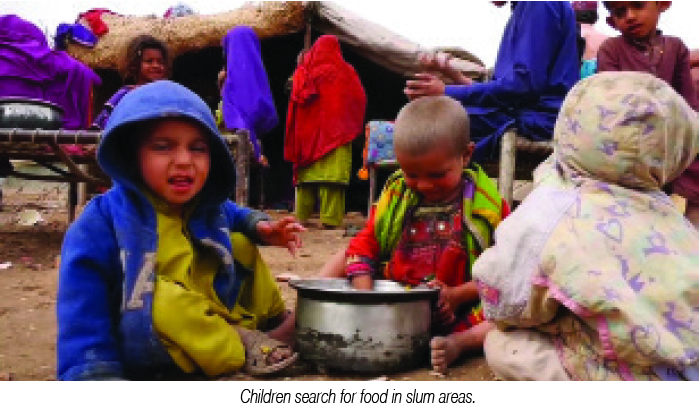 One of the most important challenges to Pakistan is poverty. There is a consistent increase in the rate of poverty, inequalities in the distribution of income, non-availability of basic needs and facilities, a high unemployment rate and increase in the inflation curve.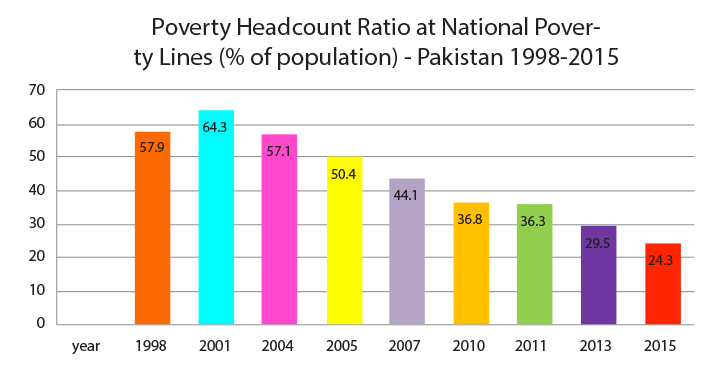

Leave a Reply