
Feature/Peshawar
Offence and Defence
The feeling of being “cut-off” from peers and “emotional numbness” are both results of CSA and highly inhibit proper social functioning.

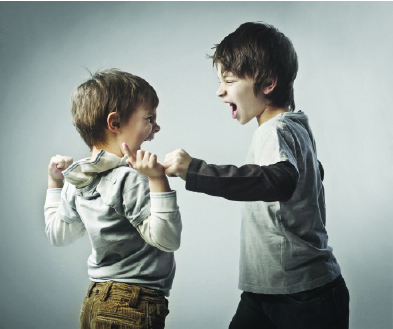
Child-on-child sexual abuse is a form of child sexual abuse (CSA) in which a child is sexually abused by one or more other children and in which no adult is directly involved in sexually abusing the child. This can happen when one of the children uses physical force, threats, trickery or emotional manipulation to elicit cooperation. It can also include non-coercive situations when a child proposes or starts a sexual act and the victimized child does not understand the nature of the act; the latter simply goes along without comprehending the implications or what the consequences may be.
Children who are sexually victimized by other minors show the same problems largely as children victimized by adults, including anxiety disorders, depression, drug abuse, suicide, eating disorders, post-traumatic stress disorder, sleep disorders and difficulty trusting peers in the context of relationships.
Under international law, there is no uniform definition of child sexual abuse. The International Rescue Committee and Unicef define CSA by compiling various definitions of CSA as “Child sexual abuse is any form of sexual activity with a child by an adult or by another child who has power over the child”.
From the afore-stated definition, it is possible for a child to be sexually abused by another child. CSA often involves body contact. This could include sexual kissing, touching and oral, anal or vaginal sex. But all kinds of sexual abuse do not involve body contact. Forcing a child to witness rape and/or other acts of sexual violence, forcing children to watch pornography or show their private parts, showing a child private parts (“flashing”), verbally pressuring a child for sex and exploiting children as prostitutes or for pornography are also acts of sexual abuse.
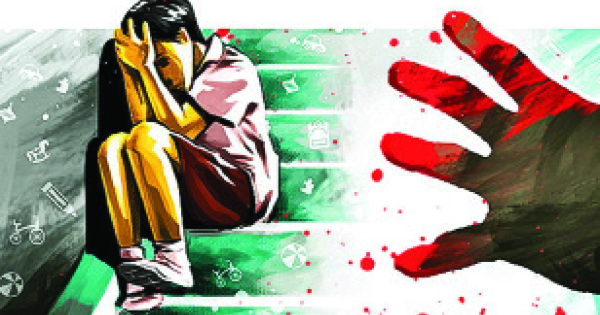
In Pakistan’s criminal justice system, CSA and child pornography are defined and penalized under Pakistan Penal Code, 1860 (PPC), Prevention of Electronic Crimes Act, 2016 and various provincial laws of the land. PPC prescribing punishments for offences committed in Pakistan, defines CSA in its section 377A as “Whoever employs, uses, forces, persuades, induces, entices, or coerces any person to engage in, or assist any other person to engage in fondling, stroking, caressing, exhibitionism, voyeurism or any obscene or sexually explicit conduct or simulation of such conduct either independently or in conjunction with other acts, with or without consent where age of person is less than eighteen years, is said to commit the offence of sexual abuse”.
Although, the different forms of sexual abuse like fondling, stroking, caressing, exhibitionism or voyeurism or any obscene or sexually explicit conduct or simulation of such conduct have been incorporated in the PPC, but these terms are not defined in detail in the PPC, which create complications for the prosecution during the trial stage.
Under international law, there is no uniform definition of child sexual abuse.
It is pertinent to mention here that definition of CSA under the domestic laws of Pakistan is not fully compatible with the definition of CSA under international laws. International law clearly says that a child can be sexually abused by another child, who by age or physical or mental development is in a relationship of responsibility, trust or power over a child, who is being sexually abused. Thus, the definition of CSA under domestic laws need to be modified according to the definition under international benchmarks. Moreover, there is no special legislation and pro-cedures described in the Criminal Procedure Code of Pakistan that how a criminal responsibility of a child would be evaluated for commission of his/her sexual abuse offence with another child and what kind of punishment under the PPC can be awarded to such a juvenile sex abuser? Section 83 of the PPC provides relaxation in criminal responsibility up to the age of 14 years, if a child has not attained sufficient maturity or understanding to judge the nature and consequences of his conduct at the time of commission of offence. But it is not mentioned in Pakistani law that in CSA offences, a criminal responsibility or awareness about sexual abuse of a juvenile abuser would be determined by the court.
Under the PPC and provincial laws of Pakistan, the punishments for CSA offences are prescribed for abusers who commit these traumatic offences. The minimum punishment prescribed under these laws is one year’s imprisonment or a fine of rupees one lakh or both, in case of ‘exposure to seduction’; the maximum punishment is a death sentence or life imprisonment along with fine in case of rape offence.
There is an ongoing debate in the country for imposition of a harsher punishment in the form of public hanging of convicts of CSA in order to create deterrence against such offences in our society. The present punishments prescribed for CSA offences under the PPC are already harsh because the maximum punishment is death sentence in case of rape of a female child, who is below sixteen years of age. So, instead of focusing on a harsher punishment in the form of public hanging, which is strict violation of human dignity and international laws and standards, we need to focus on adoption of preventive measures to curb this menace.
The foremost step to achieve this goal is to sensitize the parents, guardians, teachers, and general public on preventive measures that can be adopted for the protection of children from sexual abuse. These preventive measures can be that the child never be left alone either at home or outside the home and an eye be kept on the child’s activities, especially outside the home; there should be knowledge about the child’s friends and a monitoring of the interactions of the child with other people such as his teacher, servant, relative, acquaintance, etc.
In 2019, the World Health Organization published global statistics on violence against children and it was estimated that over half of all children in the world, or about 1 billion individuals aged 2 to 17 years, experience physical, sexual, or emotional violence or neglect in a year’s time. In Pakistan, CSA (child sexual abuse) is also widely prevalent in the country. A national civil society organization, SAHIL has published statistics about CSA cases in Pakistan in 2019. The statistics reveal that a total number of 2,846 cases from all provinces/administrative territories were reported in newspapers during 2019, which indicate 8 children are abused per day in Pakistan. Statistics further reveal that cases of child-on-child sexual abuse offences have also been reported during the second half of 2019. From July to December 2019, a total of 11 CSA cases were reported in which the abuser’s age was under 18 years. A minimum of 5 years difference in age of abuser and victim has been used as a benchmark for labeling the act as child-on-child sexual abuse. Another category of CSA is pornography (illegal filming of CSA for personal or distribution purposes). Sahil’s statistics reveal that during 2019, out of the total reported cases, 70 cases of CSA in conjunction with pornography, were recorded from all over Pakistan.
In 2019, the reported statistics regarding CSA cases in Pakistan are just a tip of the iceberg, because due to the taboo nature of the subject, unreported cases might be exponentially much higher. Moreover, this is the first time that in 2019, the cases of child-on-child sexual abuse were reported. It must be noted that more and more juveniles are being reported to have been abusers in CSA cases. This emerging problem of child-on-child sexual abuse needs to be investigated and measures be taken for its prevention with more urgency.![]()
The writer is a human rights lawyer and an advocate of the High Court, based in Islamabad. He can be reached at adv.wajahat.ali |
|
Cover Story
|
|
Social Roundup
|
|
News Buzz
|
Update |


Leave a Reply