



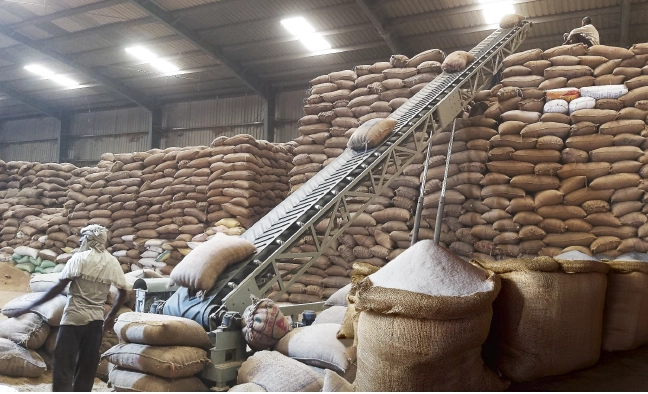
Sugarcane, or sugar, is an essential cash crop in Pakistan. It is primarily cultivated in the suitable climatic conditions and fertile lands of the Punjab and Sindh provinces. Sugar is not just a commodity in Pakistan but an integral part of cultural identity that reflects values, traditions, and communal bonding. This highlights sugar’s socio-economic importance and sets the groundwork for dissecting the intricacies of the “sugar mafia.”
The country’s sugar industry produces around 84 million tonnes of sugarcane yearly on 1.2 million hectares, yielding 70 to 100 tonnes per hectare. Pakistan, which ranks 4th globally for sugar production, contributes about 3.5% of the global output and 0.7% of its GDP. In fiscal year 2024-25, the country produced 84.24 million tonnes of sugar, making Rs 1.4 trillion in revenue.
Pakistan has experienced several shortages over its seven-decade history, but it has experienced one of the most concerning in recent years. The sugar industry faces a severe shortage due to the high demand since it cannot meet the excessive and growing demand, which drives up prices. The cost of sugar can reach 180 rupees per kilogram today. Given Pakistan’s extremely fertile land, ideal environment (which includes plenty of sunlight and water), and suitable resources, this may appear bewildering to an outsider. So why is there a shortage?
Pakistan’s sugar industry operates as a cartel.
A cartel is a collusive oligopoly. Firms of the good agree to cooperate instead of competing. They set a common price, and the absence of price wars and efficiency incentives makes it easy for cartels to exploit the consumers. They often put output restrictions to limit supply and hike prices. Hoarding the good and dumping it in the international markets at prices far lower than those in the domestic market.
Weak oversight, institutional shortcomings, and structural inefficiencies are at the root of the issue. The current scenario is influenced and exploited by elite statuses, such as affluent landlords and people with a strong political history. Since farmers are left in poverty and mill owners hoard sugarcane, politics is a major part of the situation, but government officials are unwilling to take meaningful action. It seems all parties capable of bringing a change have high stakes in the sugar industry.
There is ample stock, according to Minister for National Food Security and Research Rana Tanveer Hussain, who dismissed the situation as perception-driven. Reports, however, show differently. Government credibility is currently being closely examined by residents who cannot afford the necessity, and officials consistently fail to admit the reality. People are speaking up and beginning to recognize that the situation is a systemic malfunction rather than a “seasonal misfortune.” Despite an increase in the farmed area, the Minister referred to climate change as a major cause in lowering sugarcane production; nonetheless, contradicting claims are still being made.
Pakistan’s sugar industry isn’t run by fair competition. It is owned, controlled, and heavily influenced by the powerful politicians and influential bureaucrats.
These groups use their influence to get government subsidies, low-interest loans from the State Bank of Pakistan (SBP), tax breaks, and other administrative favors. All of this while small farmers suffer because they are liable to sell their hard work to these powerful mill owners at unfair prices. The rich bureaucrats and business magnates keep becoming richer and benefitting from surpluses while the poor suffer. Yet again, highlighting the systematic fault.
When sugar prices fall internationally, the powerful mill owners receive government bailouts to stay profitable even as consumers and farms suffer. But if foreign sugar prices drop and cheap imports threaten the cartel’s monopoly, they lobby for import bans to keep domestic prices high. This manipulative cycle ensures that the political elite will stay profitable and the monopoly will remain.


The writer is the Head, MacroPolicy Lab, and Associate Professor at the Pakistan Institute of Development Economics, Islamabad, and can be reached at dr.iqbaln@gmail.com.
Leave a Reply